Showing posts with label summer school. Show all posts

Friday, August 3, 2012

Preventing Reading Difficulties

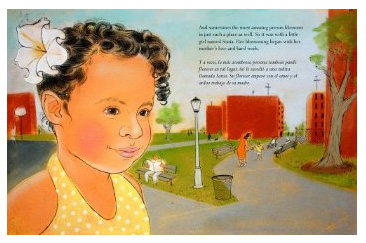
We are nearing the end of the summer school project I designed for Newark Public Schools.  I had the task of designing the primary grade literacy summer school for children in rising grades 1-4.  These were images I made during the five weeks of learning.  It was a privilege to work alongside the children and their teachers each day. I learned so much from them.  Will post more about this. But for now allow me to simply say that preventing reading difficulties is so very doable and has as much to do with love, as it does with knowledge.


Music:
On Children performed by Sweet Honey in the Rock
You Got a Friend in Me performed by Randy Newman and Lyle Lovett

Saturday, July 14, 2012

Interactive Read Aloud: Dwelling, Talking, Feeling & Thinking


When I designed the Newark Public Schools' summer school literacy project for children in primary grades, I gave a lot of thought about how to infuse high quality text into that experience and decided to emphasize the daily interactive read aloud as one important component of the daily learning.  Because I am also teaching and coaching in the project, I have the satisfaction of not only designing, but also seeing that work interpreted and enacted with children.  I knew without a doubt that I would learn so much and that this partnership would give rise to questions, wonderings, and theories about teaching and learning. I have not been disappointed as I have seen super work being done with regard to vocabulary and text response and this work has prompted my thinking.

Because most of the read aloud texts are meant to be read across multiple days as well as reread, I imagined that teachers might chart the wonderings of students as they talked and might let sit a question of two across several days:  a question that the teacher and students would revisit as they reread a given text.  Unfortunately, I failed to make that clear in the guide I wrote and so I might be most responsible for what I perceive as an absence.  It is the dwelling in ideas that matter so.

Child's response to what happens at the beginning of The Firekeeper's Son.
In correspondence with coaches who are supporting teachers and students in the project, I asked them to be mindful of the presence of student talk and to support teachers in ensuring that children have lots of opportunities to talk about what they are hearing, seeing, feeling and thinking.  Whereas there is a good deal of turning and talking among the youngest children, there seems to be less of this being done with the older children.  Alongside this emphasis of student talk, I also wanted to convey to coaches and teachers that interpreting and evaluating text often requires enough space for learners to dwell, not to simply respond.   In many ways that space is a placeholder for Louise Rosenblatt's concept of poem: the transaction a reader and text create.  A challenge with text-dependent questions is that they are often efferent and can be 'answered' definitively.  Whereas understanding literal details is important, so too are interpretive and evaluative queries and certainly text dependent questions can also lead to interpretation and evaluation.  It is these latter ways of thinking about text that I want to suggest make for good potential places for dwelling. When I rehearse teaching in my mind,  I imagine saying to children: "This is a question we may not answer and one that we will need to think about across the next few days. I'm going to leave it printed here on our chart so that we can think about it when we're not reading the book. Then when we revisit the question we can see if we have any new ideas and questions." 

I am going to be paying attention to dwelling in text as I make my way through the next week with the teachers and children.  I hope to post another blog in which I follow children's lines of thought that happen apart from the read aloud text and yet is connected to it.

Thinking beyond the read aloud time about the text is an important goal.

Here are some of the texts children are hearing and interacting with this summer.

Kindergarten

First Grade
Illustration by Edel Rodriguez from Sonia Sotomayor: A Judge Grows in the Bronx.

Second Grade
Claire Nivola's illustration from Life in the Ocean.
Ida B. Wells by Stephen Alcorn from Let It Shine.


Third Grade


Friday, June 15, 2012

Designing K-3 Professional Support through iBooks Author: A Look at a Summer Literacy Project

I. The Project
This summer I will be working to support teachers and children in K-3 summer schools scheduled at 16 sites in a city. The focus of our work will be on the prevention of reading difficulties. For the last several weeks I have been busy creating eBooks for teachers as professional support for their work. Each book is aligned and helps to explicate the pedagogy and content of the literacy project I designed. 

Four literacy/learning structures dominate the 3-hour block in kindergarten and grade 1 and three in the 90 minute block in grades 2 and 3. These include:
  • interactive read aloud with quality children's books
  • shared, choral, echo, & paired reading/writing/performing (I designed a shared reading anthology featuring diverse texts with city emphasis)
  • guided literacy group (guided reading, guided phonics, and guided writing) with multicultural texts
  • inquiry centers

There will be internal supports (master teachers, principals) and external supports (coaches from my company and myself) along with the eBook guides.  Below are two pages from the 42-page Interactive Read Aloud Guide. In this eBook each of the selected read aloud texts are outlined and include:
  1. book introduction
  2. vocabulary selection
  3. text dependent questions aligned to CCSS [ELA and mathematics]
  4. aesthetic questions and engagements designed to invite embodiment of the text. 
What is significant about iBook Author is that it allowed me to embed specific video of excellent teachers doing the teaching work that is described in the guide, along with slideshows, hyperlinks, images and text.  I have been fortunate to have video of great teachers like Michele Damiano and Barbara Cummings teaching.  I am at the stage where I have just uploaded the books via iTunes Producer so that they can be published and then made available for the teachers to download (if the choose) for their use.

Here are some sample pages:


II. Read Aloud & Guided Texts

The read aloud texts selected include:

Kindergarten
  • Aruego, Jose.  (2002). Weird Friends: Unlikely Allies in the Animal Kingdom. Illustrated by Ariane Dewey. San Diego, CA: Gulliver Books.
  • Brenner, Barbara. (1997).  Thinking About Ants (big book format). Illustrated by Carol Schwartz. New York: Mondo Books.
  • Collier, Bryan. (2004). Uptown. New York: Henry Holt.
  • Cotten, Cynthia. (2002). At the Edge of the Woods: A Counting Book. Illustrated by Reg Cartwright. New York: Henry Holt.
  • Jenkins, Steve. (2011). Actual Size. New York: Sandpiper.
  • Thong, Roseanne. (2000). Round as a Mooncake: A Book of Shapes. Illustrated by Grace Lin. San Francisco, CA: Chronicle Books.
First Grade

Second Grade
Third Grade
The linkages between students seeing themselves represented in the text and reading comprehension (Bell & Clark, 1998; Bishop, 1990; ) is well established. So too is the importance of teachers modeling with mentor texts and guided texts that are inclusive (Gangi, 2008; McNair 2008; Scroggins & Gangi, 2004).  The guided literacy and take home to read books were selected with this in mind.

Guided Reading Collection from Lee & Low Books (Text Levels: 1-40)

  • Big Cats, Little Cats
  • What Do You See at the Pond? 
  • How Do I help?  
  • What Can Fly? 
  • First Day of School 
  • Family Picnic 
  • This Is My Home
  • Batter Up 
  • Jump Rope
  • What Time is It? 
  • Best Friends 
  • My Family 
  • Laundry Day 
  • What a Street 
  • We Eat Rice 
  • I Play Soccer 
  • I Make Clay Pots
  • At the Park
  • In the Mountains 
  • I Need to Ask You Something 
  • Block Party
  • The Dashiki 
  • Ice Cream Money 
  • Go Go Gumbo 
  • Car Wash 
  • Chinatown Adventure 
  • Confetti Eggs 
  • Living in An Igloo
  • The Best Thing 
  • Silent Sam
  • The Goat Goes to Town
  • At the Firehouse with Dad
  • Pop Pop and Grandpa
  • Surprise Moon 
  • Can You Top That? 
  • David's Drawings 
  • Leo and the Butterflies 
  • African Dance: Drumbeat in Our Feet 
  • Allie's Basketball Dream 
  • Rainbow Joe and Me
  • My Steps
  • Babu's Song 
  • Under the Lemon Moon 
  • DeShawn Days 
  • Saturday at the New You 
  • Strong to the Hoop 
  • Richard Wright and the Library Card 
  • Abuela's Weave 
  • Baseball Saved Us
  • Joe Louis, My Champion
Series
Frog & Toad, Jamaica, Carlos, Song Lee, Hey L'il D, Ivy & Bean, Nikki & Deja, Julian, Mice & Beans, Danitra Brown, Dyamonde Daniel, and Koya Delaney

Technology
So the one thing I don't have in place that I know would make a difference would be a handful of iPads/iPod Touches in each classroom with some specific apps that I have used with other children or have seen used.  I am trying to figure out how to get that done--if not across all 16 sites at least at a few sites.  If you have any ideas let me know.


Works Cited 

Bell, Y.R. & Clark, T.R. (1998).  Culutrally relevant radign material as related to comprehension and recall in African American children. Journal of Black Psychology, 24 (4), 455-475.
Bishop, R. S. (1990). Mirrors, windows, and sliding glass doors. Perspectives, 6, ix-xi.
Gangi, J. M. (2008). The unbearable whiteness of literacy instruction: Realizing the implications of the proficient reader research. MultiCultural Review, 17(2), 30-35.
McNair, J. C. (2008b). The representation of authors and illustrators of color in school-based book clubs. Language Arts, 85(3), 193-201.
Scroggins, M. J. & Gangi, J. M. (2004). Paul Laurence who? Invisibility and misrepresentation in children’s literature and reading and language arts textbooks. MultiCultural Review, 13(3), 34-43.