Showing posts with label Newark. Show all posts

Saturday, April 17, 2021

Newark in Bloom

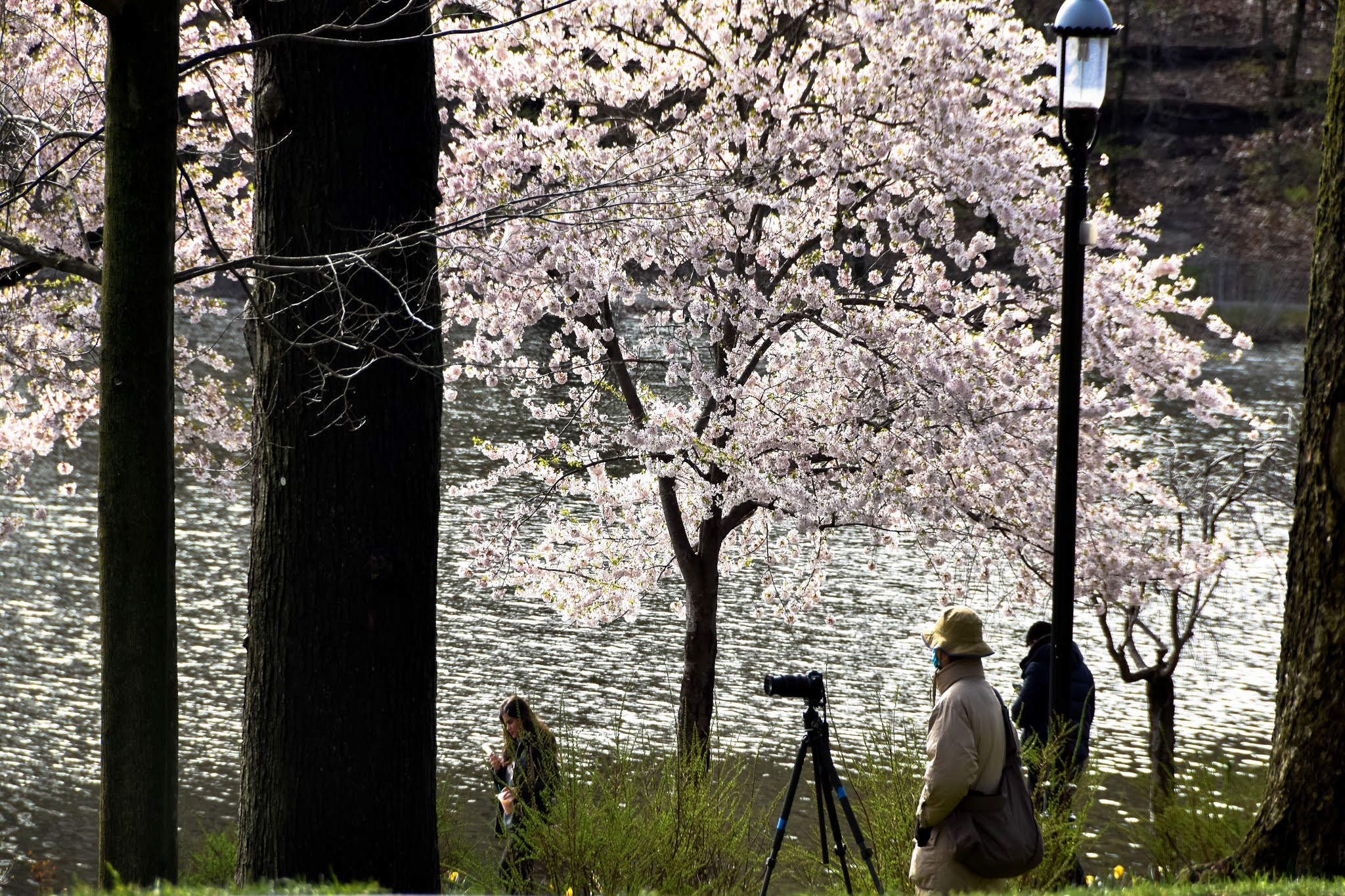
This past week I made a few images in Branch Brook Park of the cherry blossoms.  Below are some.


Blossom 2 (4.21, Newark, NJ)

Blossom 3 (4.21, Newark, NJ)

Cathedral (4.21, Newark, NJ)

Lake (4.21, Newark, NJ)

Grove (4.21, Newark, NJ)

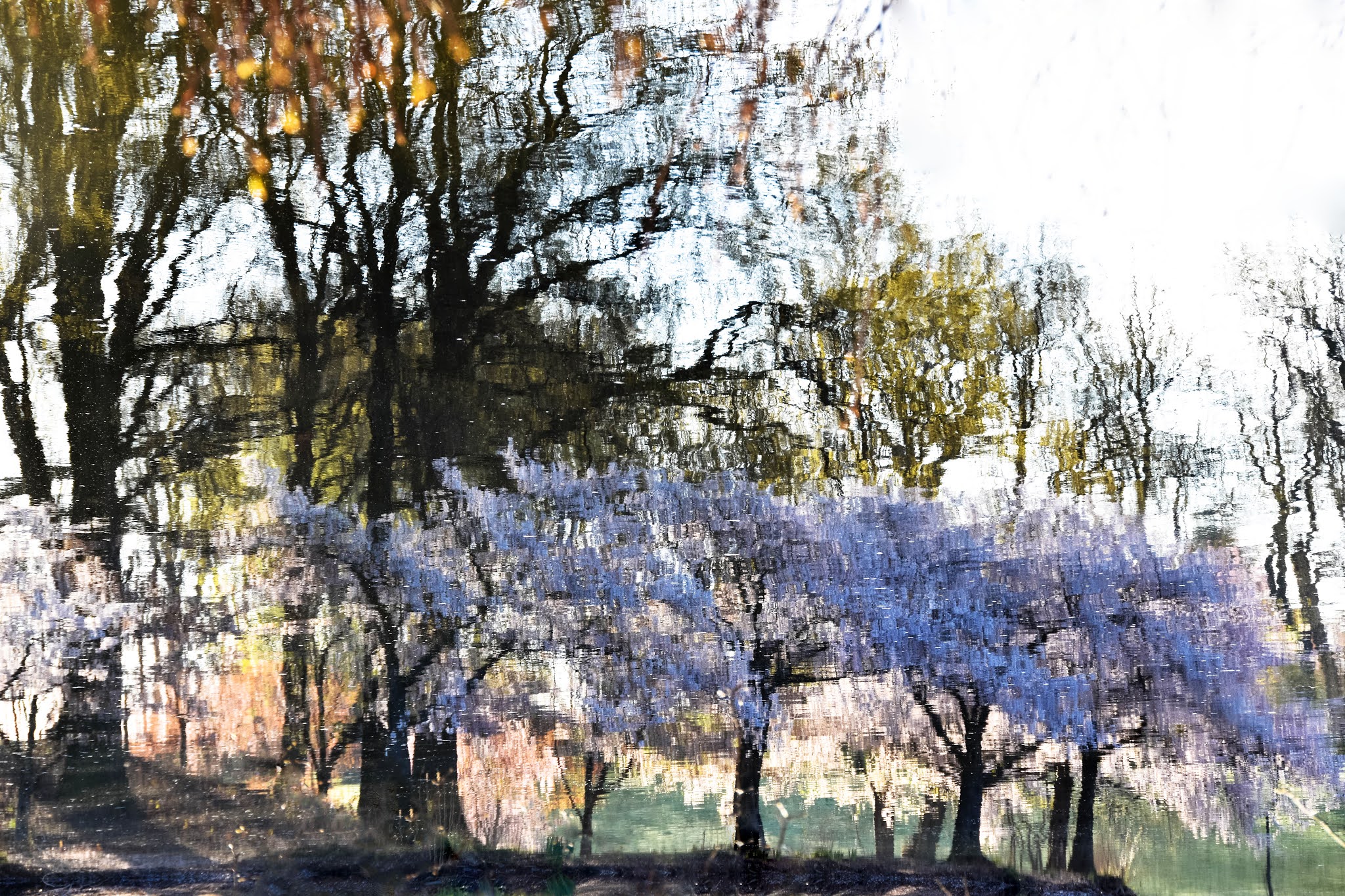
Reflection in Lake (4.21, Newark, NJ)

Blossom (4.21, Newark, NJ)


Dangling (4.21, Newark, NJ)

Blossoms 2 (4.21, Newark, NJ)

Cherry Blossom Trees (4.21, Newark, NJ)

Sunlight (4.21, Newark, NJ)


Water Drop (4.21, Newark, NJ)

The Photographer (4.21, Newark, NJ)

Out Walking (4.21, Newark, NJ)

Blossoms on Branch (4.21, Newark, NJ)

Wednesday, April 15, 2020

What Young People Say About the Pandemic (Newark, NJ): Notes from the Pandemic


I. 

The other night I was listening to pundits and experts on a news show discuss the pandemic. I thought about the high school students I had met the previous week in an English 12 class I had sat in on and the video and audio stories I had viewed and listened to that are part of the new project, Stories from the Pandemic. The distance between the concerns and stories the students shared and the talking heads on TV couldn't have been further apart.  The concerns of youth are not well represented when I listen to the discussions about the pandemic from Washington DC or state houses across the country. 

We need to listen to youth.

In thinking about the kind of assignments that might make a difference in our young people's lives, colleagues from Newark Public Schools in NJ teamed with a professor and a media company to launch, Stories from the Pandemic. Timothy Raphael, Director for the Center for Migration and the Global City and an associate professor at Rutgers-Newark and colleagues from Newark Public Schools, NJ (Brian Mooney, Liana Summey and 18 high school teachers) and department chairpersons) have teamed together with Dr. Raphael and Talking Eyes Media to produce the project.  

The site will feature the stories by high school students from American History High School, Central High School, Eagle Academy, East Side High School, Malcolm X. Shabazz High School, Technology High School, University High School, and Weequahic High School--all public schools in Newark, NJ. This is the beginning of that project. 

Tim writes:


Young people in Newark, NJ, an area with one of the highest rates of COVID-19 in the country, are adjusting to life under quarantine while processing the potential impact on their families’ health and economic security. In response, Newest Americans has created Stories from the Pandemic, a web platform for young people to document their experience in real time using photography, video, writing and audio. Our goal is to give students an opportunity to observe, reflect, and share their personal stories in order to feel less isolated while becoming frontline documentarians for their local community and beyond.

II. 

Here is the first assignment.


Digital Storytelling Project
Assignment *

Through an audio recording, video recording, or photograph(s),
  1. Capture how this virus has disrupted your school year—including sporting events, concerts, assemblies, dances.
  2. Discuss how your daily life has been disrupted.
  3. Share the effect it has had on your friends and family.
  4. Describe the situation at home. How many people are you quarantined with? Who does that include?
  5. Discuss the changes that have occurred in Newark since you first learned about the virus.
  6. Include your name, age, and school.


MAINTAIN YOUR SAFETY
Do this reporting from your home, out your window, via Skype/Zoom/Facetime. Do not leave your home for this project, but do document if you go out for some other reason like shopping or walking.

This is followed by ways to upload audio, video, and photographic stills.

* Discussion questions adapted from from Kelly Gallagher http://www.kellygallagher.org/instructional-materials


III.

Take a look and listen to the first set of stories.  We need to learn from students. High school and college age students can share stories here


Friday, May 19, 2017

#SOL17: Newark, 20 Years Later

4th graders creating a map


2nd grade teacher reading aloud a novel
20 years ago this month, I accepted the position of the director of literacy for Newark Public Schools in New Jersey. I was in my 30s and had just finished my dissertation and would defend it that next spring. The job was somewhat overwhelming given the academic needs that seemed so prevalent, the pressure heaved upon children and staff to produce academic gains as measured on a state assessment, and the scale.  When I worked there the enrollment was about 50,000 students across 80 schools. Working with staff and students in Newark was  the most important work I would do while employed in public schools.  What I didn't understand well until today is that the years there would fundamentally change me, allow me to see whiteness in ways I simply had not and prepare me to be, perhaps, a better mom to my own son who would be born two years later. What was most important, without question, were the children and teens who populated the schools. 20 years later, I still know that to be true.

Newark was a source of love.

4th graders from NPS reading Hawthorne's The Pomegranate Seeds during a Greek Mythology unit.

Working in Newark allowed me to be a minority--as much as one white woman from Ireland might be. For the first time in my working life there were daily references to music, art, literature, food, dance, and historical and contemporary happenings that I did not understand, and needed to learn. Working in Newark and becoming friends with so many there allowed me to (un)learn some matters of race as I had been taught and to experience from others there the nature and pulse of profound joy and kindness that often were connected to community and faith.

20 years later, the published news out of Newark continues to be more desperate than kind, and often is limited to recounting dangerous situations and terrible deaths. The myriad of caring acts that more typify the different communities there are lost or under-reported. And frankly, we are all the worse for that.

I still work in Newark helping schools there to better ensure the development of fine readers and writers. It is such doable work and some days it feels a bit frustrating to know how important these learning changes could be had and to not be able to influence the public schools who seem bent on chasing academic success with products, not people. If products alone could alter performance trajectories, large scale need would no longer be an issue. In the last two years of Rob's life, before he was diagnosed with cancer, he worked with me in the city. He told me more than once that he understood why I found the place, the people, and the work so compelling.


Monday, March 16, 2015

Building Theories in Grade 2 (#SOL15, Day 16)

James and Julia buddy reading Demi's The Emperor's New Clothes
I. 

Earlier in the day, the children partner read and then we discuss Demi's version of The Emperor's New Clothes. They are quick to volunteer connections between the setting of this version and two other stories their teacher, Ms. Ruisanchez has read aloud to them: Barbara Soros's fable Tenzin's Deer: A Tibetan Tale and Jacqueline Briggs Martin's The Chiru of High Tibet.  They also take delight in the beauty of Demi's book, marveling at the many fold-out pages that open into panoramas, as well as the gold trimmed paintings. 


Four Panel Spread in Demi's The Emperor's New Clothes

We are gathered around a table in the classroom as the other children work in centers trying to figure out additional themes for the tale. We have previously discussed the ways the emperor is a poor leader. Today we begin to discuss how the emperor doesn't trust what he knows. 

"He can look down and see he's got no clothes."
"Yeah, he just has to look."
"All he has to do is look and it's like he doesn't. You know. He doesn't."
"Trust?"
"Why do you think he doesn't seem to be trusting what he can actually see?"
"That's the problem. He believes the swindlers. He thinks they're right"
"Yeah, he trust them, not him."
"You know, the emperor isn't very smart."
"And even though he can see he has no clothes on except his underwear, he has to pretend he does cause he wants to be the emperor."
"He still believes the swindlers."
"That he has no clothes on?"
"No, that he isn't honest or smart."


Three Versions of the Fairy Tale, The Emperor's New Clothes that 2nd Graders Read (2.14.15)

Earlier in the week I had given the teacher 6 copies of Hans Christian Anderson's fairy tales that include The Emperor's New Clothes for the children.  She has passed these along to them. Without any adult prompting, the children begin reading the Anderson text too. They also request to have the initial story we read, The Emperor's New Clothes published by Pioneer Valley in hand. 

When adults don't lead children to specific outcomes, but rather take time to simply notice what they do in unprompted situations, the learning for adults and children can be significant. 

II. 


James Noticing 
Later in the morning, James came rushing up to the table where his teacher and I are seated. I have just finished teaching another small group of children and Ms. Ruisanchez and I are conferring. James places three different versions of The Emperor's New Clothes on the table and quickly launches into a story about how the illustrations in the Hans Christian Anderson original text and the text by Pioneer Valley are similar.

"See. See. The swindlers look the same," he says pointing to the two line drawings in each text. 

He aligns the books so we can better see. He wants us to notice that the illustrations of the swindlers are very similar and indeed they are. 

"It's interesting, isn't, it?"
James nods, as does his teacher.

"See how they look alike," he says while pointing to the jaw area.
"I see what you mean," I say to James. "The tall swindlers' faces look very similar."
"I wonder how that happened?" he asks.
"I'm not sure. The original tale was first published in the 1800s," I volunteer as we all continue to study the illustrations.
"Wow, that's a long time ago."
"Yes it is." I'm curious now about the things James has been noticing and so I ask, "James, did you notice any other similarities?"
"Well." He takes a minute to look again at the books and says, "The stories (plot) are the same even though this one takes place in China. And some of the words used in these two stories are the same. Like swindlers, and weavers and I think loom is in both too. I'll have to look more."
With the final pronouncement James is done. He's closing books and getting ready to return to the other side of the classroom.
"Let us know what you find," I say.

III.

Theory is knowledge.  James is working on something big. Unlike the emperor whose faith rests in what others think and say, James is trying on his own ideas, following hunches, and trusting that what he notices and thinks matter. As he and his peers continue to work together in the small reading group, I'll continue to watch and note how they make knowledge. Through observation, classification, and association they create understandings of how the world works (and/or fails to work). This is some of the important work of school.


Sunday, March 15, 2015

Slice of Life in Images, Sounds (#SOL15, Day 15)

Tunes in Ears (M.A. Reilly, Boston, March, 2015)
I have been participating in Slice of Life (#SOL15) Challenge for the last 15 days. I thought today I would show what I have been seeing and recording in image through the lens of my camera during the first two weeks.

I made the black and white images in Ringwood, NJ, Newark, NJ, Manhattan, Boston, MA, and Tuxedo, NY.

Enjoy the slideshow. It's 2 minutes.


Thursday, June 26, 2014

Building World Knowledge in Grade 2

2nd graders' initial wonderings as they listened to The Watcher.


It is particularly important for young children to be able to give names to experiences beyond where they live. High quality read alouds can potentially open windows to new worlds.  

Two examples of building world knowledge with primary grade students through high quality picture books come to mind as I think about the work done in Newark, this last year.  The student examples below come from Suzanne Capuano and Carolyn Garcia's 2nd grade classroom. Along with their colleagues Kathryn Callan, Daniela Healing, and Dolores Babalaco we have been trying out an e-book I wrote for 2nd grade that focuses on reading aloud.  (This link will take you to an early version of the e-book. It has now grown to nine units and I am revising based on what I have learned form these teachers and their students. The book is downloadable from iTunes. It's free.)
from The Watcher.

Students enjoyed listening and rereading, Jeanette Winter's picture book biography about Jane Goodall, The Watcher. Here are 3 students' initial written responses to the book.

(1) Written by Kiyara, Grade 2. May 2014 
Jane Goodall patiently waited for the cautious, hidden chimpanzees. Jane is very patient with the chimps. But, for some reason she was very patient wit that type of wild animal. Especially the life that they are living. How can she even watch them so closely when she is huddle with them in the rain? 
I guess by waiting for the chimpanzees to show themselves they gave her time to think. By staying in the background, never hid from the chimps, she pretended she didn’t care, and she quietly watched the chimps.

(2). Written by Saladin, Grade 2. May 2014            
Some things Jane learned by watching the chimps were you have to be patient. Also, chimps wake up at dawn to get food. Also, chimps are just like us.  Chimps make their own tools. Chimps eat termites. Jane loved that chimps have tantrums just like us. Chimps kiss like us. Jane learned that chimps accepted the rain. Lastly, Jane learned that chimps are the animals that are most likely just like us.

(3) Written by Isamar, Grade 2. May 2014             
When you think of chimpanzees, you might think of them being growly, harmful, but then Jane Goodall came along and opened the window of chimps to us. They’re not ALWAYS this way. 
             Observing Chimps – Did you know?
Before Jane learned about chimps, they didn't come by her for weeks They had to observe her before they could trust her. Just like humans!
 
             Bananas for Meat
When Jane Goodall moved in she explored these beautiful creatures.  Until one day she observed that they ate termites! WOW! Nobody knew about this before Jane.
 
             Interacting
Jane has accomplished many things about chimps, but she’s not done yet. She’s found out that the chimpanzees interact by kissing, hugging, and laughing like humans.
             Thank you Jane for teaching me about goodness and nature. You are amazing.

from Gandhi: A March to the Sea
I also thought it was significant that when these same 2nd graders wrote poetry at the end of the year, one boy wrote that he thought a statue of Gandhi should be placed in Branch Brook Park (in Newark) to remind everyone to settle differences through non-violent methods and "to learn how to walk with dignity." The children devoured the picture book, Gandhi: A March to the Sea. What is important to not is how the child infused this knew knowledge about Gandhi into his everyday living. This boy understands the importance of dignity (Gandhi's march to the sea) and non-violent protest and can apply each to his life in Newark. 

This is the big stuff.

The unit, these texts come from focuses on inspiring people. These are the texts included in the unit.

  1. Bruchac, Joseph. (2009). Rachel Carson: Preserving a Sense of Wonder. Illustrated by Thomas Locker. Golden, CO: Fulcrum. (Lexile N/A)
  2. Lawlor, Laurie. (2012). Rachel Carson and Her Book That Changed the World. Illustrated by Laura Beingessner. New York: Holiday House. (890L) 
  3. McGinty, Alice B. (2013). Gandhi: A March to the Sea. Illustrated by Thomas Gonzalez. Las Vegas, NV: Amazon Children’s Publishing. (Lexile N/A)
  4. Nivola, Claire. (2012). Life in the Ocean: The Story of Oceanographer Sylvia Earle. New York: Farrar, Straus & Giroux. (1170)
  5. Roth, Susan & Cindy Trumbore. (2011). The Mangrove Tree: Planting Trees to Feed Families. Collages by Susan Roth. New York: Lee and Low Books. (1180L)
  6. Tonatiuh, Duncan. (2014). Separate is Never Equal: Sylvia Mendez and Her Family’s Fight for Desegregation.  New York: Abrams Books for Young Readers. (Lexile N/A)
  7. Winter, Jeanette. (2011). The Watcher: Jane Goodall’s Life with the Chimps. New York: Schwartz & Wade/Random House. (820L)
  8. Winter, Jonah. (2009). Sonia Sotomayor: A Judge Grows in the Bronx: La juez que crecio en el Bronx. Illustrated by Edel Rodriguez. New York: Atheneum. (840L)


Tuesday, June 17, 2014

4 Quick Videos Exploring Kindergarten Classroom Environment and Centers

Screen shot of Lenore's class using centers.

I have had the pleasure during the last decade to work with Lenore Furman from time-to-time.  These videos were made by Bank Street College of Lenore's class.  Lenore is an experienced kindergarten teacher at a pubic school in Newark, NJ.

2-minute video of Lenore Furman's kindergarten classroom in Newark, NJ.


3-minute video that shows Choice Board for Center use in Lenore's classroom.


3-minute video showing how Lenore facilitates children's learning during Work Center Time (Video made in February). Notice how Lenore scaffolds children's thinking.


2-minute video that shows how Lenore debriefs with children after Work Center Time.

Thursday, April 3, 2014

Visual Evidence of K- 2 Student Thinking: A Pictorial


2nd graders' explanation of the water cycle. (2014)


1st grader's explanation about a share text.

1st graders' vocabulary knowledge rating chart for science-based read aloud


Kindergarten children's thinking in response to Stealing Home.

2nd grades Frayer Model vocabulary wall chart

1st grader's journal entry.


2nd grader's independent project (self designed)
created in response to poetry book about Gee's Bend women quilters.
Kindergarten children work together to complete a concept sort.

Kindergarten children's mental images created in response to a heard poem.

Two 2nd graders' collaborative research report.


Word solving anchor cart from 2nd grade.

Kindergarten child's journal page.

2nd grader's response during read aloud.

Example of daily quote and students' interpretation from grade 2.
Close up of a 2nd grader's response to a posted quote.


Quote and interpretations from grade 2.

Two 2nd graders collaborating on a visualization and explanation task.


Two 2nd graders' initial noticing and wonderings as they preview a text.

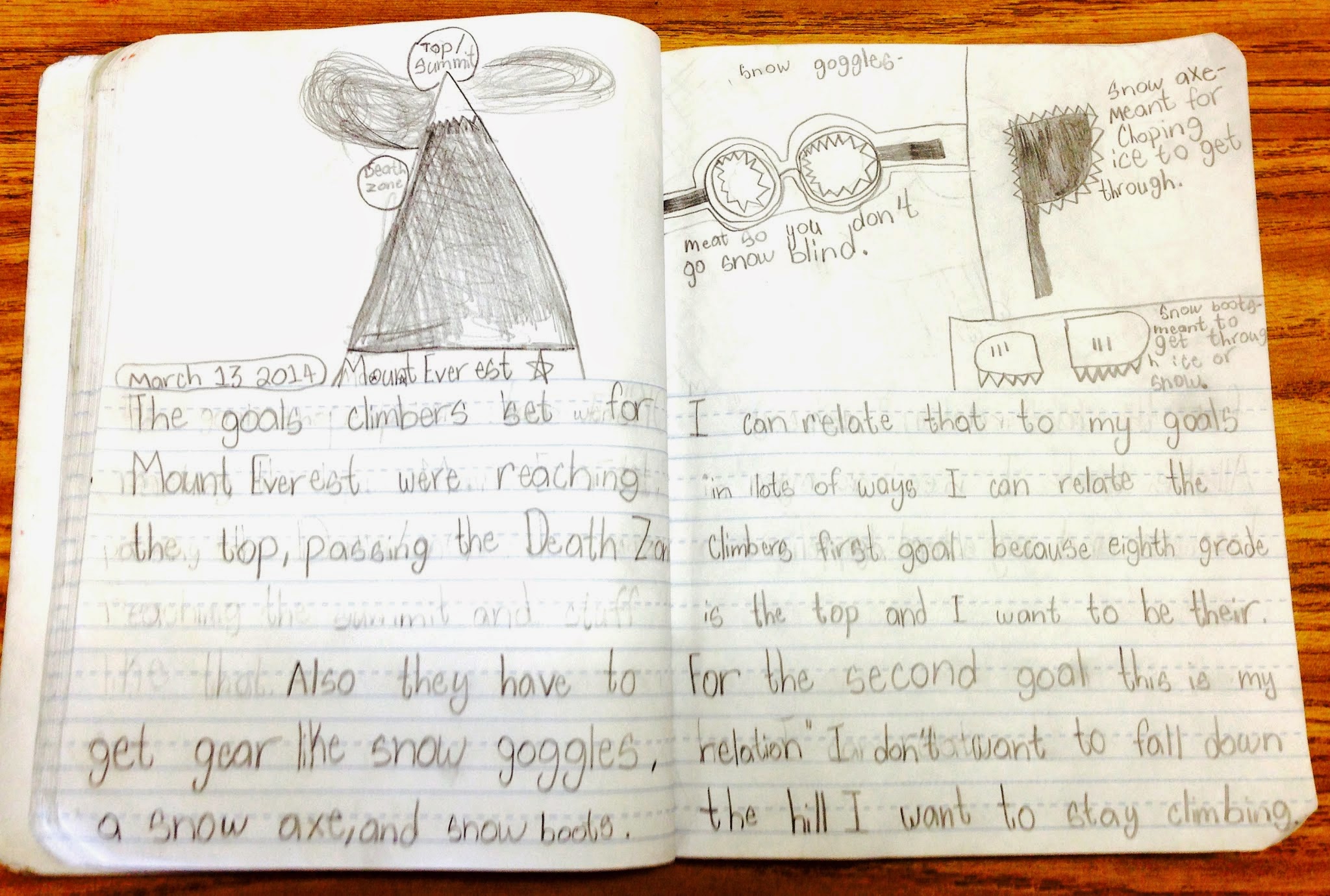
2nd grader's explanation about goals related to read aloud book and then connected to his life.


2nd grader's explanation about a text.

Primary grade student's imitation of a Rothko painting.

1st grader's journal entry.

Kindergarten child's drawing and fact based on the read aloud book, Weird Friends.

Comparative chart made in kindergarten focusing on animal partnerships.

Kindergarten child's letter sorting.

Flip book illustrated by kindergarten child.

2nd grader's 4 square facts.

Interactive writing from 1st graders.

2nd grader sketching what he sees as he listens to the opening of a text.

1st graders determining their knowledge of ket vocabulary.
Art Conversation and poem created by 1st graders.

1st grader drawing before writing.  He is writing a before and after text.

1st grader composing in journal.

Kindergarten child's science observation.


1st grader checking a favorite book (North) to help him with his own composing.