Showing posts with label environment. Show all posts

Sunday, April 22, 2018

Celebrate Earth Day with these 20 Recent Children's Books


from Drawn from Nature 


from  Drawn from Nature
Ahpornsiri, Helen.  (2018). Drawn from Nature. Somerville, MA: Candlewick Press.
Informational and visual arts text organized by season. Accurate and aesthetically stunning.
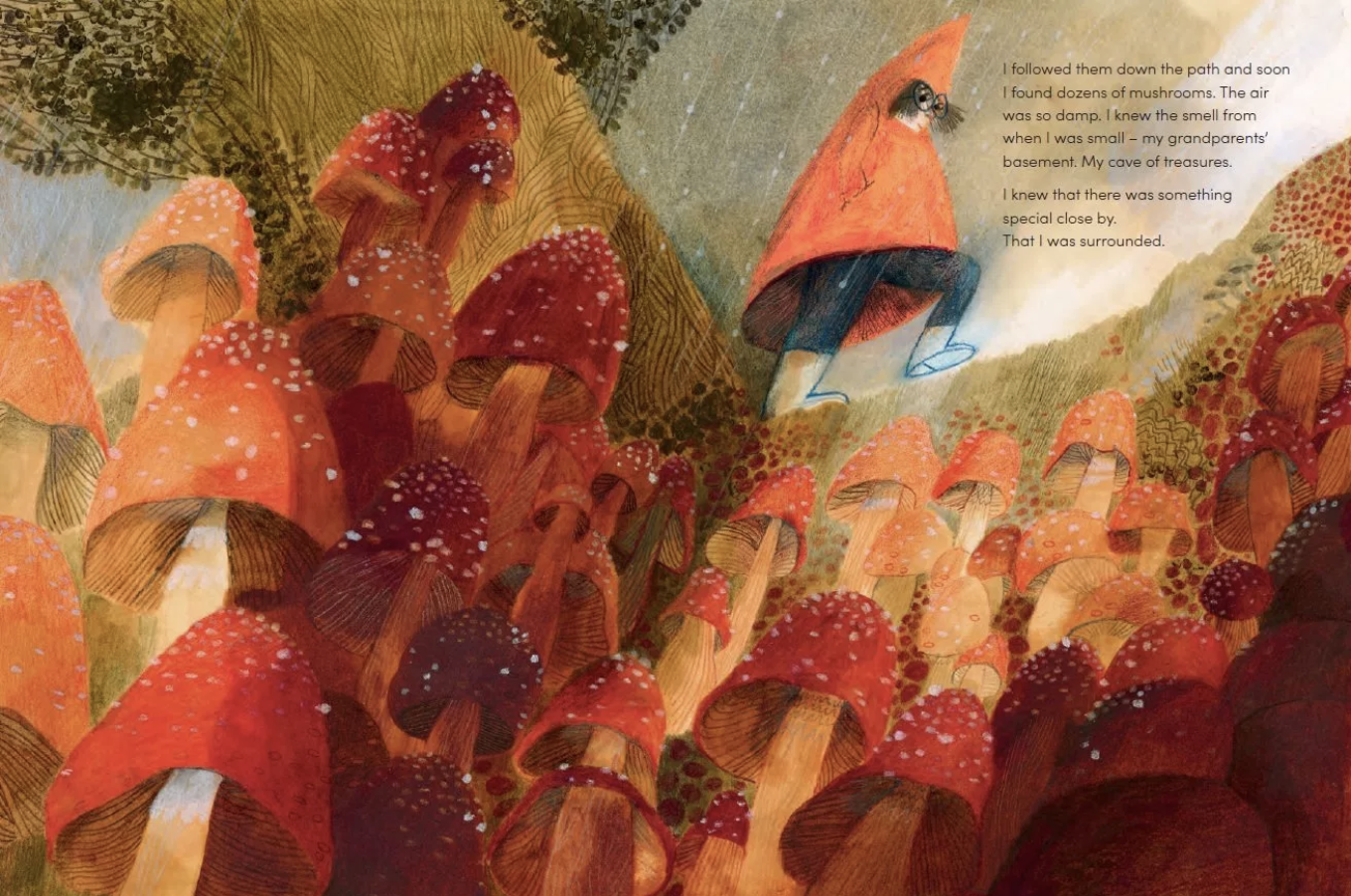


from On a Magical Do-Nothing Day

Alemagna, Beatrice. (2017). On a Magical Do-Nothing Day. New York: HarperCollins.
A child on holiday from the city in an isolated cabin with her mom accidentally drops her electronic game into a pond. She is desolate until she begins to closely look around. When she does, the boring day without electronics becomes one of seeing nature and wonder. Such a good book. Starred reviews from Kirkus Reviews, Publishers Weekly and Booklist.


Cheng, Andrea. (2018). Bees in the City. Illustrated by Sarah McMenemy. Thomaston, ME: Tilbury House Publishers.
Fictional story about a boy (Lionel) who lives in an apartment in Paris. His Aunt Celene resides at a farm outside the city and there she raises bees. when bees begin dying, Lionel wants to help, but he lives in the city. What can he do? A rooftop garden and window boxes are his solution. Illustrations complement and extend the story. Rich backmatter about urban beekeeping and rooftop gardening. (Level P) 
Green Earth Award Book 2018 Short List


Davies, Nicola. (2017). Many: The Diversity of Life on Earth. Illustrated by Emily Sutton. Somerville, MA: Candlewick Press.
What might happen if instead of having millions of species we had just one? This picture book answers that question.

from Pedal Power

Drummond, Allan. (2017). Pedal Power: How One Community Became the Bicycle Capital of the World. New York: Farrar Straus Giroux
As he did in Energy Island for Danish island of Samsø, Drummond this time tells about the use of bicycles in the city of Amsterdam where people protested unsafe streets for bike riding and in doing so helped to create a safe biking well beyond the borders of that city.
Green Earth Award Book 2018 Short List


Flynn, Sarah Wassner. (2017). This Book Stinks! Gross Garbage, Rotten Rubbish, and the Science of Trash. Washington, DC: National Geographic Kids. 128 pp. Grade 4+
Everything a kid might want to know about waste!
Green Earth Honor Book 2018 for Children's Nonfiction 


Galat, Joan Marie. (2018). Branching Out: How Trees are Part of Our World. Illustrated by Wendy Ding. Toronto, ON: OwlKids.
In this 64 page informational text, 11 different trees are explored. detailed. Great for grade 5 and higher.


Garland, Michael. (2018). A Season of Flowers. Thomaston, ME: Tilbury House Publishers.
I have long loved Michael Garland's paintings.  This books follows the order that plants arrive from early spring to winter. The illustrations are rich. (Level L)


Gerstein, Mordicai. (2017). The Boy and The Whale. New York: Roaring Brook Press.
Fictional story about a boy and his father who discover a whale tangled in their fishing net. Competing concerns  (livelihood and whale's life) creates tension in this picture book. Paintings are outstanding.
Green Earth Award Book 2018 Short List


Gladstone, James. (2017). When Planet Earth Was New. Illustrated by Katherine Diemert. Toronto, ON: OwlKids.
A visual and informational treat perfect for primary learners about how earth formed. Dioemert's paintings are lush and detailed. (540L)


Martin, Jacqueline Briggs. (2017). Creekfinding: A True Story. Illustrated by Claudia McGehee. (University of Minnesota Press)
Briggs tells the the story of the restoration of an ecosystem in northeast Iowa. Detailed text and illustrations.
Green Earth Award Book 2018 for Picture Book.


from The Bee Book

Milner, Charlotte. (2018). The Bee Book. New York: Penguin/Random House.
Informational text about bees. Attractive.


Newman, Patricia. (2017). Sea Otter Heroes: The Predators that Saves an Ecosystem. Millbrook Press. 56 pp.
Newman reports on a California inlet where seagrass grew in abundance even though there was algae. Why? Turns out the answer was sea otters. Based on Brent Hughes's research,. 56 pp.
Green Earth Award Book 2018 for Children's Nonfiction

from My Busy Green Garden

Pierce, Terry. (2017). My Busy Green Garden. Illustrated by Carol Schwartz. Thomaston, ME: Tilbury House Publishers.
What makes a garden bloom? This lyrical tribute to bees and birds and other living things that make a garden a garden.  Illustrations are detailed as one would expect from Carol Schwartz. Ever since I first saw Thinking about Ants. I have been a fan of Schwartz's art.


Root, Phyllis. (2017). Anywhere Farm. Illustrated by G. Brian Karas. Somerville, MA: Candlewick Press.
For the youngest students a picture book to inspire the growth of plants. The book opens, "You can grow your own farm anywhere."
Green Earth Award Book 2018 Short List


Schmalzer, Sigrid. (2018). Moth and Wasp, Soil and Ocean: Remembering Chinese Scientist Pu Zhelong's Work for Sustainable Farming. Illustrated by Melanie Linden Chan. Thomaston, ME: Tilbury House Publishers.
Fictionalized account of Pu Zhelong who taught peasants in Mao's China to grow food without reliance on pesticides during the 1960s and 1970s. He taught the peasants to use parasitic wasps to combat the moths that were destroying crops. An important person for children to know. The illustrations are rich and created through watercolor.

from Out of School

Slade, Suzanne. (2017). Out of School and Into Nature: The Anna Comstock Story. Illustrated by Jessica Lanan. MI: Sleeping Bear Press.
A picture book biography about nature pioneer Anna Comstock (1854-1930) who defied gender norms and studied science at Cornell.
Green Earth Honor Book 2018 for Picture Book.
2018 NSTA Outstanding Science Trade Book

from Look at Weather
from Look at Weather

Teckentruop, Britta. (2018). Look at the Weather. Toronto, ON: OwlKids.
This 150 page text is divided into four sections: Sun, Rain, Ice and Snow, and Extreme Weather. Each section is illustrated with paintings by Tchentroup. Originally printed in Germany, this is a lovely and meditative book for primary and intermediate learners. (800L) My favorite of this group.

from The Triumphant Tale of the House Sparrow.

Thornhill, Jan. (2018). The Triumphant Tale of the House Sparrow. Toronto, ON: Groundwood Books.
I can't say enough good about this narrative informational book about the house sparrow. Deeply interesting, amazing artwork, and accurate. The history of the common house sparrow will hold all learners' interest.


Tuttle, Sarah Grace. (2018). Hidden City: Poems of Urban WildlifeIllustrated by Amy Schimler-Safford.  Eerdmans Books for Young Readers.
18 free verse poems about about plants and insects. Schimler-Safford's collages are outstanding.


Sunday, November 2, 2014

Talking Bird Talk

Raven Talk (M.A. Reilly, 2010)
I.

Mr. and Mrs. Rivet were the first ones.

They lived up the block and were childless at a time when most other families in our neighborhood had more children spilling out of their homes than inside space might permit. They were old, too--Mrs. Rivet's hands were wrinkled, blue veined and Mr. Rivet had thinning grey hair.  For reasons I still don't quite understand, the Rivets invited Jo-Ellen--their next door neighbor and my friend and me--to accompany them on a Saturday to watch birds.  A full day outing, Mrs. Rivet told us. I did not know what it even meant to watch birds, but my mom told me it would be fun and sent along some sandwiches as she ushered me out the door on a very early morning in late September.  I was almost 10. Jo, 12.

Jo and I sat in the back of the Rivet's blue late 60s Chrysler 300 white top convertible.  I knew cars. My brother built model cars. More than 300 models were displayed on shelves he and my Da had built beneath the basement stairs in a small, well lit alcove.  It was his private area. Do not trespass. Some afternoons I would steal in there when he was outside playing and lift the red 1957 Chevrolet Bel Air from its spot on the shelf, fly it though the air, and imagine what it might be like to take off in it--to fly like a rocket.

So I knew all about cars and knew the Rivet's convertible was an unusual one to have in our neighborhood--a neighborhood over populated with Ford Country Squires and Plymouth Suburbans. Every now and then some rebellious teen would show up in a Mustang, but sadly that was not very often. We were the land of station wagons, not sleek, white leather-interior convertibles. But the Rivets were different.  And on that Saturday morning, as I made my way to the Rivet's front stoop I secretly hoped Mr. Rivet would put that top down.

II.

We set out north towards Bear Mountain, an hour plus drive Mr. Rivet warned. Jo and I sat seat beltless in the back, while Mr. and Mrs. Rivet each sat comfortable in their own front bucket seats--nary a long bench seat to be found. The AM radio was turned to WNEW and to my sorrow the top remained firmly up. The trip was long--longer than an hour at least by the standards of a young girl, suddenly too shy and car sleepy. I knew I had to be on my best behavior recalling my mom giving me her list of dos and don'ts.  No squabbling with Jo, don't say yeah, say yes and remember to say, thank you.

I barely uttered a handful of words, but I did learn that some observe, see.

III.

In those days there was no nature.  There was just the outdoors--something every kid on my block visited each and every day, rain or not, unchaperoned, with nary a play date to be found. Go outside, was the beckon call of every mom on the street. I climbed trees, ran bases we had chalked on the street, played dodge ball, jumped hard into puddles, had relay races, made forts out of cardboard boxes, and raced about. The day spent with the Rivets though began to alter how I saw, experienced being outside.

When we got to Bear Mountain we had to hike up hill a bit until we came to a clearing and set up camp, as Mr. Rivet called it in what looked like a large lawn. Mrs. Rivet would tell Jo and me that it was a meadow. The grass and bits of dried flowers that were there had grown wild. It was still quite early in the day and apparently from what Mrs. Rivet said, this was later than they normally arrived. We were there to watch birds, have a picnic, and later we would see a beaver dam. What I recall most was that we spent the day being very, very quiet, speaking in whisper voices, staying still, and now and then looking at birds through binoculars ever so careful not to smudge the lens. Apparently running children and bird watching were not ideal partners. And so, bird watching didn't make a lot of sense to me. I wanted to climb trees, not look into them.

But what did make sense was the reverence the Rivets had for watching, noticing their birds. They loved birds and had been watching them for decades Mrs. Rivet told us--more years than either Jo or I had lived. The Rivets talked in hushed, yet excited voices about spying Eastern Bluebirds and arguing whether they had seen an Old World wabbler or just a starling and now and then writing stuff in notebooks each had.  They grew excited by the call of distant birds in tree tops. They squabbled back and forth as to which call belonged to what bird and they oddly sounded much like the bird calls they were attempting to name.

They talked bird and it an unguarded moment I thought I might like to talk bird too.

As we wandered late day down near a lake to see the beaver dam, Mr. Rivet cut a few twigs from a tree, handed us each a twig and told us to chew it.

"Eat it," Jo asked?

"Chew it, like gum."

There, I got my first taste of wonder.

"Tastes like root beer, right?" asked Mr. Rivet.  We grinned at him, the softened sassafras bark stuck to our teeth as we nodded our heads.

IV.

In a day filled mostly with missing the birds the Rivets talked about, my first time seeing a blue heron standing motionless at the edge of a lake stopped me.  There it stood, so still I could see it was just about my height.

A Great Blue Heron, Mr. Rivet whispered to Jo and me.  A special day when you spy a heron.

I had never seen a heron before and it looked so awkward and yet graceful--curves atop two white stalk-like legs. We watched as its head moved slightly, perhaps sensing our nearness, and then it stepped backwards and with a suddenness that surprised even Jo, lifted cleanly into the air, its large wings flapping as it flew a foot, no more, over the water and then climbed out of sight beyond the trees.

V.

Cardinal (M.A. Reilly, 2010)
Later after I had been home for awhile, after supper and my bath were done, my mom asked me how the day was.

Did you have fun?

I had no words, I realized later--much later, to express what started that day so I told her simply, "Yeah, a good day. The Rivets are cool."

Learning deeply is rarely about the moment. It's as Edward Said wrote that we recognize a beginning well after it has occurred.


Tuesday, May 29, 2012

Situating Instructional Rounds Inside a Lived Context

Note: This is work that I have been doing for the last year with a school district.  We have examined and participated in Instructional Rounds.

Thanks to @irasocol  and @monk51295 for video recommendations/creation:)


I. The Environment Matters


Begin in small, yet important ways by asking: Do children regulate their own physical selves at school?  Are they allowed to determine when and where they sit, stand, lean, and so on...


 What if the environment was not limited to the physical school?


II. We might collapse the entire year into a statement about slowing down and noticing.