Showing posts with label birds. Show all posts

Wednesday, February 14, 2018

Love in the Morning

To warm you today.  A Valentine's Day poem.


Prayer (M.A. FReilly, 2017)

Love in the Morning

Morning’s a new bird
stirring against me
out of a quiet nest,
coming to flight—

quick-changing,
slow-nodding,
breath-filling body,

life-holding,
waiting,
clean as clear water,

warmth-given,
fire-driven
kindling companion,

mystery and mountain,
dark-rooted,
earth-anchored.

Tuesday, October 3, 2017

#SOL17: Birds Sung to Me


Night, I (M.A. Reilly, 2008)

"On starless nights, one can feel like a loose array of limbs and purpose, and seem smaller, limited to what one can touch."   ― from Diane Ackerman's  "Dawn Light: Dancing with Cranes and Other Ways to Start the Day"

I. 

It was time to let go of our house where light fell through familiar windows and each creak of the staircase I knew by heart. It was time to pack away all that could not be carried further. Such cargo weighed too much and I carried it too far. Some truths took greater time to surface. Sea deep. They resided where sunlight did not penetrate. Oceanographers called this the bathypekagic zone. Poets knew it as the midnight zone. I, like every other widow, simply called it the blue-black absence of love. 

Across the last two years, grief remained a spiraling affair.  At times a darkness rose up to reclaim and then release me. Claimed and released over and over and somehow each time the sudden pain of it stunned me. The center I once knew by heart was blown wide open after Rob died making it hard to find my balance in the dark.

II.

And yet, I stood 
          at the open window tonight
                               where the fall of late light
                               felt familiar,
                                      memories remained bittersweet,
                                       and the sharp desire to be still
                                       pressed against a need to move.  
                                       
Grief was a tension
that rose between then and next
leaving me only a slim truth:
Rob was dead and I was not.

Outside the window
           a pair of cardinals settled
                      on the limb of a bare tree
                 just beyond my reach
                 and sung to me.

As I listened even the darkness felt warm.


Saturday, January 7, 2017

#SOL17: It Is In Your Hands

What is Written (M.A. Reilly, Tuscany, 2009)


We die. That may be the meaning of life. But we do language. That may be the measure of our lives.                     
                                            Toni Morrison, 1993  


I.

It is never quite as simple as missing him.

It isn't until the late 15th century that regret works its way into the definition. Before that missing was more about failing to get what you wanted. 

And then regret showed up.


II.

Missing is too anemic a posture. Too sterile. Too boxed-up-pretty. 
Too wrong. 

I don't simply miss Rob. I wish it could be that simple. That kind.


III.

Sometimes when my language shows its limits, it also brings to light a deeper syntax and for a moment I notice how interchangeable wishing and feeling are. How they obfuscate as they reveal. 

Most everything is moveable and mute.


IV. 

Grief is more tacit than not. More implicit than voiced. Even as scores of writers attempt to codify grief with their memoirs and remembrances or fill pages with the strict talk of psychological stages and loose advice--the desperate pain that has broken and re-formed my body's too-slim bones, still resists the easy metaphors about time and roller coasters, waves and shore.


V. 

Once upon a time 
all the king's horses 
and all the king's men 
and even Humpty himself 
knew that missing was never a consideration.


VI.

Yesterday I was rereading Toni Morrison's Nobel lecture. It's been at least ten years, if not longer, since I last took a look. This time it was the repetition of what rests in hands and the space the narratives open that caught my heart. It was the stories that get made between the old woman and the group of young people as they circle each other, equally blind and seeing, that moved me, that forged a path through these multiple narratives to arrive at the end when the old woman says to the young people (and us)
Finally...I trust  you now. I trust you with the bird that is not in your hands because you have truly caught it. Look. How lovely it is, this thing we have done - together." 

VII.

In the last hour of Rob's life I clasped his hand between both of mine and held. I held and murmured words, bits of phrases that sounded like, Let go. Find peace. We'll be okay. Let go

A litany of half poems, half prayers. I was anchoring him, not to this earth, not to our time together, but to something more enduring than our hands, our bodies, our selves. 

I was wrapping him and me in this story I am telling so that when he crossed from here to there he would do so feeling the touch of his wife, his lover, his best friend. Feeling until what was earthly gave way to what would be next.


VIII.

What was within our hands then was unnamable in that late afternoon light. I remember those last minutes. The rough sound of his breathing. The way his jaw unlocked, loose like the lift of a bird finding new flight. 

A wild bird lifting.


IX. 

I don't remember lifting my phone and making a photograph of my dying husband--one I found this week. One I must have taken sometime during that last hour when the rose colored towel was beneath his head that rested on the pillow I now sleep with each night.


X.

Do I miss him? Could love ever be so ephemeral? So fleeting?


XI.

Imagine a story you know by heart. One you love more than the words you use to tell it. It is a story that has transcended the language in which you think. It is a story that lacks meaning.

Now, imagine what it costs to willingly open your hands and release that story, that man, your heart.


XII.

That story was never mine alone and it is this connection that sources beauty and pain as it touches me here, now.


XIII.

What is not in my hand now is what I most trust.


XIV.

I didn't, perhaps couldn't, know what we caught as we lived and languaged each day. What we made.


XV.

I didn't know what I sealed between his and mine hands as he crossed from here to there. 

I didn't know it would be this simple act of love that would sustain me a year later and would allow me to say here and now--that this thing we made together was truly lovely.


Monday, December 29, 2014

Seeing Birds

The Bridal Chamber (M.A. Reilly, Philadelphia, PA, 2011)

As some of you may have noticed, I admire birds.  During the last few years, I've repeatedly posted about watching birds, poetry about birds, memoir, and books about birds.


Posts

  1. Dust of Snow (12.26.14)
  2. Littlefoot, 19 [This is the bird hour] (12.2.14)
  3. To Not Know is to Wander (11.29.14)
  4. Talking Bird Talk (11.2.14)
  5. Birds Lifting (10.12.14)
  6. Bluebird (7.21.14)
  7. Confessions: My Father, Hummingbirds, and Franz Fanon (7.19.14)
  8. For the Birds, Part 2: Books for 5-8 (5.30.14)
  9. For the Birds: 50 Children's Books for K-4 (5.29.14)
  10. The Crow and the Pitcher: A Fable for These Times (12.17.12)
  11. Crows Talking, Tacit Knowledge (7.3.12)
  12. Playing with Mixbook: Birds (6.24.12)
  13. Barefoot Knowledge and a Few Birds (5.5.12)
  14. Six Thoughts About Curriculum (3.19.11)
  15. 13 Ways of Looking without a Blackbird in Sight (8.22.10)
  16. Woman with Crow (8.14.10)


I was thinking about the many images I've made through photography, mixed media, and collage and decided to assemble these images into a slideshow. I hope you enjoy this celebration of birds.
Photographic images were made in: England, Ireland, Italy, USA (Florida, Iowa, Maryland, New Jersey, New York, North Carolina, Pennsylvania, South Dakota, Tennessee, Virginia) and Wales


Saturday, November 29, 2014

To Not Know is To Wander

Birds Flying (M.A. Reilly, November 2014)

I.

Hear that? The call of birds at the end of fall.  Their sounds filling spaces with a cacophony of noise that I can admire and yet, not understand.  For I  know almost nothing about birds and this keeps me sharp, unsettled, cataloging--even though my attempts at each of these is poor.

To not know is to wander, searching for a foothold in the world, a boat to take you upstream.

II.

Before the late fall storm slips in, we feel the air pressure drop and the crows and Jays swoop from oak tree to maple filling the wood lot beyond the side window with an increasing insistence--like a Morse code signaling urgency. Sparrows scour below the feeders in my neighbor's yard eating seed, making that odd chirping sound that grows louder until crows strut close and the sparrows lift as one.

The world before the storm feels busy and the birds pull me from the list of things I will not get done today--knowing that what is left undone is its own catalog, worthy of notice.

The Jays are perched on branches and wires, their feathers fluffed up, keeping them warm. I watch the black crows dart back and forth between limbs of trees, noting that where they have been marks an absence in the overcast sky. I try to watch until the sky grays completely obscuring birds and horizon but I always look away too soon. I know little about patience.  And ever so slowly snow begins to fall covering the sounds of birds huddling now on branches or crowding below bird feeders where seed has spilled.

The world quiets. And then there's only snow--each of us accepted into its stillness.

III.

Early this morning, well after the snowfall had ended, the call of young birds punctuated the silence of the kitchen. Upstairs my husband slept on and in the far rooms at the other end of the house my son and his two friends slept too. I love these settled moments when the the trickle of water though baseboards and coffee perking are the only interior sounds I notice.

Hungry? I wondered and closed my laptop leaving it perched on the kitchen table.  I crossed the floor and opened the draw that holds bread taking out a few pieces and crumbling each. Opening the side door, I noticed that no one had shoveled the steps and so I needed to throw the crumbs a distance greater than I had wished. I watched for a while.  The crumbs lying on top of the snow and all the while I was remembering how my mom forty years earlier would send me outside to do the same.

Then it was a drudgery.  How could I know what she was preparing me for with such a simple and unassuming act as feeding the birds?

In those days our backyard was the size of a thumb and we concocted more ways to feed winter birds and did it daily. Pie plates filled with bacon grease and crushed peanuts and seeds. Homemade suet balls hanging from a fence made from seeds and fat and cut up apples. Days old bread crumbled and tossed out the back door. We were nothing less than inventive in that small house just a few miles from Manhattan.

Each time I feed the birds now I think of the children living in the neighborhood and how the bears come in early fall too to eat whatever has been thrown outside for the birds. But at November's end I think the bears must be slumbering. At least this is what I tell myself as I toss the last handful of bread and notice at how it disrupts the stillness of snow.

Upstairs I can hear the sound of my husband rising as I resettle at the table, opening the laptop.  In some small ways what we repeat most often is what we first failed to understand.


Sunday, November 2, 2014

Talking Bird Talk

Raven Talk (M.A. Reilly, 2010)
I.

Mr. and Mrs. Rivet were the first ones.

They lived up the block and were childless at a time when most other families in our neighborhood had more children spilling out of their homes than inside space might permit. They were old, too--Mrs. Rivet's hands were wrinkled, blue veined and Mr. Rivet had thinning grey hair.  For reasons I still don't quite understand, the Rivets invited Jo-Ellen--their next door neighbor and my friend and me--to accompany them on a Saturday to watch birds.  A full day outing, Mrs. Rivet told us. I did not know what it even meant to watch birds, but my mom told me it would be fun and sent along some sandwiches as she ushered me out the door on a very early morning in late September.  I was almost 10. Jo, 12.

Jo and I sat in the back of the Rivet's blue late 60s Chrysler 300 white top convertible.  I knew cars. My brother built model cars. More than 300 models were displayed on shelves he and my Da had built beneath the basement stairs in a small, well lit alcove.  It was his private area. Do not trespass. Some afternoons I would steal in there when he was outside playing and lift the red 1957 Chevrolet Bel Air from its spot on the shelf, fly it though the air, and imagine what it might be like to take off in it--to fly like a rocket.

So I knew all about cars and knew the Rivet's convertible was an unusual one to have in our neighborhood--a neighborhood over populated with Ford Country Squires and Plymouth Suburbans. Every now and then some rebellious teen would show up in a Mustang, but sadly that was not very often. We were the land of station wagons, not sleek, white leather-interior convertibles. But the Rivets were different.  And on that Saturday morning, as I made my way to the Rivet's front stoop I secretly hoped Mr. Rivet would put that top down.

II.

We set out north towards Bear Mountain, an hour plus drive Mr. Rivet warned. Jo and I sat seat beltless in the back, while Mr. and Mrs. Rivet each sat comfortable in their own front bucket seats--nary a long bench seat to be found. The AM radio was turned to WNEW and to my sorrow the top remained firmly up. The trip was long--longer than an hour at least by the standards of a young girl, suddenly too shy and car sleepy. I knew I had to be on my best behavior recalling my mom giving me her list of dos and don'ts.  No squabbling with Jo, don't say yeah, say yes and remember to say, thank you.

I barely uttered a handful of words, but I did learn that some observe, see.

III.

In those days there was no nature.  There was just the outdoors--something every kid on my block visited each and every day, rain or not, unchaperoned, with nary a play date to be found. Go outside, was the beckon call of every mom on the street. I climbed trees, ran bases we had chalked on the street, played dodge ball, jumped hard into puddles, had relay races, made forts out of cardboard boxes, and raced about. The day spent with the Rivets though began to alter how I saw, experienced being outside.

When we got to Bear Mountain we had to hike up hill a bit until we came to a clearing and set up camp, as Mr. Rivet called it in what looked like a large lawn. Mrs. Rivet would tell Jo and me that it was a meadow. The grass and bits of dried flowers that were there had grown wild. It was still quite early in the day and apparently from what Mrs. Rivet said, this was later than they normally arrived. We were there to watch birds, have a picnic, and later we would see a beaver dam. What I recall most was that we spent the day being very, very quiet, speaking in whisper voices, staying still, and now and then looking at birds through binoculars ever so careful not to smudge the lens. Apparently running children and bird watching were not ideal partners. And so, bird watching didn't make a lot of sense to me. I wanted to climb trees, not look into them.

But what did make sense was the reverence the Rivets had for watching, noticing their birds. They loved birds and had been watching them for decades Mrs. Rivet told us--more years than either Jo or I had lived. The Rivets talked in hushed, yet excited voices about spying Eastern Bluebirds and arguing whether they had seen an Old World wabbler or just a starling and now and then writing stuff in notebooks each had.  They grew excited by the call of distant birds in tree tops. They squabbled back and forth as to which call belonged to what bird and they oddly sounded much like the bird calls they were attempting to name.

They talked bird and it an unguarded moment I thought I might like to talk bird too.

As we wandered late day down near a lake to see the beaver dam, Mr. Rivet cut a few twigs from a tree, handed us each a twig and told us to chew it.

"Eat it," Jo asked?

"Chew it, like gum."

There, I got my first taste of wonder.

"Tastes like root beer, right?" asked Mr. Rivet.  We grinned at him, the softened sassafras bark stuck to our teeth as we nodded our heads.

IV.

In a day filled mostly with missing the birds the Rivets talked about, my first time seeing a blue heron standing motionless at the edge of a lake stopped me.  There it stood, so still I could see it was just about my height.

A Great Blue Heron, Mr. Rivet whispered to Jo and me.  A special day when you spy a heron.

I had never seen a heron before and it looked so awkward and yet graceful--curves atop two white stalk-like legs. We watched as its head moved slightly, perhaps sensing our nearness, and then it stepped backwards and with a suddenness that surprised even Jo, lifted cleanly into the air, its large wings flapping as it flew a foot, no more, over the water and then climbed out of sight beyond the trees.

V.

Cardinal (M.A. Reilly, 2010)
Later after I had been home for awhile, after supper and my bath were done, my mom asked me how the day was.

Did you have fun?

I had no words, I realized later--much later, to express what started that day so I told her simply, "Yeah, a good day. The Rivets are cool."

Learning deeply is rarely about the moment. It's as Edward Said wrote that we recognize a beginning well after it has occurred.


Friday, May 30, 2014

For the Birds, Part 2 - Books for Grades 5-8

f
from Peter Sis'sThe Conference of the Birds.
Traditional and Contemporary Stories

Lumbard, Alexis York. (2012). The Conference of the Birds. Illustrated by Demi. Bloomington, IN: Wisdom Tales Press.
Martin, Rafe. (2007). Birdwing. New York: Scholastic.
Sis, Peter. (2011). The Conference of the Birds. New York: Penguin.

from  Moonbird: A Year on the Wind with the Great Survivor B95. 
Informational & Literary Nonfiction

Arnonsky, Jim. (2011). Thunder Birds: Nature’s Flying Predators. New York: Sterling.
Fleischman, Paul. (2013). I Am a Phoenix: Poems for Two Voices. Illustrated by Ken Nutt. New York: HarperCollins.
Hoose, Philip. (2012). Moonbird: A Year on the Wind with the Great Survivor B95. New York: Farrar, Straus and Giroux.
Hoose, Philip. (2004). The Race to Save Lord God Bird. New York: Farrar, Straus and Giroux.
from  Looking for Seabirds: Journal from an Alaskan Voyage
Webb, Sophie. (2011). Far from Shore: Chronicles of an Open Ocean Voyage. New York: HMH Books for Young Readers.
Webb, Sophie. (2004). Looking for Seabirds: Journal from an Alaskan Voyage. New York: HMH Books for Young Readers.

Webb, Sophie. (2000). My Season With Penguins: An Antarctic Journal. New York: HMH Books for Young Readers.

Thursday, May 29, 2014

For the Birds: 50 Children's Books for K-4

f

Biography

Davies, Jacqueline. (2004). The Boy Who Drew Birds: The Story of John James Audubon. Illustrated by Melissa Sweet. . New York: HMH Books for Young Readers.
Thomas, Peggy. (2011). For the Birds: The Life of Roger Tory Peterson.  Illustrated by Laura Jacques. Honesdale, PA: Calkins Creek.

Traditional and Contemporary Stories
Bryan, Ashley. (2011). Beautiful Blackbird. New York: Atheneum Books for Young Readers.


de Mariscal, Blanca Lopez. (2001).  The Harvest Birds/ Los pajaros de la cosecha. Illustrated by Enrique Flores. New York: Lee & Low Books.
DePalma Mary Nwell. (2014).Two Little Birds. Grand Rapids, MI: Eerdmans Books for Young Readers.
dePaola, Tomie. (2005). Days of the Blackbird. New York: Puffin.

from  The Lion and the Bird.

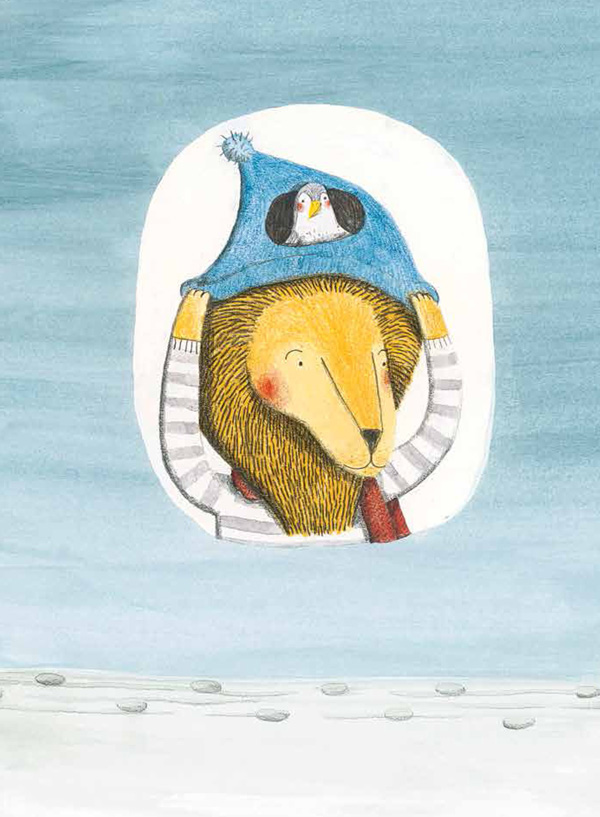
Dubuc, Marianne. (2014). The Lion and the Bird. Brooklyn NY: Enchanted Lion Books.
Dumont, Jean-Francois. (2014). The Geese March in Step. Grand Rapids, MI: Eerdmans Books for Young Readers.
Graham, Bob. (2008). How to Heal a Broken Wing. Somerville, MA: Candlewick.
Hayes, Joe. (2002). Pajaro Verde / The Green Bird. Illustrated by Antonio Castro L. El Paso, TX: Cinco Puntos Press.
Huxley, Aldous. (2011). The Crows of Pearblossom. Illustrated by Sophie Blackall. New York: Harry N. Abrams.
Judge, Lita. ( 2014). Flight School. New York: Atheneum.
Lionni, Leo. (2000). Tico and the Golden Wings. New York: Dragonfly Books.
Mikkigak, Qaunaq and Joanne Schwartz. (2013). Grandmother Ptarmigan. Illustrated by Illustrated by Qin Leng. Iqaluit, Nunavut: Inhabit Media.
Qitsualik-Tinsley, Rachel and Sean Qitsualik-Tinsley (Inuit). (2014). The Raven and the Loon. Illustrated by Kim Smith. Iqaluit, Nunavut: Inhabit Media.


Rumi. (2014). Two Parrots. Illustrated by Rashin. New York: NorthSouth
Schwartz, Ellen. Abby's Birds. Illustrated by Sima Elizabeth Shefrin. Vancouver, BC: Tradewind Books.
Staake, Bob. (2013). Bluebird. New York: Schwartz & Wade
Steed, Philip. (2012). A Home for Bird. New York: Roaring Brook Press.
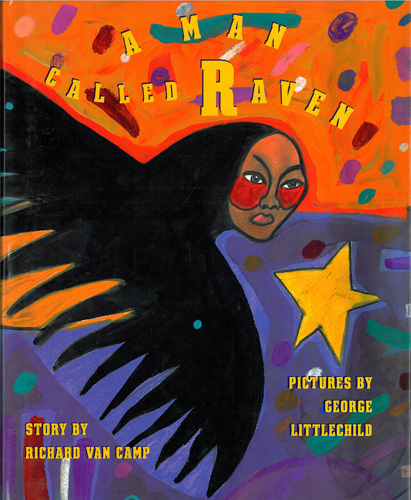
Van Camp, Richard (Dogrib). (1997).  A Man Called Raven. Illustrated by George Littlechild. New York: Lee & Low Books.


Williams, Maria. (Tlingit) (2001). How Raven Stole the Sun. Illustrated by Felix Vigil. New York: Abbeville Kids.
from  Little Bird.
Zullo, Germano. (2012). Little Bird. Brooklyn NY: Enchanted Lion Books.

Informational & Literary Nonfiction

Bash, Barbara. ( 1992). Urban Roosts: Where Birds Nest in the City. New York: Little, Brown Books for Young Readers.
Bouler, Olivia. (2011). Olivia’s Birds: Saving the Gulf. New York: Sterling.
Cate, Annette LeBlanc. (2013). Look Up!: Bird-Watching in Your Own Backyard. Somerville, MA: Candlewick.
Collard, Sneed B. III. (2008). Wings! Watertown, MA: Charlesbridge.
Collard, Sneed B. III. (2002). Beaks!  Watertown, MA: Charlesbridge.


Dunning, Joan. (2011). Seabird of the Forest. Honesdale, PA: Boyds Mills Press.
Dunphy, Madeleine. (2008). The Peregrine's Journey: A Story of Migration. Illustrated by Kristen Kest. Berkeley, CA: Web of Life.
Franco, Betsy. (2007). Birdsongs.  Illustrated by Steve Jenkins. New York: Margaret K. McElderry Books.
Garelick, May. (1995). What Makes a Bird a Bird? Illustrated by Trish Hill.  New York: Mondo Press.
Gray, Rita. (2014).  Have You Heard the Nesting Bird? Illustrated by Kenard Pak. New York: HMH Books for Young Readers.
Henkes, Kevin. (2009). Birds. Illustrated by Laura Dronzek. New York: Greenwillow.
Hurley, Jorey. (2014.) Nest. New York: Simon & Schuster/Paula Wiseman Books.
Judge, Lita. (2012). Bird Talk: What Birds Are Saying and Why. New York: Flashpoint.

from Puffin Patrol.
Lewin, Ted & Betsy Lewin. Puffin Patrol. New York: Lee & Low Books.
Kelly, Irene. (2009). Even an Ostrich Needs a Nest: Where Birds Begin. New York: Holiday House.
Schaefer, Lola M. (2014).  Arrowhawk. Illustrated by Gabi Swiatkowska. New York: Squarefish.
Schulman, Janet. (2008). Pale Male: Citizen Hawk of New York City. Illustrated by Meilo So. New York: Knopf.
Stewart, Melissa. (2014). Feathers: Not Just for Flying. Illustrated by Sarah S. Brannen. Watertown, MA: Charlesbridge.
Stewart, Melissa. (2009). A Place for Birds. Illustrated by Higgins Bond. Atlanta, GA: Peachtree Publishers.

Susan Roth's collages from Parrots Over Puerto Rico.
Trumbore, Cindy. (2013). Parrots Over Puerto Rico. Illustrated by Susan L. Roth. New York: Lee & Low Books.
Ward, Jennifer. (2014). Mama Built a Little Nest. Illustrated by Steve Jenkins. New York: Beach Lane Books.
Willis, Nancy Carol. (2006). Red Knot: A Shorebird's Incredible Journey. Middletown, DE: Birdsong Books.

Poetry

Florian, Doug. (2000). on the wing. Orlando, FL: Harcourt.
Johnston, Tony. (2001). The Barn Owls. Illustrated by Deborah Kogan Ray. Watertown, MA: Charlesbridge.
Prevert, Jacques. (2007). How to Paint the Portrait of a BirdIllustrated by Mordicai Gerstein. New York: Roaring Brook Press.
Rosen, Michael. J. (2009). The Cuckoo’s Haiku and Other Birding Poems. Illustrated by Stan Fellows. Somerville, MA: Candlewick.
Sierra, Judy. (2003). Antarctic Antics: A Book of Penguin Poems.  Illustrated by Jose Aruego and Ariane Dewey. New York: HMH Books for Young Readers.

Winer, Yvonne. (2002). Birds Build Nests. Illustrated by Tony Oliver. Watertown, MA: Charlesbridge.