Text sets are collections of resources designed to support learning. Focusing on a concept or topic, a text-set collection often includes multiple genres such as books, e-resources, infographics, charts and maps, poetry, film, and songs, photographs, non-fiction texts, and other types of text. In this post I outline a few possibilities for grade 1.
Grade: Grade 1 Topic: Bears : Real and Imagined
Fiction Read Aloud
Litchfield, David. (2015). The Bear and the Piano. London, UK: Frances Lincoln.
Na, Il Sung. (2015). Welcome Home, Bear: A Book of Animal Habitats. New York: Knopf Books for Young Readers. (650L)
Sarcone-Roach, Julia. (2015). The Bear Ate Your Sandwich. New York: Knopf Books for Young Readers. (Tall Tale) (490L)
Soman, David. (2014). Three Bears in a Boat. New York: Dial. (730L)
Nonfiction Read Aloud
Arnonsky, Jim. (1996). Every Autumn Comes the Bear. New York: Puffin. (410L)
Brett, Jeannie. (2014). Wild About Bears. Watertown, MA: Charlesbridge. (1070L)
Davies Nicola.(2008). Ice Bear: Read and Wonder. In the Steps of the Polar Bear. Illustrated by Gary Blythe. Somerville, MA: Candlewick. (950L)
Dowson, Nick. (2013). North: The Amazing Story of Arctic Migration. Illustrated by Patrick Benson. Somerville, MA: Candlewick. (910L)
Raye, Rebekah. (2009). Bear-ly There. Thomaston, ME: Tilbury House Publishers. (880L)
Winter Jeanette. (2016). Nanuk the Ice Bear. New York: Beach Lane Books.
Big Book
Galdone, Paul. (2014). The Three Bears. Boston, MA: HMH Books for Young Readers.
Call and Response Texts
Guiberson, Brenda Z. (2010). Moon Bear. Illustrated by Ed Young. New York: Henry Holt and Co.
Rhythm and Rhyme
Big Books for Shared Reading
Martin, Bill. (2011). Baby Bear, Baby Bear, What Do You See? Big Book (Brown Bear and Friends). Illustrated by Eric Carle. New York: Henry Holt.
Martin, Bill. (2007). Panda Bear, Panda Bear, What Do You See? Illustrated by Eric Carle. New York: Henry Holt.
Rosen, Michael. (1997). We're Going on a Bear Hunt. Illustrated by Helen Oxenbury. New York: Walker Books.
Poems, Songs, & Finger Play
Brown, Ron. The Three Bears Rap.
Buchanan, Liz. The Three Bears.
Milne, A.A. Furry Bear.
Silverstein, Shel. Bear In There. (from The Giving Tree)
Five Little Bears (Finger Play)
Video/Nursery Rhyme
Mother Goose Club. (2015). The Bear Went Over the Mountain. Video.
Emergent
Berenstain, Stan & Jan. (1999). Berenstain Bears in the House of Mirrors. New York: Random House Books for Young Readers. Level A/1.
Hanson, Sony. Basketball. Illustrated by David Macri. Pembina, ND: Blueberry Hill Books. Level C/3
Harrison, Pat. Bear and Monkey. Illustrated by David Macri. Pembina, ND: Blueberry Hill Books. Level C/3
Martin, Bill. (2010). Brown Bear, Brown Bear, What Do You See? Illustrated by Eric Carle. New York: Henry Holt. Level C/3.
Mitchell, Sara. Sleepy Bear. New York: Scholastic. Level C/3
Smith, Annette. (1997). Little Teddy and Monkey. Illustrated by Chantal Stewart. Rigby PM Stars. Level C/3
Lewis, Rose. Goldilocks and the Three Bears. Illustrated by Michelle Morse. Northampton, MA: Pioneer Valley Books. Level C/4
Randell, Beverly. (2004). A Home for Little Teddy. Illustrated by Chantal Stewart. Rigby PM Reader. Level C/4
Early
Randell, Beverly. (2004). Ben's Teddy Bear. Illustrated by Isabel Lowe. Rigby PM Reader. Level D/5.
Randell, Beverly. (2004). Father Bear Goes Fishing. Illustrated by Isabel Lowe.Rigby PM Reader. Level D/5
Randell, Beverly. (2004). Teddy Bears' Picnic. Illustrated by Chantal Stewart. Rigby PM Reader. Level D/5.
McPhail, David. (2004). Rick is Sick. Boston, MA: HMH Books. D/6
Randell, Beverly. (2004). Blackberries. Illustrated by Isabel Lowe. Rigby PM Reader. LevelD/6
Randell, Beverly. (2004). Baby Bear Goes Fishing. Illustrated by Isabel Lowe. Rigby PM Reader. Level E/7
Berenstain, Stan & Jan. (1968). Inside, Outside, Upside Down. New York: Random House Books for Young Readers. Level E/8
Randell, Beverly. (2004). Mother Bear' Scarf. Illustrated by Isabel Lowe.Rigby PM Reader. Level E/8.
McPhail, David. (2007). Jack and Rick. Boston, MA: HMH Books. E/8
Maris, Ron. (1986). Are You There, Bear? New York: Puffin. Level F/9
Randell, Beverly. (2004). Baby Bear's Present. Illustrated by Isabel Lowe. Rigby PM Reader. Level F/9
Randell, Beverly. (2004). Honey for Baby Bear. Illustrated by Isabel Lowe. Rigby PM Reader. Level F/9
Asch, Fran. (2015). Just Like Daddy. New York: Scholastic. Level F/10
McPhail, David. (2007). Big Brown Bear/El gran oso pardo. Boston, MA: HMH Books. Level F/10
McPhail, David. (1998). A Bug, A Bear, and a Boy. New York: Scholastic. Level F/10
McPhail, David. (1993). Emma's Pet. New York: Puffin. Level F/10
McPhail, David. (2005). The Teddy Bear. New York: Little, Brown Books for Young Readers. Level F/10
Randell, Beverly. (2004). Baby Bear' Climbs a Tree. Illustrated by Isabel Lowe. Rigby PM Reader. Level F/10
Randell, Beverly. (2004). Eggs and Dandelions. Illustrated by Isabel Lowe.Rigby PM Reader. Level F/10
Randell, Beverly. (2004). Baby Bear's Hiding Place. Illustrated by Isabel Lowe. Rigby PM Reader. Level F/10
Dickey, Laurel. The Three Bears. Illustrated by Tracey La Rue Hohn. Northampton, MA: Pioneer Valley Books. Level G/11
Dufresene, Michele. The Fishing Adventure. Illustrated by Cula Carmen Elena. Northampton, MA: Pioneer Valley Books. Level G/11.
Mack, Stan. (2012). 10 Bears in My Bed. New York: Random House. Level G/11.
Randell, Beverly. (2004). Mushrooms for Dinner. Illustrated by Isabel Lowe. Rigby PM Reader. Level G/11
Mattison, Ruth. The Story of the Three Bears. Illustrated by Max Stasiuk. Northampton, MA: Pioneer Valley Books. Level G/12.
Randell, Beverly. (2004). The Bears and the Magpie. Illustrated by Isabel Lowe.Rigby PM Reader. Level G/12
Randell, Beverly. (2004). House Hunting. Illustrated by Isabel Lowe. Rigby PM Reader. Level G
Rendall, Jennie. When Goldilocks Went to the House of the Bears. New York: Mondo Press, Level G/12
Carlstrom, Nancy White. (1996). Jesse Bear, What Will You Wear? Illustrated by Bruce Degen. New York: Aladdin. Level H/14
McPhail, David. (1993). Lost! New York: Little, Brown Books for Young Readers. Level H/14
Randell, Beverly. (2004). Father Bear's Surprise. Illustrated by Isabel Lowe.Rigby PM Reader. Level H/14
Nellie, Elsie. (2014). Why Bears Have Short Tails. Illustrated by Dale Newman. Rigby PM Stars. Level H/14
Minarik, Else Holmelund. (1996). A Kiss for Little Bear. New York: Harper Collins. Level H/14.
Carlstrom, Nancy White. (1996). Guess Who's Coming, Jesse Bear. Illustrated by Bruce Degen. New York: Aladdin. Level I/16
Harrison, Pat. Sleeping Under the Stars. Illustrated by M. Wheeler. Pembina, ND: Blueberry Hill Books. Level I/16
McLeod, Emilie Warren. (1986). The Bear's Bicycle. New York: Little, Brown Books for Young Readers. Level I/16
McPhail, David. (1992). Fix-It. New York: Puffin. Level I/16
Minarik, Else Holmelund. (1978). Father Bear Comes Home. New York: Harper Collins. Level I/16
Rueda, Claudia. My Little Polar Bear. New York: Scholastic, Level I/16.
Stuart, Melissa. (2002). Goldilocks and the Three Bears. Illustrated by Marc Mongeau. New York: Scholastic. Level I/16
Wood. Audrey. (1984). The Little Mouse, the Red Ripe Strawberry, and the Big Hungry Bear. Illustrated by Don Wood. Child's Play. Level I/16
Transitional
Asch, Frank. (1991). Bear's Bargain. New York: Scholastic. Level J/17
Asch, Frank. (2001). Goodbye House. New York: Scholastic. Level J/17
Asch, Frank. (2001). Good Night, Baby Bear. New York: Scholastic. Level J/17
Asch, Frank. (1999). Moonbear's Shadow. New York: Aladdin. Level J/17
Flack, Marjorie. (1971). Ask Mr. Bear. New York: Aladdin. Level J/17
Minarik, Else Holmelund. (1996). Little Bear. New York: Harper Collins. Level J/17.
Minarik, Else Holmelund. (1996). Little Bear's Friend. New York: Harper Collins. Level J/17.
McPhail, David. (2000). Drawing Lessons from a Bear. New York: Little, Brown. Level K/18
Wilson, Karma. (2002). Bear Snores On. Illustrated by Jane Chapman. New York: Margaret K. McElderry Books. Level K/18
Stead, Philip C. (2012). Bear Has a Story to Tell. Illustrated by Erin E. Stead. New York: Roaring Brook Press. Level K/18
Asch, Frank. (1999). Happy Birthday, Moon. New York: Scholastic. Level L/20
Dufresene, Michele. Brer Rabbit and the Moon: A Southern American Folk Tale. Illustrated by Michelle Morse. Northampton, MA: Pioneer Valley Books. Level K-L/20.
Grade: Grade 1 Topic: Bears : Real and Imagined
Read Aloud
 |
Fiction Read Aloud
Litchfield, David. (2015). The Bear and the Piano. London, UK: Frances Lincoln.
Na, Il Sung. (2015). Welcome Home, Bear: A Book of Animal Habitats. New York: Knopf Books for Young Readers. (650L)
Sarcone-Roach, Julia. (2015). The Bear Ate Your Sandwich. New York: Knopf Books for Young Readers. (Tall Tale) (490L)
Soman, David. (2014). Three Bears in a Boat. New York: Dial. (730L)
Nonfiction Read Aloud
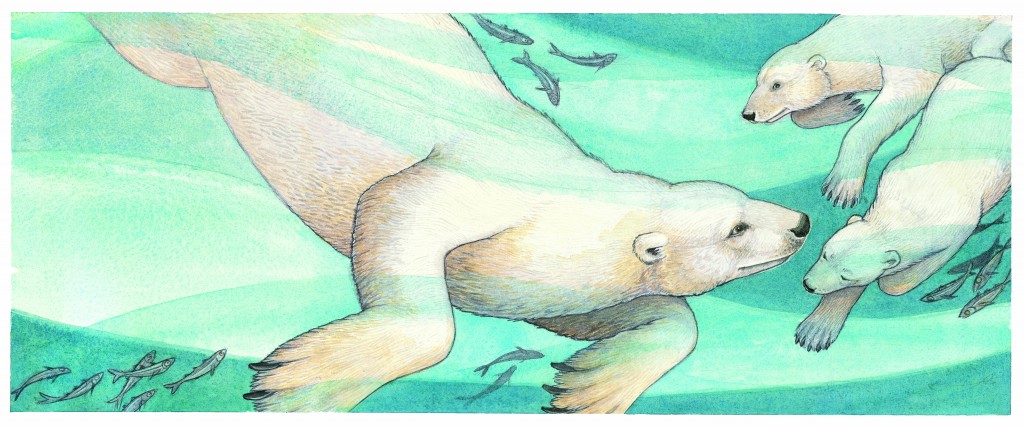 |
| from Wild About Bears |
Brett, Jeannie. (2014). Wild About Bears. Watertown, MA: Charlesbridge. (1070L)
Davies Nicola.(2008). Ice Bear: Read and Wonder. In the Steps of the Polar Bear. Illustrated by Gary Blythe. Somerville, MA: Candlewick. (950L)
Dowson, Nick. (2013). North: The Amazing Story of Arctic Migration. Illustrated by Patrick Benson. Somerville, MA: Candlewick. (910L)
Raye, Rebekah. (2009). Bear-ly There. Thomaston, ME: Tilbury House Publishers. (880L)
Winter Jeanette. (2016). Nanuk the Ice Bear. New York: Beach Lane Books.
Shared Reading
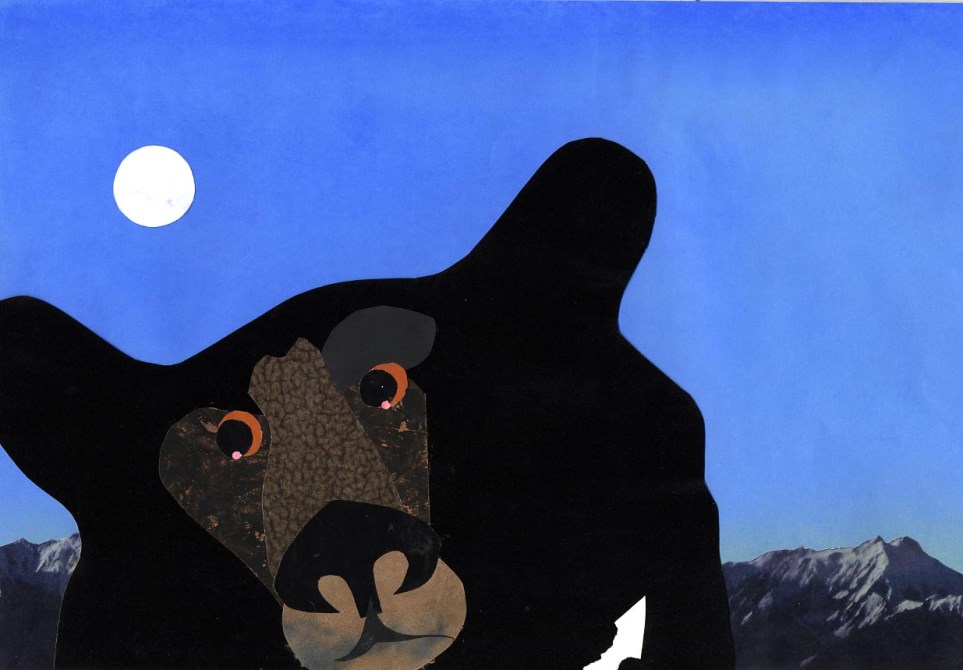 |
| from Moon Bear, Illustrated by Ed Young |
Galdone, Paul. (2014). The Three Bears. Boston, MA: HMH Books for Young Readers.
Call and Response Texts
Guiberson, Brenda Z. (2010). Moon Bear. Illustrated by Ed Young. New York: Henry Holt and Co.
Big Books for Shared Reading
Martin, Bill. (2011). Baby Bear, Baby Bear, What Do You See? Big Book (Brown Bear and Friends). Illustrated by Eric Carle. New York: Henry Holt.
Martin, Bill. (2007). Panda Bear, Panda Bear, What Do You See? Illustrated by Eric Carle. New York: Henry Holt.
Rosen, Michael. (1997). We're Going on a Bear Hunt. Illustrated by Helen Oxenbury. New York: Walker Books.
Poems, Songs, & Finger Play
Brown, Ron. The Three Bears Rap.
Buchanan, Liz. The Three Bears.
Milne, A.A. Furry Bear.
Silverstein, Shel. Bear In There. (from The Giving Tree)
Five Little Bears (Finger Play)
Video/Nursery Rhyme
Mother Goose Club. (2015). The Bear Went Over the Mountain. Video.
Guided Reading Texts
 |
| from Bear and Monkey |
Berenstain, Stan & Jan. (1999). Berenstain Bears in the House of Mirrors. New York: Random House Books for Young Readers. Level A/1.
Harrison, Pat. Bear and Monkey. Illustrated by David Macri. Pembina, ND: Blueberry Hill Books. Level C/3
Martin, Bill. (2010). Brown Bear, Brown Bear, What Do You See? Illustrated by Eric Carle. New York: Henry Holt. Level C/3.
Mitchell, Sara. Sleepy Bear. New York: Scholastic. Level C/3
Smith, Annette. (1997). Little Teddy and Monkey. Illustrated by Chantal Stewart. Rigby PM Stars. Level C/3
Lewis, Rose. Goldilocks and the Three Bears. Illustrated by Michelle Morse. Northampton, MA: Pioneer Valley Books. Level C/4
Randell, Beverly. (2004). A Home for Little Teddy. Illustrated by Chantal Stewart. Rigby PM Reader. Level C/4
Early
 |
| from Baby Bear Goes Fishing. |
Randell, Beverly. (2004). Father Bear Goes Fishing. Illustrated by Isabel Lowe.Rigby PM Reader. Level D/5
Randell, Beverly. (2004). Teddy Bears' Picnic. Illustrated by Chantal Stewart. Rigby PM Reader. Level D/5.
McPhail, David. (2004). Rick is Sick. Boston, MA: HMH Books. D/6
Randell, Beverly. (2004). Blackberries. Illustrated by Isabel Lowe. Rigby PM Reader. LevelD/6
Randell, Beverly. (2004). Baby Bear Goes Fishing. Illustrated by Isabel Lowe. Rigby PM Reader. Level E/7
Berenstain, Stan & Jan. (1968). Inside, Outside, Upside Down. New York: Random House Books for Young Readers. Level E/8
Randell, Beverly. (2004). Mother Bear' Scarf. Illustrated by Isabel Lowe.Rigby PM Reader. Level E/8.
McPhail, David. (2007). Jack and Rick. Boston, MA: HMH Books. E/8
 |
| from Just Like Daddy. |
Maris, Ron. (1986). Are You There, Bear? New York: Puffin. Level F/9
Randell, Beverly. (2004). Baby Bear's Present. Illustrated by Isabel Lowe. Rigby PM Reader. Level F/9
Randell, Beverly. (2004). Honey for Baby Bear. Illustrated by Isabel Lowe. Rigby PM Reader. Level F/9
Asch, Fran. (2015). Just Like Daddy. New York: Scholastic. Level F/10
McPhail, David. (2007). Big Brown Bear/El gran oso pardo. Boston, MA: HMH Books. Level F/10
McPhail, David. (1998). A Bug, A Bear, and a Boy. New York: Scholastic. Level F/10
McPhail, David. (1993). Emma's Pet. New York: Puffin. Level F/10
McPhail, David. (2005). The Teddy Bear. New York: Little, Brown Books for Young Readers. Level F/10
Randell, Beverly. (2004). Baby Bear' Climbs a Tree. Illustrated by Isabel Lowe. Rigby PM Reader. Level F/10
Randell, Beverly. (2004). Eggs and Dandelions. Illustrated by Isabel Lowe.Rigby PM Reader. Level F/10
Randell, Beverly. (2004). Baby Bear's Hiding Place. Illustrated by Isabel Lowe. Rigby PM Reader. Level F/10
 |
Dufresene, Michele. The Fishing Adventure. Illustrated by Cula Carmen Elena. Northampton, MA: Pioneer Valley Books. Level G/11.
Mack, Stan. (2012). 10 Bears in My Bed. New York: Random House. Level G/11.
Randell, Beverly. (2004). Mushrooms for Dinner. Illustrated by Isabel Lowe. Rigby PM Reader. Level G/11
Mattison, Ruth. The Story of the Three Bears. Illustrated by Max Stasiuk. Northampton, MA: Pioneer Valley Books. Level G/12.
Randell, Beverly. (2004). The Bears and the Magpie. Illustrated by Isabel Lowe.Rigby PM Reader. Level G/12
Randell, Beverly. (2004). House Hunting. Illustrated by Isabel Lowe. Rigby PM Reader. Level G
Rendall, Jennie. When Goldilocks Went to the House of the Bears. New York: Mondo Press, Level G/12
 |
McPhail, David. (1993). Lost! New York: Little, Brown Books for Young Readers. Level H/14
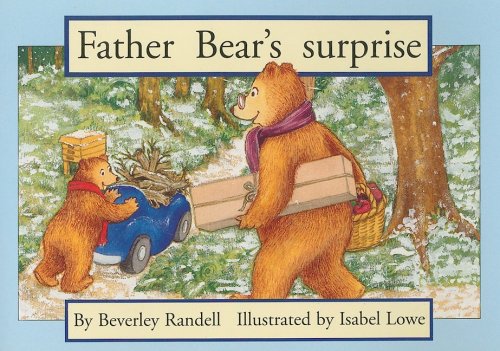
Randell, Beverly. (2004). Father Bear's Surprise. Illustrated by Isabel Lowe.Rigby PM Reader. Level H/14
Nellie, Elsie. (2014). Why Bears Have Short Tails. Illustrated by Dale Newman. Rigby PM Stars. Level H/14
Minarik, Else Holmelund. (1996). A Kiss for Little Bear. New York: Harper Collins. Level H/14.
Carlstrom, Nancy White. (1996). Guess Who's Coming, Jesse Bear. Illustrated by Bruce Degen. New York: Aladdin. Level I/16
Harrison, Pat. Sleeping Under the Stars. Illustrated by M. Wheeler. Pembina, ND: Blueberry Hill Books. Level I/16
McLeod, Emilie Warren. (1986). The Bear's Bicycle. New York: Little, Brown Books for Young Readers. Level I/16
McPhail, David. (1992). Fix-It. New York: Puffin. Level I/16
Minarik, Else Holmelund. (1978). Father Bear Comes Home. New York: Harper Collins. Level I/16
Rueda, Claudia. My Little Polar Bear. New York: Scholastic, Level I/16.
Stuart, Melissa. (2002). Goldilocks and the Three Bears. Illustrated by Marc Mongeau. New York: Scholastic. Level I/16
Wood. Audrey. (1984). The Little Mouse, the Red Ripe Strawberry, and the Big Hungry Bear. Illustrated by Don Wood. Child's Play. Level I/16
 |
Asch, Frank. (1991). Bear's Bargain. New York: Scholastic. Level J/17
Asch, Frank. (2001). Goodbye House. New York: Scholastic. Level J/17
Asch, Frank. (2001). Good Night, Baby Bear. New York: Scholastic. Level J/17
Asch, Frank. (1999). Moonbear's Shadow. New York: Aladdin. Level J/17
Flack, Marjorie. (1971). Ask Mr. Bear. New York: Aladdin. Level J/17
Minarik, Else Holmelund. (1996). Little Bear. New York: Harper Collins. Level J/17.
Minarik, Else Holmelund. (1996). Little Bear's Friend. New York: Harper Collins. Level J/17.
Minarik, Else Holmelund. (1996). Little Bear's Visit. New York: Harper Collins. Level J/17.
 |
| from Bear Has a Story to Tell, Illustrated by Erin Stead |
Wilson, Karma. (2002). Bear Snores On. Illustrated by Jane Chapman. New York: Margaret K. McElderry Books. Level K/18
Stead, Philip C. (2012). Bear Has a Story to Tell. Illustrated by Erin E. Stead. New York: Roaring Brook Press. Level K/18
 |
| from Brer Rabbit and the Moon: A Southern American Folk Tale. |
Asch, Frank. (1999). Happy Birthday, Moon. New York: Scholastic. Level L/20
Dufresene, Michele. Brer Rabbit and the Moon: A Southern American Folk Tale. Illustrated by Michelle Morse. Northampton, MA: Pioneer Valley Books. Level K-L/20.
Minarik, Else Holmelund. (1996). Little Bear and the Marco Polo. New York: Harper Collins. Level L/20.