|
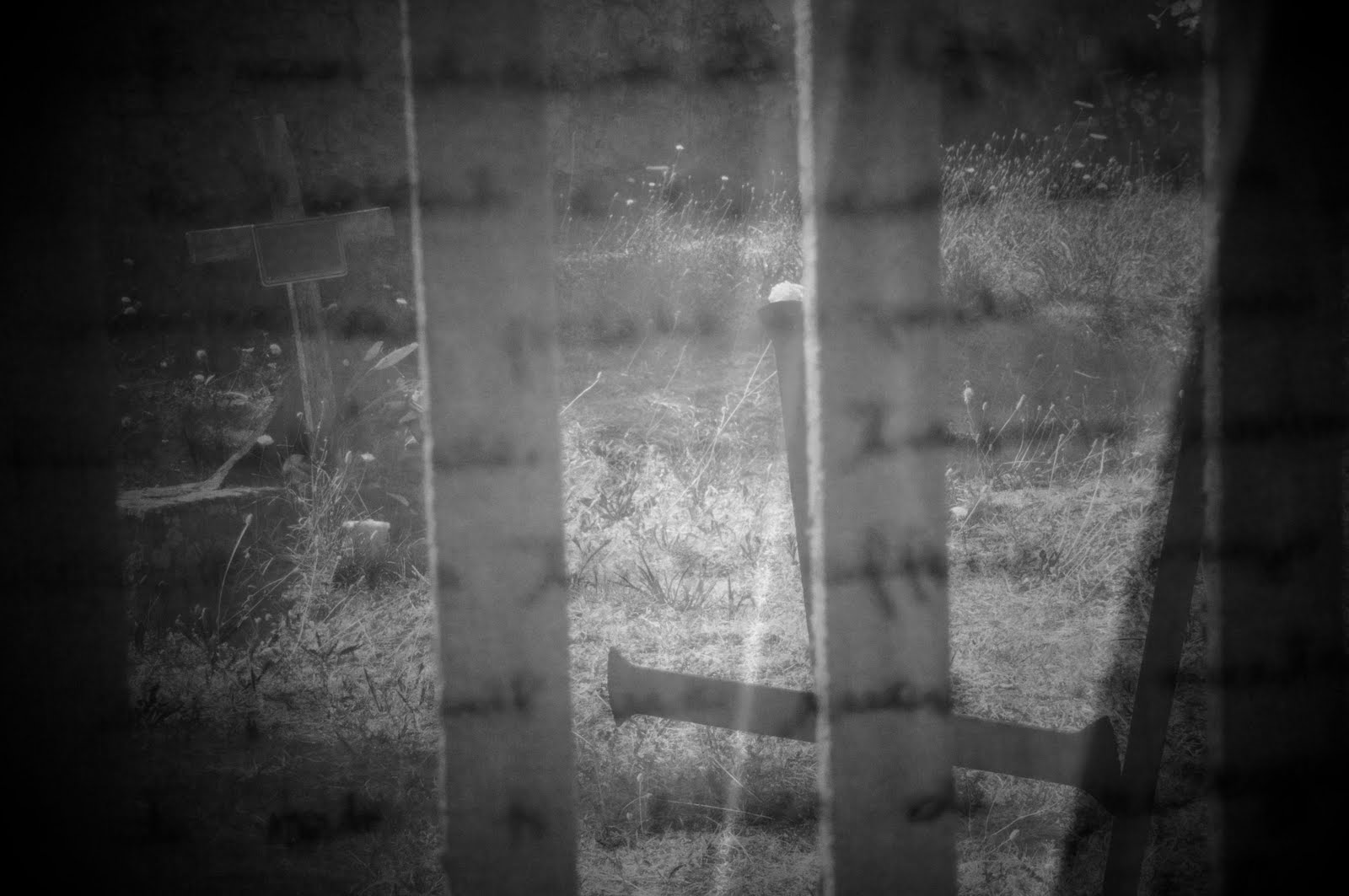
| Parked (M.A. Reilly, 2010) |
For the last few weeks I have been practicing Transcendental Meditation (TM). Last week I returned to the center for a check in and as I was viewing a talk given in 1971 by Maharishi Mahesh Yogi, two things he said struck me as significant. First, he said, "Stagnancy does not belong to life." This stopped me. Ironic, yes. How difficult it has been to move beyond Rob's death and to reconcile, if that is even the act I am seeking, the loss of Rob in my life. When Rob died, I lost my very heart. I moved from living to not belonging to life. And these last few months I do function, but I do so with an ear out listening for the dead. What would Rob think? Oh, that was a song Rob loved. Here is a magazine he used to read. How might he have responded to this or that? I must remember to tell Rob... If only Rob were here... and so on. I could not have made the life I made with Rob for nearly three decades and not feel the absolute amputation of heart and limb that happened with his death.
I am missing parts of me. There are holes you could drive through.
And it is this sense of absence, of holes that I am thinking about when earlier this morning, two friends, Renee and Michael, from New Hampshire stopped in for breakfast. After they left I was filled with a profound sadness as Rob was not here to meet with them. Years ago, Rob was the best man at their wedding. Rob, Michael and I all met in graduate school and we have such history together. This morning was the first time they have been here since Rob died. Michael stayed with us when Rob first came home from the hospital in mid-February during the first few days of Hospice care, but he and Renee have not been here since Rob's death and their presence and then departure echoes Rob's absence. Honestly, the whole living world echoes Rob's absence and my loneliness.
II.
It seems that since I listed all the things I am angry about I have not been able to stop crying. If I'm awake for 16 hours in a day, at least half of it has been spent sobbing. It's like that list somehow opened a faucet to where my heart once beat and out flows buckets of tears. ("Got all them buckets coming out of my ears/Buckets of moonbeams in my hand...") And for each moment in the day I am not crying, I can feel the press of more tears that are merely a breath away. The triggers are endless.
If the natural inclination of life is flow, movement, I wondered if grief gives rise to stress when a body refuses to move. Is this emotional stagnation I feel a part of grief? Is grief its source--if such complexity can have a source? Or is the world of bereavement simple? Input. Output. As I write this I am reminded of Annie Dillard's Pilgrim at Tinker Creek, a collection of essays that Rob first gave me to read years and years ago and if I remember correctly it was a book that he and Michael had read for a class. In the essay, The Fixed, she writes,
“I want out of this still air. What street-corner vendor wound the key on the backs of tin soldiers and abandoned them to the sidewalk, and crashings over the curb? Elijah mocked the prophets of Baal, who lay a bullock on a woodpile and begged Baal to consume it: “Cry aloud: for he is a god; either he is talking, or he is pursuing, or he is in a journey, or peradventure he sleepeth, and must be awaked.” Cry aloud. It is the fixed that horrifies us, the fixed that assails us with the tremendous force of its mindlessness. The fixed is a Mason jar, and we can’t beat it open...The fixed is the world without fire- dead flint, dead tinder, and nowhere a spark. It is motion without direction, force without power, the aimless procession of caterpillars round the rim of a vase, and I hate it because at any moment I myself might step to that charmed and glistening thread" (pp.68-69).And that is how I feel when I push up against the grief. Fixed. A mason jar you can't beat open. And I wonder will I ever feel alright? Will I ever feel like the confident me I used to be?
III.
Towards the end of the talk, the Maharishi spoke about the use of the mantra during the meditation to gently return attention when the mind drifts. He said, "It just takes a whisper until that whisper goes away." I puzzled over that statement for a few days. I understood it with regard to the mantra and how thinking the mantra is mostly about brief intention. It need not be mechanized and overt. Earlier a collection of essays by the Maharishi, I read, "...the capacity of subtle experience is rusted, the machinery is not used" (p. 101, from here) and I laughed aloud. How true that is for me.
Being present is largely about subtlety--about letting a place happen to you. In Kathleen Norris's wonderful, Dakota: A Spiritual Geography, she quotes a monk who says, "You have only to let a place happen to you...the loneliness, the silence, the poverty, the futility, indeed the silliness of your life."
Over-attention isn't a way through the grief. Letting a place happen is where my heart, though faint, beats. It is where I must (un)learn to stand.
I feel this centering power each day as I walk. Stepping foot after foot roots me to earth, to the present, to where grief washes over me and my footing is so solid, the earth so kind, that my movements with grief allow it to wash over me. Somedays, I move to feel whole.