Friday, December 18, 2015

#SOL15: Order Like a Net

Stopped (M.A. Reilly, Leonia, NJ, 2012)

“The order that our mind imagines is like a net, or like a ladder, built to attain something. But afterward you must throw the ladder away, because you discover that, even if it was useful, it was meaningless.” ― Umberto Eco, The Name of the Rose
I.

Lately, I have taken to moving furniture and vacuuming, cleaning countertops and bathrooms with strong chemicals, making my son's bed, stripping and cleaning linens, washing, washing, washing and opening wide windows--even here in December. Especially now the cold air filters in and it brings with it an odd hope.

Each day I set our unsettled house back to an orderliness few here seem to appreciate, perhaps even see. But it is not the aftermath of temporary order I seek or even their appreciation, but rather the slim accomplishment I feel that comes from doing.

Doing, not being.

Here is something I do daily, repeatedly that has a known end.


II.

My life these days is slippery, cracked, broken, lacking an order one might name. (And I want to call forth the right words, for is not naming a truth in itself?)

(Dis)Order.
Clean.
(Dis)Order.
Clean.


Thursday, December 10, 2015

Big Bold Books for Beginning Readers


Level B
Barner, Bob. (2014). I Have a Garden. New York: Holiday House. (Fiction, collage)
Long, Ethan. (2013). Pig Has a Plan. New York: Holiday House. (Fiction - Humor)


Level C

Emberley, Rebecca. (2013). Mice on Ice.  New York: Holiday House. (Fiction - rhyming, sight words)
Lewin, Ted. (2015). Animals Work. New York: Holiday House. (Nonfiction)
Lewin, Ted. (2014). What Am I? Where Am I? New York: Holiday House. (Nonfiction - Guessing Game)
McCully Emily Arnold. (2015). Little Ducks Go. New York: Holiday House. (Fiction)


Level D

Björkman, Steve. (2012). Dinosaurs Don't, Dinosaurs Do. New York: Holiday House. (Fiction - Humor)
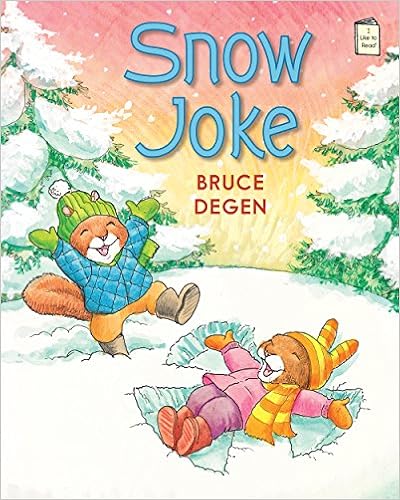
Degen, Bruce. (2015). Snow Joke. New York: Holiday House. (Fiction - Humor & Theme)
Degen, Bruce. (2015). I Said, "Bed!" New York: Holiday House. (Fiction - Humor)
Florian, Douglas. (2015). Pig is Big on Books. New York: Holiday House. (Fiction - Humor)
Garland, Steve. (2014). Car Goes Far. New York: Holiday House. (Fiction - Humor)
Garland, Steve. (2013). Fish Had a Wish. New York: Holiday House. (Fiction - Theme)
Lewin, Betsy. (2014). You Can Do It! New York: Holiday House. (Fiction - Theme)
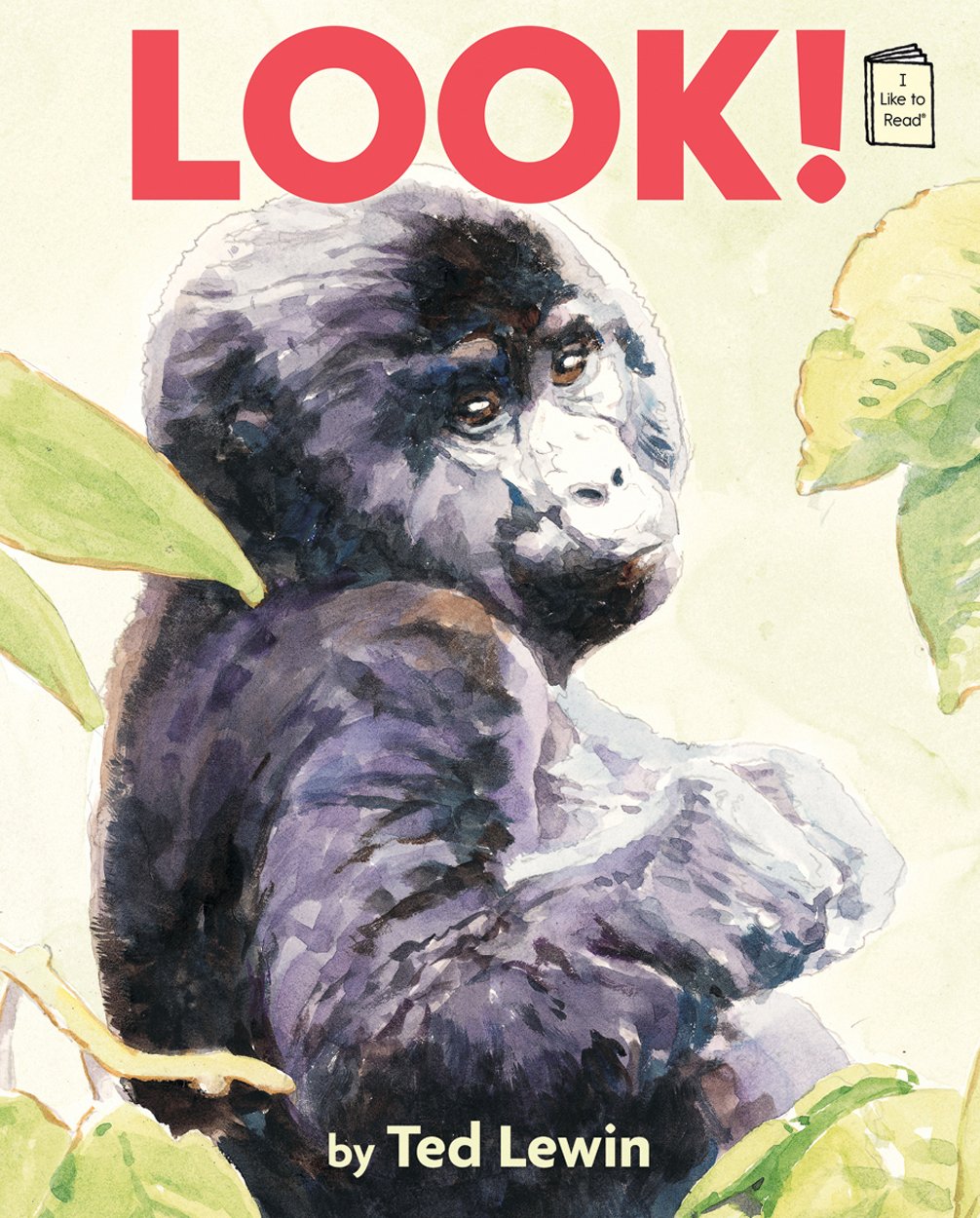
Lewin, Ted. (2014). Look! New York: Holiday House. (Fiction - featuring different animals & Lewin's signature paintings)
McCully Emily Arnold. (2013). Late Nate in a Race. New York: Holiday House. (Fiction)
McPhail, David. (2013). Sick Day. New York: Holiday House. (Fiction)
Meisel, Paul. (2014). See Me Dig. New York: Holiday House. (Fiction)
Meisel, Paul. (2012). See Me Run. New York: Holiday House. (Fiction)


Level E
Arnold, Tedd. (2014). Fix this Mess! New York: Holiday House. (Fiction)
Björkman, Steve. (2015). Look Out Mouse! New York: Holiday House. (Fiction)
Emberley, Rebecca & Ed. (2012). The Lion and the Mice. New York: Holiday House. (Fiction -
McCully Emily Arnold. (2014). Sam and the Big Kids. New York: Holiday House. (Fiction)
McCully Emily Arnold. (2015). Pete Makes a Mistake. New York: Holiday House. (Fiction)
McCully Emily Arnold. (2013). Pete Won't Eat. New York: Holiday House. (Fiction)
McPhail, David. (2012). Boy, Bird, and Dog. New York: Holiday House. (Fiction)


Level F


Lewin, Betsy. (2015). Good Night, Knight! New York: Holiday House. (Fiction - Knight's Tale)
Lewin, Betsy. (2014). Groundhog Day. New York: Scholastic. (Fiction)
Williams, Mo. (2014). Waiting is Not Easy! New York: Disney-Hyperion. (Fiction - Humor)
Williams, Mo. (2014). My New Friend Is So Fun! New York: Disney-Hyperion. (Fiction - Humor)
Williams, Mo. (2013). A Big Guy Took My Ball! New York: Disney-Hyperion. (Fiction - Humor)
Williams, Mo. (2012). Let's Go for a Drive! New York: Disney-Hyperion. (Fiction - Humor)
Williams, Mo. (2010). We Are In a Book! New York: Disney-Hyperion. (Fiction - Humor)
Williams, Mo. (2010). Can I Play Too? New York: Disney-Hyperion. (Fiction - Humor)
Williams, Mo. (2010). I Am Going! New York: Disney-Hyperion. (Fiction - Humor)
Williams, Mo. (2009). Watch Me Throw the Ball! New York: Disney-Hyperion. (Fiction - Humor)
Williams, Mo. (2009). Pigs Make Me Sneeze! New York: Disney-Hyperion. (Fiction - Humor)
Williams, Mo. (2009. Elephants Cannot Dance! New York: Disney-Hyperion. (Fiction - Humor)
Williams, Mo. (2008). Are You Ready to Play Outside? New York: Disney-Hyperion. (Fiction - Humor)
Williams, Mo. (2007). Today I Will Fly! New York: Disney-Hyperion. (Fiction - Humor)


Level G
Lewin, Betsy. (2004). Animal Snackers. New York: Scholastic. (Fiction)
Williams, Mo. (2007). There Is a Bird on Your Head! New York: Disney-Hyperion. (Fiction - Humor)
Williams, Mo. (2011). Should I Share My Ice Cream? New York: Disney-Hyperion. (Fiction - Humor)
Williams, Mo. (201). I Am Invited to a Party! New York: Disney-Hyperion. (Fiction - Humor)

Monday, December 7, 2015

Teaching Mysteries in Grades 2-4

Introducing children to the mysteries in grades 2 through 4 requires us to think abut the characteristics of the genre, have a collection of books we can read aloud and that children can read in small groups, with a partner and on their own.  Below are a few suggestions.

Read Alouds
Book Scavenger by Jennifer Chambliss Bertman
The Chronicles of Harris Burdick by Chris Van Allsburg & various writers
Escape from Mr. Lemoncello’s Library by Chris Grabenstein
From the Mixed Up Files of Mrs. Basil E. Frankweiler by E.L. Konigsburg
Greenglass House by Kate Milford (Edgar winner)
The London Eye Mystery by Siobhan Dowd

Mystery Series


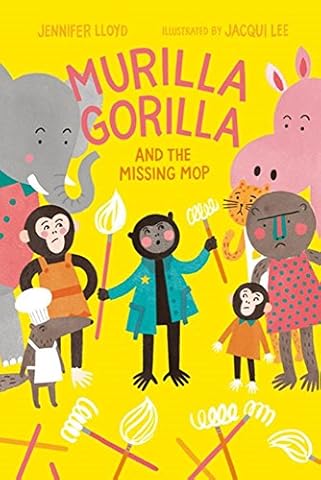
Murilla Gorilla and the Missing MopGrade 2
Adam Sharp by George Edward Stanley (Level L)
Aunt Eaters series by Doug Cushman (Level K)
The Calendar Mysteries by Nancy Star (Level M)
Cam Jansen Mysteries by David A. Adler (Level L)
Capita Mysteries by Ron Roy (Level M)
Clues Brothers by Franklin Dixon (Level M)
High-Rise Private Eyes series by Cynthia Rylant (Level K)
Houdini Club Magic Mystery by David A. Adler  (Levels L & M)
Inspector Hopper series by Doug Cushman (Level K)
Invisible Inc. series by Elizabeth Levy (Level L)
Meg MacKintosh series by Lucinda Landon (Level M, O)
Murilla Gorilla series by Jennifer Lloyd (Level M)
Nancy Drew Notebooks series by Carolyn Keene (Level M)
Nate the Great by Marjorie Weinman Sharmat (Level K)
Scooby-Doo Hello Reader Mystery series by James Gelsey (Level J+)
Sly the Sleuth series by Donna Jo Napoli (Level L)
Young Cam Jansen Mysteries by David A. Adler (Level J)


Pigsticks and Harold and the Incredible Journey
Grade 3
A to Z Mysteries by Ron Roy (Level N)
Abracadabra Series series by Peter Lerangis  (Level N)
Agatha: Girl of Mystery series by Sir Steve Stevenson (Levels O & P)
The Babysitters Club Super Mysteries by Ann M. Martin (Level O)
Chet Gecko Mysteries by Bruce Hale (Level O)
Doyle and Fossey Science Detectives series  by Michele Torrey (Level O)
Encyclopedia Brown series  by Donald J. Sobol (Level P)
Jack Russell Dog Detective series by Darrel Odgers (Level N)
Jigsaw Jones Mystery series  by James Preller (Level N)
Meg MacKintosh series by Lucinda Landon (Level M, O)
Mystic Lighthouse Mysteries series by Laura E. Williams (Level O)
Nancy Drew and the Clue Crew series  by Carolyn Keene (Level N)
Pigsticks and Harold series by Alex Milway (Level  P)
Polka Dot Private Eye series by Patricia Reilly Giff  (Level N)
Something Queer series by Elizabeth Levy (Level N)
Third-Grade Detectives series by George Edward Stanley (Level N)
Wild Willie Mystery series by Barbara Joosse (Level N)


Children's Book: The Great Cake MysteryGrade 4+
Agatha: Girl of Mystery series by Sir Steve Stevenson (Levels O & P)
American Girl Mysteries series by various authors (Level S+)
Culpepper Adventures series by Gary Paulsen (Levels O-R)
Diamond Brothers series by Anthony Hopkins (Levels P - T)
A Dog and His Girl Mysteries by Jane B. Mason (Level U)
Encyclopedia Brown series  by Donald J. Sobol (Level P)
Half-Moon Investigations series by Eoin Colfer (Level Q)
Hank the Cowdog series  by John R. Erickson (Levels P & Q)
Herculeah Jones Mystery series  by Betsy Byars (Level S)
Jack Russell Dog Detective series by Darrel Odgers (Level N)
Nancy Drew and the Clue Crew series  by Carolyn Keene (Level N)
Precious Ramotswe Mysteries for Young Readers series by Alexander McCall Smith (Level S)
Raven Hill Mystery series by Emily Rodda (Levels N - R)
Sebastian Barth Mystery series by James Howe (Level R)
Sherlock Holmes and the Baker Street Irregulars series by Tracy Mack and Michael Citrin (Level R)
The Sisters Grimm series by Michael Buckley (Level U)
Spider Kane series by Mary Pope Osborne (Levels O & P)
Two Minute Mysteries by Donald Sobol (Level S)
Ulysses Moore series by Pierdomenico Baccalario  (Level S)
Ziggy and the Black Dinosaurs by Sharon Draper (Levels O-R)


Thursday, December 3, 2015

Diverse Early Literacy Books for Social Studies by Jane M. Gangi

Note: This is a bibliography of early literacy books focused on social studies topics and the description of a way to share texts (Check It Out! Circle) that my friend and colleague Jane M. Gangi created and presented at a education conference a few weeks ago.  Jane's are of expertise is in children's literature. She is the author of numerous articles and three professional books including:


Genocide in Contemporary Children's and Young Adult Literature: Cambodia to Darfur (Children's Literature and Culture)   (Routledge, 2014)
(You can read more about this text here.)


Deepening Literacy Learning: Art and Literature Engagements in K-8 Classrooms (Teaching-Learning Indigenous, Intercultural Worldviews) 


Encountering Children's Literature: An Arts Approach. 


Diverse Books for Young Children: Connecting Social Studies and Literacy

Image result for jane m. gangiPresenter:
Jane M. Gangi: jane.gangi@msmc.edu
Division of Education
Member, Collaborative for Equity in Literacy Learning (CELL)
Hudson Hall, 109D
Mount Saint Mary College
330 Powell Ave
Newburgh, NY 12550
Phone: 845-569-3529

AGENDA

Mirror and Window Books and the Proficient Reader Research

Check It Out Circle: Children’s Literature and the Social Studies. Sibberson and Szymusiak, (2003):

A Check It Out! Circle is another way to support book choice.  We use this activity when we want to highlight a certain author or genre.  If we notice that very few students have read a biography, for example, we will organize a…Circle to introduce them to some biographies that we hope they will choose to read independently. 
Before we begin a …Circle, we collect the same number of books in the genre we are highlighting….as there are students in the class.  Then we have the children sit in a large circle on the floor.  We walk around the circle, give each child a book, and ask them to silently preview the book.  After just a minute, we ring a bell and have the children pass the book to the child on their right.  We continue doing this until every child has had a chance to briefly look at each book.  We limit the amount of time because it gives students just enough time to find something interesting, but not enough time for them to read the books.  As a result, they are often eager to get their hands on the books that particularly interested them.
Following the activity, we usually ask two questions: “Which books did you see that you want to go back to during independent reading time?” and “How did you go about previewing the book in such a short time?” (p. 95)


Civics: Civic and Political Institutions; Participation and Deliberation; Processes, Rules and Laws

 ¡Si, Se Puede! Yes, We Can! Janitor Strike in L.A by Diana Cohn; Francisco Delgado, illustrator

from The Mangrove Tree: Planting Trees to Feed Families 


Economics: Decision Making; Exchange and Markets; National and Global Economy

  1. Chugga-Chugga Choo-Choo by Kevin Lewis, illustrated by Daniel Kirk
  2. The Good Garden: How One Family Went from Hunger to Having Enough by Katie Smith Milway, illustrated by Sylvie Daigneault
  3. If the World Were a Village: A Book about the World’s People (2nd ed.) by David J. Smith, illustrated by Shelagh Armstrong
  4. The Mangrove Tree: Planting Trees to Feed Families by Susan L. Roth and Cindy Trumbore
  5. One Hen: How One Small Loan Made a Big Difference by Katie Smith Milway, illustrated by Eugenie Fernandes
  6. Quinito’s Neighborhood/El vecíndario de Quinito by Ina Cumpiano, illustrated by José Ramírez
  7. Seeds of Change by Jen Cullerton Johnson, illustrated by Sonia Lynn Sadler


from How Far Do You Love Me? 
Geography: Spatial Views; Place, Regions and Culture; Population; Global Interconnections
  1. Alphabet City by Stephen T. Johnson
  2. Amazing Faces, poems selected by Lee Bennett Hopkins, illustrated by Chris Soentpiet
  3. Animal Poems of the Iguazú/Animalario del Iguazú by Francisco Alarcón, illustrated by Maya Christina Gonzalez
  4. Bein’ with You This Way by W. Nikola-Lisa, illustrated by Michael Bryant
  5. Celebrate! Connections Among Cultures by Jan Reynolds
  6. Efraín of the Sonoran Desert by Amalia Astorga, as told to Gary Paul Nabhan, illustrated by Janet K. Miller
  7. A Full Moon Is Rising, poems by Marilyn Singer, illustrated by Julia Cairns
  8. The Gum Chewing Rattler by Joe Hayes, illustrated by Antonio Castro L.
  9. How Far Do You Love Me? by Lulu Delacre
  10. Listen to the Desert/Oye al desierto by Pat Mora, illustrated by Francisco X. Mora

from Shi-shi-etko 
11. Shi-shi-etko by Nicola I. Campbell, illustrated by Kim LaFave
12. Talking Walls by Margy Burns Knight, illustrated by Anne Sibley O’Brien
13. Tan to Tamarind, poems by Malathi Michelle Iyengar, illustrated by Jamel Aikb
By Jan Reynolds:
  1. Amazon Basin  
  2. Down Under
  3. Far North
  4. Frozen Land
  5. Himalaya
  6. Mongolia
  7. Sahara

History: Change, Continuity, and Context; Perspectives; Sources and Evidence; Causation and Argumentation

  1. Drumbeat in Our Feet by Patricia A. Keeler and Júlio T. Leitão
  2. My Papa Diego and Me: Memories of My Father and His Art/Mi papa Diego y yo/Recuerdos de mi padre y su arte  by Guadalupe Rivera Marín and Diego Rivera
  3. Yum!¡MmMm! Qué rico¡ America’s Sproutings by Pat Mora, illustrated by Rafael López

Medium_bebopbks_logo 
Bebop Books Leveled Books: https://www.leeandlow.com/imprints/2


Resources for Children’s and Young Adult Literature: http://cell.msmc.edu/literature/
There are multiple resources for young children at this site.

Publishers of Multicultural Books:
Lee & Low Books: https://www.leeandlow.com/
Groundwood Books: http://groundwoodbooks.com/


Reference
Sibberson, F & Szymusiak, K.  (2003).  Still learning to read: Teaching students in grades 3-6.  Portland, ME: Stenhouse.


Tuesday, December 1, 2015

#SOL15: Writing, Agency, and Colonization

Blue Ridge Mountains III (M.A. Reilly, 2009)
I.

This morning I withdrew an article that required some revision before being published.  Originally the article was 12,000 words and I whittle it down to about 8,000 at the insistence of the editors who have been patient and the peer reviewers who have been somewhat helpful.  And although I have never not returned a manuscript that was accepted or accepted with revisions prior to this morning, I did so today.

With Rob's care and my responsibilities, priorities shift and time feels far more constrained.  I do plan to revise the essay again as I want to see it finished and see what it is I must learn. I realize though that presently such work will need to wait as I just do not have the clarity of thought to write academically and I know that this work is far from done.

I don't know what I most want to say and so I have said a lot of things not worth reading. As John Cage might say, "I have nothing to say" and unfortunately I am saying it (over and over). I do realize that there is something there that is important and I am missing it, for now.

II.

I think about this authorial freedom to wade into a work or set it aside and think about my son in high school where such options are rarely afforded, if ever.  Yes, I am confident his teachers would make exceptions for him especially now as he struggles with all that is happening at home--but the agency would reside with his teachers to a larger extent and that is highly problematic--especially for writers, thinkers, doers.

Good writing requires thought.
Better writing requires agency.

III.

Agency is more important than the myriad of lessons taught via mini lessons, focus lessons, workshop lessons and the like. The right to determine the trajectory of a work is a large part of the writing.  I wonder where that happens at school in these days of Common Core, non-organic workshops, and those units of study that come pre-made, written for teachers to enact as if teachers and students were interchangeable cogs.  This is the very definition of being colonized.

Hopefully there is some young writer in some US classroom testing his or her agency, helping the teacher to understand that the more important lesson is one we do not teach directly.