Wednesday, February 23, 2011

Global Books for the First Grade


Mirror & Window Books
Figueredo, D.H. 1999. When this World Was New. Illustrated by Enrique O. Sanchez. New York: Lee & Low Books.
Forman, Ruth. 2007. Young Cornrows Callin Out the Moon. Illustrated by Cbabi Bayoc. San Francisco, CA: Children’s Book Press.
Hole, Stitan. 2008. Garmann's Summer. Illustrated by Don Bartlett. NY:  Eerdmans Books for Young Readers.
hooks, bell. 2004. Skin Again. Illustrated by Chris Raschka. New York: Hyperion Books for Children.
Katz, Karen. 1999. The Color of Us. New York: Henry Holt.
Lamperti, Noelle. 1999. Brown Like Me. Illustrated by author and the children of the Learning School. Norwich, VT: New Victoria Publishers.
Mora, Pat, 2010. Abuelos. Illustrated by Amelia Lau Caring Tornoto: Groundwood Books.
Prats, Joan de Déu. 2005. Sebastian’s Roller Skates. Illustrated by Francesc Rovira. La Jolla, CA: Kane/Miller.
Shin, Sun Yung. 2004. Cooper’s Lesson. Illustrated by Kim Cogan. San Francisco: Children’s Book Press. 
 
Text Sets
1. Wants, Wishes, and Needs
Boelts, Maribeth. 2009. Those Shoes. Illustrate by Noah Z. Jones. Cambridge. MA: Candlewick.
Bridges, Shirin Yim. 2002. Ruby's Wish. Illustrated by Sophie Blackall. San Francisco, CA: Chronicle Books.
Johnson, Angela. 1995. The Leaving Morning. Illustrated by David Soman. Orlando, FL: Harcourt.
Lipp, Frederick. 2001. The Caged Birds of Phnom Penh. Illustrated by Ronald Himler. NY: Holiday House.
Perez, Amada Irma. 2008. My Very Own Room/Mi propio cuartito. Illustrated by Maya Christina Gonzalez. San Francisco, CA: Children’s Book Press.
Ringgold, Faith. 1996. Tar Beach. NY: Dragonfly Books.
Thong, Roseanne. 2008.Wish: Wishing Traditions Around the World. Illustrated by Elisa Kleven. San Francisco, CA: Children’s Book Press.
Williams. Vera B. 1984. A Chair for My Mother. NY: Greenwillow.

2. Flying
Night Flight: Amelia Earhart Crosses the AtlanticBorden, Louise & Mary Kay Kroeger, 2004. Fly High! The Story of Bessie Coleman. Illustrated by Teresa Flavin. NY: Perfection Learning.
Breen, Steve. 2008. Violet the Pilot. NY: Dial.
Burleigh, Robert. 2011. Night Flight: Amelia Earhart Crosses the Atlantic. Illustrated by Wendell Minor. NY: Simon & Schuster.
Crews, Donald. 1989. Flying. NY: Greenwillow.
Duble, Kathleen Benner. 2003. Pilot Mom. Illustrated by Alan Marks. Watertown, MA: Charlesbridge.
Johnson, Angela. 2007. Wind Flyers. Illustrated by Loren Long. New York: Simon & Schuster Children's Publishing.
Lindbergh, R. 1998. Nobody Owns the Sky: The Story of "Brave Bessie" Coleman. Illustrated by Pamela Paparone. Cambridge MA: Candlewick.
Sibert, Diana. 1995. Plane Song. NY: HarperTrophy.
Tanaka, Shelley. 2008. Amelia Earhart: The Legend of the Lost Aviator. Illustrated by David Craig. NY: Abrams.
Tarpley, Natasha. 2003. Joe-Joe’s First Flight. Illustrated by E. B. Lewis. New York: Knopf.
Yolen, Jane. 2003. My Brother's Flying Machine: Wilbur, Orville, and Me.  Illustrated by Jim Burke. NY: Little, Brown.

3. Weather
Cassino, Mark. 2009. The Story of Snow: The Science of Winter's Wonder. San Francisco: Chronicle Books.
Hesse, Karen. 1999. Come On, Rain! Illustrated by Jon Muth. NY: Scholastic.
Kajikawa, Kimiko. 2009. Tsunami! Illustrated by Ed Young. NY: Philomel.
Krishnaswami, Uma. 2003. Monsoon. Illustrated by Jamel Akib. NY: Farrar, Straus & Giroux.
Lee, Milly. 2006. Earthquake. Illustrated by Yangsook Choi. NY: Farrar, Straus & Giroux.
Lehman, Barbara. 2007. Rainstorm. San Diego, CA: Houghton.
Ray, Mary Lyn. 2001. Mud. illustrated by Lauren Stringer. NY: Sandpiper.
Wallner, Alexandra. 2006. Sergio and the Hurricane. NY: Henry Holt.
Watson, Reness, 2010. A Place Where Hurricanes Happen. Illustrated by Shadra Strickland. NY: Random House. (Hurricane Katrina)
Wiesner, David. 1992. Hurricane. NY: Clarion.

4. Local Matters & Global Concerns
Brown, Monica. 2010. Side by Side/Lado a lado: The Story of Dolores Huerta and Cesar Chavez/La historia de Dolores Huerta y Cesar Chavez. Illustrated by Joe Cepeda.NY: HarperCollins/ Rayo.
DiSalvo-Ryan, DyAnne. 2000. Grandpa’s Corner Store. New York: Harper Collins.
Heide, Florence Parry and Judith Heide Gilliland. 1990. The Day of Ahmed’s Secret. Illustrated by Ted Lewin. NY: Scholastic.
Johnson, Angela. 2007. Lily Brown’s Paintings. Illustrated by E.B. Lewis. NY: Orchard Books.
Menchu, Rigoberta. 2006. The Honey Jar. Illustrated by Domi. Contributed by Dante Liano. Toronto: Groundwood Books.
Mortenson, Greg. 2009. Listen to the Wind. Illustrated by Susan Roth. NY: Dial.
Napoli, Donna Jo. 2010. Mama Miti: Wangari Maathai and the Trees of Kenya. Illustrated by Kadir Nelson. NY: Simon & Schuster.
Velasquez, Eric. 2001. Grandma’s Records. NY: Walker.
Winter, Jeannette. 2008. Wangari’s Trees of Peace: A True Story from Africa. NY: Harcourt.\

When The Visual Image Matters...
Alarcón, Francisco X. 2005. Laughing Tomatoes: And Other Spring Poems/Jitomates Risuenos: Y Otros Poemas de Primavera. Illustrated by Maya Christina Gonzalez. San Francisco: Children's Book Press.
Browne, Anthony. 2003. The Shape Game. NY: Farrar, Straus and Giroux.
Galindo, Mary Sue. 2000. Icy Watermelon/Sandía fría. Illustrated by Pauline Rodriguez Howard. Houston, TX: Arte Público Press.
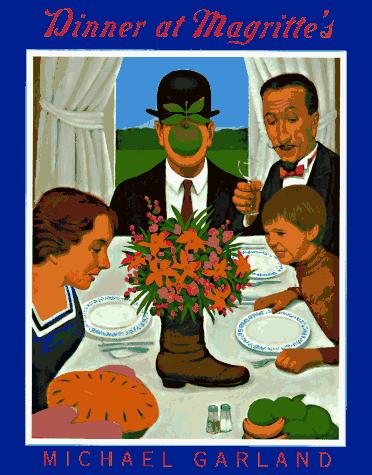
Garland, Michael. 1995. Dinner at Magritte’s. New York: Dutton Juvenile.
Gillard, Denise. 2010. Music from the Sky. Illustrated by Stephen Taylor. Toronto: Groundwood Books.
Myers, Walter Dean. 2001. Blues of Flats Brown. Illustrated by Nina Laden. NY: Holiday House.
Niemann, Christopher. 2010. Subway. NY: Greenwillow.

Books That Make Me Want To Ask Questions
Brenner, Barbara. 1996. Thinking About Ants. Illustrated by Carol Schwartz. NY: Mondo Press.
Bunting, Eve. 1990. How Many Days To America? A Thanksgiving Story. Illustrated by Beth Park. New York: Clarion.
Forest, Heather. 2006. Wonder Tales from Around the World. Little Rock, AK: August House.
Lyons, George Ella. 1996. Who Came Down that Road? Illustrated by Peter Catalanotto. New York: Orchard Books.
Schuch, Steve. 2002. A Symphony of Whales. Illustrated by Peter Sylvada. Orlando, FL: Voyager Books.
Vaccaro, Laura Seeger. 2010. What If? New York: Roaring Brook Press,
Van Camp, Richard. 2003. What’s the Most Beautiful Thing You Know About Horses? Illustrated by George Littlechild. San Francisco, CA: Children’s Book Press.
Wiesner, David. 2010. Art & Max. NY: Clarion.

Drawing Inferences
Carling, Amelia Lau. 1998. Mama and Papa Have a Store. New York: Dial.
Elya, Susan Middleton. 2006. Home at Last. Illustrated by Felipe Davalos. NY: Lee & Low Books.
Gerstein, Mordicai. 2002. What Charlie Heard. New York: Farrar, Straus Giroux.
Sis, Peter. 2006. Play, Mozart, Play! New York: Farrar, Straus & Giroux.
Wong, Janet, S. 2000. Night Garden: Poems from the World of Dreams. Illustrated by Julie Paschkis. New York: Margaret E. McElkderry Books.
Robles, Anthony D. 2003. Lakas and the Manilatown Fish/Si Lakas at ang Isdang Manilatown. Illustrated by Carl Angel. San Francisco, CA: Children’s Book Press.

Determining Importance
Bash, Barbara. 1990. Urban Roosts: Where Birds Nest in the City. San Francisco, CA: Sierra Club Books.
Davies, Nicola. 2001. One Tiny Turtle. Illustrated by Jane Chapman. Cambridge, MA: Candlewick.
Miller, Debbie S. 2003. Arctic Lights, Arctic Nights. Illustrated by Jon Van Zyle. NY: Walker Books.
Micucci, Charles. 1997. The Life and Times of the Honeybee. NY: Houghton Mifflin.
Pfeffer, Wendy. 1997. A Log’s Life. Illustrated by Robin Brickman. New York: Simon & Schuster.
Sayre, Alice Pulley. 2005. Stars Beneath Your Bed: The Surprising Story of Dust. Illustrated by Ann Jonas. NY: Greenwillow.
Waboose, Jan Bordeau. 2000. Sky Sisters. Illustrated by Brian Deines. Niagara Falls, NY: Kids Can.


Synthesis
Buy Night Moonjellies. A world where ordinary magical meet. at AtomicMall.comBernier-Frand Carmer T. 2009. Diego: Bigger than Life. Illustrated by David Diaz. Tarrytown, NY: Marshall Cavendish.
Igus, Toyomi. 2001. Two Mrs. Gibsons. Illustrated by Daryl Wells. San Francisco, CA: Children's Book Press.
Shasha, Mark. 1992. Night of the Moonjellies. Cynthiana, KY: Purple House Press.
Wiesner, David. 2001. The Three Pigs. New York: Clarion.
Winter, Jonah. 2010. Here Comes the Garbage Barge. Illustrated by Red nose Studio. NY: Schwartz & Wade.
Woodson, Jacqueline. 2001. The Other Side. Illustrated by E.B.Lewis. NY: Putnam.

Tuesday, February 22, 2011

Literacy, Colonialism, and Web 2.0


When my grandmother was a child, she practiced speaking Irish with other children secreted behind the tall hedgerow skirting the lane where she and her family lived. Such were the times in Ireland, the decades preceding the Republic’s freedom from Britain--a time when British rule prohibited the Irish from speaking the language of home.  One-hundred plus years later, I sit at home 20 minutes west of Manhattan, thinking of this woman I never met, of a country, I too left, and wondering about the parallels between colonialism and our national need to reclaim teacher and student voices in the classroom. To be sure, this imperative is not new.


In Culture and Imperialism, Edward Said defines imperialism as "the practice, the theory, and the attitudes of a dominating metropolitan center ruling a distant territory."  He defined "colonialism, which is almost always a consequence of imperialism" as "the implanting of settlements on distant territory." In thinking about the relationship between the two, I wonder about those educational practices that serve to colonize classrooms, students, teachers, and schools, of which there are many.

In this post, I want to examine one example of colonized practice: prescribed units of study for writing. I want to explore how prescribed, commercial units of study act as agents that "re"settle classrooms into "writing workshop" products, stripping from teachers and students agency, voice, and maintaining "literacy" as a Web 1.0 practice. Now to be sure, I am not talking about organic workshops that are made by teachers and students, although these too may maintain web 1.0 practices. First a bit of clarity as to what I mean by Web 1.0 and Web 2.0 literacy practices.

According to Colin Lankshear and Michele Knobel (2003), Web 1.0 practices privilege:
letter recognition, skill sharpening, and enhanced fluency with reading and writing conventional linear texts via use of word processing software, drill and skill software, electronic early reader books, audio software functions for matching sounds to letters, authoring software and so on. (Lankshear & Knobel, 2003 as quoted in Wohlend, 2010).
In contrast, Web 2.0 literacies integrate "the principles of Web 2.0 online interaction: global participation, multi user collaboration, and distributed resources and knowledge. Web 2.0 includes social networking sites like Facebook, fanfiction sites, wikis, massively multiplayer online games, and music- and video-sharing sites such as YouTube. Literacy 2.0 practices involve ways of participating in vast digital networks through posting, blogging, recording, remixing, uploading and downloading" (Wohlend, 2010, p. 147).

When schools (such as all public school in New York City) adopt prescribed units of study for writing that situate literacy as a single user event, a misdirection occurs.  As the mother of a 12-year-old boy, I have watched as his literacy learning has been largely influenced by "Units of Study" borrowed and in some cases, wholly adopted, from Teachers College Reading and Writing Project (TCRWP). Whereas he has benefited by having caring teachers and administrators, he also has been defined and to a some degree, limited, by the his schools' misunderstanding of what it means to be literate. In every classroom he has occupied, authorship has been situated as  solo event, limited to the mind of one.  Yet, when I watch my son play online at home, he is composing narratives with other players from across three continents. I listen as he strategizes with players in order to complete missions, advance troops, considers his partners, and win/lose contests. The work emerges as the play ensues. Recently when he was teaching me how to play an online game, he told me that I needed to be sensitive to emerging situations.

"You can't figure it all out on your own," he told me.  "You got to look and see what you partners are doing and figure out how you are going to lead or assist."

A very different type of narrative emerges in the virtual world where authorship is inherently collaborative, subject to emerging situations, and located in partially constructed narrative worlds. Against this richness, I worry each school year when my son (and I imagine so many other children) is required to dust off a small moment narrative as one of the genres he must write. 
"I just gotta get it done," he tells me as I read a rather poorly written story. "It doesn't mean anything."
We all suffer through these narrative attempts and what is learned is significant. My son learns compliance and I learn about practices that colonize a classroom. Allow me to elaborate. 

Not too long ago I worked at a NY college as professor in the department of Literacies, Language and Culture. The graduate students I worked with were usually certified teachers, mostly teaching in New York City public schools, and returning to college to earn a post graduate degree in literacy.  At the beginning of a spring semester, two of the graduate students in a leadership and literacy course teaching at public schools in the South Bronx showed our class their multi-page curriculum map. The maps were voluminous, stretching across legal size paper and containing many pages that indicated what they were to teach each and every month.  Further, the school day was also parsed, and indicated what techniques they were to use at each given moment in the day.  Many of us were pretty amazed at the level of detail the maps contained and were alarmed that anyone would be given such a map, let alone a teacher. Consider this exchange:
“You have to follow this exactly,” Sophie indicated, pointing to the curriculum map she had been given by her principal. The kindergarten map, highlighting writing, was several pages.
“Can you actually teach all of this in a single year?” I ask cautiously as I turned page by page.
“You have to,” Sophie said. 
“If at 10:00 it says shared reading and someone comes into your class and you aren’t doing shared reading, you’re in trouble,” explained Lana, who teaches at a different public school in the Bronx.
“What kind of trouble?” I asked.
“Well I don’t really know.  I just know you have to do everything the way it’s spelled out if you want to be teaching next year. The threat is implied.”
"We have to follow exactly as the Unit prescribes. I mean we spent a week on learning about writing instruments and I never would have done that."
"What kind of writing instruments?"
"Crayons, markers, pencils," Sophie answered. "I had to introduce each instrument. The kids were so bored and it was the first month of kindergarten. It's not how I wanted to start, but I have no voice in this."
"Everything is scripted," explained Lana.  "I was reprimanded by a literacy coach because I called my kindergartners, children, instead of writers. It's all so absurd."
Having no voice is problematic, especially when you are a learner and required to do things that make little sense. Imagine what is being learned by children who watch their teachers following a script. Now to be sure, prescribed curriculum abounds and there are variations on writing workshop by other for profit groups.  What these groups have in common though is a belief that a prescribed curriculum is superior to a locally invented one.  That is a colonial mind set: the belief that some foreign entity holding more power knows better than the local people what is good and bad for them.  Additionally, as these prescribed literacy curricula are all lodged in Web 1.0 methodologies, they not only remove agency and strip voice from teachers and students, but they also ensure that the work that is being privileged is out of date with the times.

In the opening to A Guide to the Writing Workshop (Heinemann, 2006) the first of Units of Study for Teaching Writing, Grades 3-5, Lucy Calkins channeling Isaac Newton writes, “The books are intended to be read and used in sequence, each book standing on the shoulders of the books that go before it…A few homemade units can be inserted between the fifth and sixth book. I suggest one of these be a unit of study on poetry, and I will later direct you to sources of support for that unit and others” (p.4).  A few pages later Calkins writes, “There is no one ‘right way’ for a yearlong curriculum to proceed. In this series, I lay out one curricular journey, one that is especially important to the community within which I teach” (p. 25). Yet, the units of study as suggested by Calkins would fill all but four weeks of a school year.  Precious little time remains for teacher ingenuity or student interest. Calkins explains, “I’ve deliberately left this month absolutely open. Chapter 9 in this book helps you to imagine possible units of study you could coauthor with your colleagues…Whatever unit a group of colleagues decides to pursue, the process of designing that unit will probably follow a course similar to the one I outline in Chapter 9” (pp. 33-34).
 
Web 1.0 literacies are privileged in the Units of Study.  In contrast consider the classroom  Karen Wohlend (2010) describes in A is for Avatar: Young Children in Literacy 2.0 Worlds and Literacy 1.0 Schools. She writes about observing two first graders who wrote an invented version of Digimon Rumble Arena, a two-player video game. Wohlend writes:

Attempting to understand this game from the Literacy 1.0 convention of narrative fiction shrinks the boys’ divergent, rapidly changing messiness into a one-outcome progression (Ranker, 2006). Literacy 2.0 activities, such as video games, produce nonlinear and dynamic interactive texts, as opposed to the Literacy 1.0 linear and fixed narratives (beginning, middle, end) that are typically generated through story writing in an elementary school writing workshop. Video-game play merged the boys’ individual play and design moves into a joint text that blurred the line between reading and writing as each interpreted the other’s move and produced a counter-move. The pretended video game demonstrates that new texts require coordinated action.
In writing workshop, a single author produces a book with support from others who consult but do not produce the text; responsibility for production is alleviated but always individual (p. 148).
Wohlend's observations are important and offer a different understanding of authorship. The Units of Study movement posits the belief in specific types of genres that students should learn about and replicate across grade levels.  Yet missing from these units are the types of texts the two first graders compose in the classroom depicted by Wohlend. Hybrid works informed by new uses of technology are sorely missing, even though  the youngsters populating public school classrooms are avid users of virtual worlds ( Marsh 2008, 2010; Merchant 2005 ).  Ironically, in the opening to the NYC Units of Study (influenced by TCRWP)  - Launching the Reader's and Writer's Workshop: Where We Begin, the authors state the curricular intention:
The focus of the curriculum in the early grades is to offer young children the opportunity to ‘bring their lives to school'.
Yet, the very world of digital media is missing. Researcher Jackie Marsh (2008) indicates that there were12 million registered users of the virtual online world, Club Penguin back in 2007. Club Penguin targets children 6 through 14. No where in the units of study does it include privileging the extended play by students in virtual worlds as an example of authorship.  Authorship within the units of study is limited to a paper-bound text, even if computers are used.  Where is the potential for remix inside units of study?  Where is the potential for the emergence of a made genre, not already delineated by adults? Where is the potential for agency and voice?


Works Cited
Calkins, L. 2006. A guide to writing workshop. Portsmouth, NH: Heinemann.
------------. 2006. Units of study for teaching writing, grades 3-5. Portsmouth NH: 
Marsh, J. 2010. Young children's play in online virtual worlds. Journal of Early Childhood Research, 8, 23-29.
Marsh, J. 2008. Embedded link.
Merchant, G. 2005.Barbie meets Bob the Builder at the workstation: Learning to write on screen. In J. Marsh's (ed.) Popular culture, new media, and digital literacy in early childhood (183-200). New York: Routledge/Falmer.
Said, Edward. 1994. Culture and Imperialism. NY: Vintage.
Wohlend, K. 2010. A is for avatar: Young children in literacy 2.0 worlds and literacy 1.0 schools. Language Arts, 88 (2), 144-152.

Saturday, February 19, 2011

In Praise of Librarians: A Collection of Books Made In their Honor

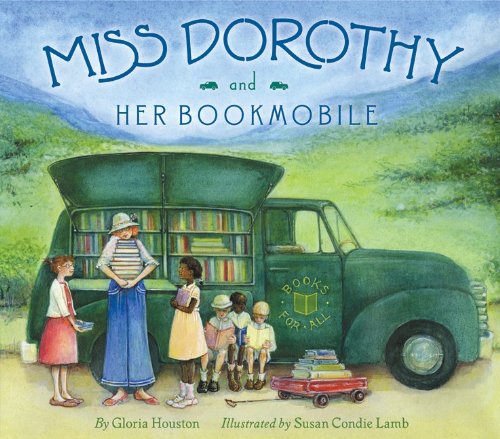
Gloria Houston’s (2011) new picture book, Miss Dorothy and Her Bookmobile opens: “When Dorothy was a young girl, she loved books and she loved people, so she decided that she would become a librarian.”

The opening captures easily what I have known to be true about all librarians: their love of books is only overshadowed by their love of people.  In this collection of recommended texts, librarians figure largely. As a child visiting in the country, I can recall waiting with my mother for the bookmobile.  The sound of tires crunching on gravel signaled its arrival. At home, our town's library was housed in a restored Victorian--a place we went to at least twice a week, if not more often.  I can still recall sitting at a tall window with a pile of books at my feet, waiting for my mother to finish browsing. My childhood was formed and informed by libraries and kind librarians, especially my mother who volunteered as a librarian's assistant at an elementary school. It was she who inspired me to love books, simply by sharing the habit of reading and the habit of visiting public libraries.

Librarians are often characterized as being seemingly quiet, yet we well know that they are the insistent force for social justice in our local communities, bringing opportunity to people who in other circumstances would not be privileged.  They are the very people who understand the importance of public libraries to a democracy and fortunately for all us, they are well organized and work to secure our rights to uncensored reading. From very celebrated librarians such as Pura Belpré (The Storyteller’s Candle/La cvelita de los cuentos) to less known ones, librarians are our neighbors, friends, spouses, siblings, parents and teachers. They stand for others, encourage all, and place into hands--young and old--possibilities.

This blog post is dedicated to librarians in our lives who have made and continue to make critical differences. I urge all to look carefully at proposed local, state, and federal budgets to make sure public libraries in towns, cities and schools are funded.

Mary Ann

Friday, February 18, 2011

Pre K - 12 Bilingual Read Alouds For World Read Aloud Day (3.9.11)

If you are participating in World Read Aloud Day (3.9.11), here's a list of favorite bilingual read alouds for you to consider.

Grades PreK-2

Arugeta, Jorge. 2007. Talking with Mother Earth/Hablando con Madre Tierra. Illustrated by Lucía Angela Pérez. Toronto: Groundwood Books. (English and Spanish).
Byrd, Lee Merrill. 2005. Lover Boy / Juanito el Carinoso: A Bilingual Counting Book (English and Spanish Edition). Illustrated by Francisco Delgado. NY: Lee & Low. (English and Spanish). 
Griego, Margot C., Betsy L. Bucks and Sharon S. Gilbert. 1988. Tortillitas para Mamá and Other Nursery Rhymes (Bilingual Edition in Spanish and English). Illustrated by  Laurel H. Kimball. NY: Henry Holt. (Spanish and English)
Hinojosa, Tish. 2002. Cada Nino / Every Child: A Bilingual Songbook for Kids. Illustrated by Lucia Angela Perez. El Paso, TX: Cinco Puntos Press.
Lee, Huy Voun. 2005. In the Leaves. NY: Henry Holt. (English and Mandarin)
Mado, Michio. 1998. The Magic Pocket: Selected Poems. Illustrated by Anno Mitsumasa. Translated by Empress Michiko. NY: Margaret K. McElderry. (Japanese and English)
 Mora, Pat. 1994. Listen to the Desert/Oye al Desierto. Illustrated by Francisco X. Mora. NY: Clarion. (English and Spanish)
Park, Linda Sue and Julia Durango. 2005. Yum! Yuck!  Illustrated by Sue Rama. Charlesbridge. (Multiple languages: A book of exclamations in English, Farsi, French, Hindi, Spanish,Yiddish)

Robles, Anthony D. 2003. Lakas and the Manilatown Fish/Si Lakas at ang Isdang Manilatown. Illustrated by Carl Angel. San Francisco, CA: Children’s Book Press. (English and Tagalog) Tagalog Audio Recording  
Sáenz, Benjamin Alire. 2008. A Perfect Season for Dreaming / Un tiempo perfecto para soñar (English and Spanish Edition). Illustrated by Esau Andrade Valencia. El Paso, TX: Cinco Puntos Press. (English and Spanish)
Tron, Truong. 2003. Going Home, Coming Home/Ve Nha, Than Que Huong. Illustrated by Ann Phong. San Francisco, CA: Children’s Book Press. (English and Vietnamese)

Grades 3-5
The Lion's Share Qayb LibaaxAhmed, Said Salah. 2006. The Lion's Share/Qayb Libaax. Illustrated by Kelly Dupre. Minnesota Humanities Commission.  (English and Somali).

Bouchard, David. 2008. An Aboriginal Carol. Illustrated by Moses Amik Beaver (First Nations). Music by Susan Aglukark (Inuit). Markham, Ontario: Red Deer Press. (English and Inuktituk).
Gonzalez, Lucia. 2008. The Storyteller’s Cande/La velita de los cuentos. Illustrated by Lulu Delacre. San Francisco: Children’s Book Press. (English and Spanish) Spanish Audio Recording.
Hayes, Joe. 2003. The Day It Snowed Tortillas/ El Dia Que Nevaron Tortillas, Folktales told In Spanish and English. Illustrated by Antonio Casto Lopez. El Paso, TX: Cinco Puntos Press. (Spanish and English).
Herrrera, Juan Felipe.  1995. Calling the Doves/El Canto de las Palomas. Illustrated by Elly Simmons. San Francisco, CA: Children's Book Press. (English and Spanish) Spanish Audio Recording.
Lee-Tai, Amy. 2006. A Place Where Sunflowers Grow. Illustrated by Felicia Hoshino. Children’s Book Press. (Japanese and English)
Rose, Naomi C. 2009. Tibetan Tales from the Top of the World. Clear Light Publisher. (Tibetan and English).
Shin, Sun Yung. 2005. Cooper's Lesson. Illustrated by Kim Cogan. San Francisco: Children's Book Press. (English and Korean) Korean Audio Recording

Grades 6-8
From   Nuits de pow-wow
Anzaldua, Gloria. 1997. Friends from the Other Side / Amigos del otro lado. Illustrated by Consuelo Mendez. San Francisco, CA: Children's Book Press. (English and Spanish)
Bouchard, David & Pam Aleekuk. 2010. Nuits de pow-wow. Illustrated by Leonard Paul. Music by Buffy Sainte-Marie. Markham, Ontario: Red Deer Press. (Bilingual French and Mi'kmaq). Trailer for Long Powwow Nights.
Bouchard, David. 2006.  Nokum is My Teacher (with CD). Translated by Northern Cree. Illustrated by Allan Sapp (Cree). Markham, Ontario: Red Deer Press. (English and Cree).
Parsons-Yazzie, Evangeline. 2005. Naazbaa'/Little Woman Warrior Who Came Home: A Story of the Navajo Long Walk. Illustrated by Irving Toddy. Salina Bookshelf. (Navajo and English).


Grades 9-12
Carlson, Lori Marie. 1998. Sol a Sol: Original and Selected Bilingual Poems. Illustrated by Emily Lisker. NY: Henry Holt. (English and Spanish)

Hayes, Joe. Ghost Fever/Mal de Fantasma. El Paso, TX: Chang, Edward. 2009. Walking into My World. NY: BookSurge. (Mandarin Chinese and English)
Cinco Puntos Press. (English and Spanish)
Heaney, Seamus. 2001. Beowulf: A New Verse Translation. NY: Norton. (Anglo Saxon and English)
Marcos, Subcomandate. 2003. The Story of Colors / La Historia de los Colores: A Bilingual Folktale from the Jungles of Chiapas (English and Spanish Edition). Illustrated by Domitila Dominguez. Translated by Anne Bar Din. El Paso, TX: Cinco Puntos Press. (English and Spanish)
Nye, Naomi Shihab. 1998. This Tree is Older Than You Are: A Bilingual Gathering of Poems and Stores with Paintings by Mexican Artists. NY: Aladdin.  (English and Spanish)

Thursday, February 17, 2011

Books to Teach Writer's Craft with in Middle School

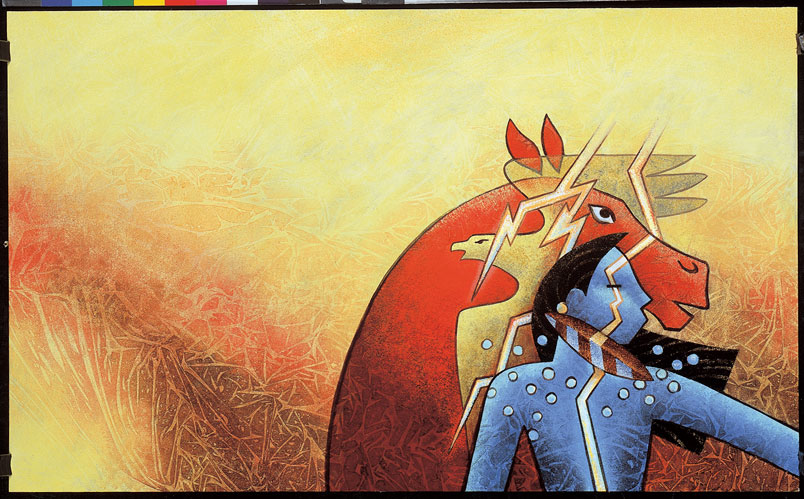
Detail from Crazy Horse's Vision by S.D. Nelson (Illustrator)
Connecting Illustrations & Text
Begay, Shonto (Dine). 1995. Navajo: Visions and Voices Across the Mesa. NY: Scholastic.
Bruchac, Joseph. 2000. Crazy Horse’s Vision. Illustrated by S. D. Nelson. NY: Lee & Low.
Burleigh, Robert. 2006. Tiger of the Snows: Tenzing Norgay: The Boy Whose Dream Was Everest.
Illustrated by Ed Young. New York: Atheneum Books.
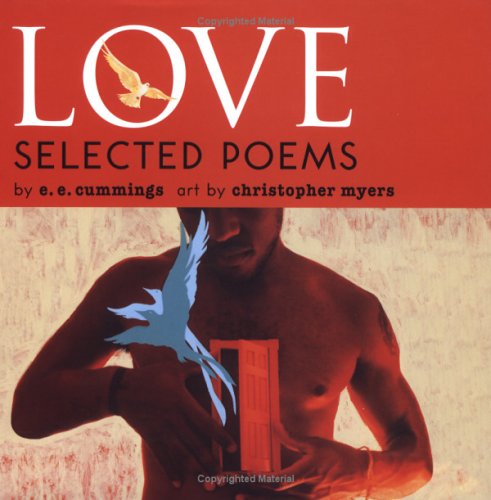
cummings, e.e. 2005. Love: Selected Poems. Art by Christopher Myers. New York: Jump at the
Sun.
Duggleby, John.1998. Story Painter: The Life of Jacob Lawrence. San Francisco: Chronicle
Books.
Ellabbad, Mohieddine. 2006. The Illustrator’s Notebook. Toronto: Groundwood Books.
Feelings, Tom. 1995. The Middle Passage: White Ships/Black Cargo. New York: Dial.
Hughes, Langston. 1995. The Block. Paintings by Romare Bearden. NY: Viking Juvenile.
Myers, Walter Dean. 2005. Patrol: An American Soldier in Vietnam. Collage by Ann Grifalconi. New York: HarperTrophy.
Shange, Ntozake.1994. I Live in Music. Paintings by Romare Bearden. New York: Welcome Books.
Sis, Peter. 2007. The Wall: Growing Up Behind the Iron Curtain. NY: Farrar, Straus and Giroux.
Young, Ed. 2005. Beyond the Great Mountains: A Visual Poem About China. San Francisco, CA: Chronicle.
Detail from Tom Feelings, The Middle Passage.

Craft: Language & Syntax
Barakat, Ibtisam 2007. Tasting the Sky: A Palestinian Childhood. New York: Farrar, Straus, &Giroux.
Flores-Galbis, Enrique. 2010. 90 Miles from Havana. Roaring Brook Press.
Giovanni, Nikki. 1996. Shimmy Shimmy Shimmy Like My Sister Kate: Looking at the Harlem Renaissance through Poems. New York: Henry Holt.
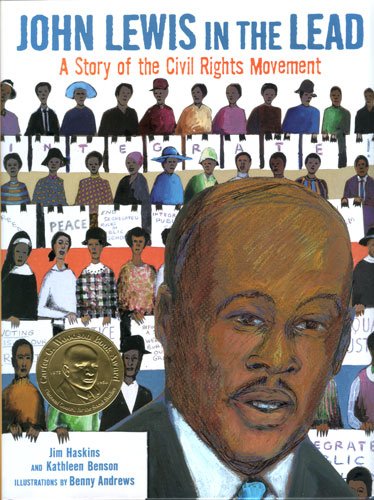
Haskins, Jim & Benson, Kathleen. 2006. John Lewis in the Lead: A Story of the Civil Rights Movement. Illustrated by Benny Andrews. NY: Lee & Low.
Johnson, Angela. 2003. A Cool Moonlight. Illustrated by Kamil Vojnar. New York: Dial Books.
Jordan, June. 1995. Poetry for the People; A Revolutionary Blueprint. New York: Routledge.
Joseph, Lynn. 2002. The Color of My Words. New York: HarperTrophy.
Miller-Lachmann, Lyn, (Ed). 2003. Once Upon a Cuento. Williamantic, CT: Curbstone Press.
Mora, Pat. 2000. My Own True Name: New and Selected Poems for Young Adults. Houston, TX: Arte Publico Press.
Myers, Walter Dean. 2007. What They Found: Love on 145th Street. New York: Wendy Lamb Books. Nelson, S.D. 2006. Quiet Hero: The Ira Hayes Story. NY: Lee & Low Books.
Rushdie, Salman. 1990. Haroun and the Sea of Stories. New York: Penguin.
Santiago, Chiori. 2002. Home to Medicine Mountain.Illustrated by Judith Lowry. San Francisco, CA:
Children’s Book Press.
Urrea, Luis Alberto.2000. Vatos. El Paso, TX: CInco Puntos Press.
Wong, Janet S. 1999. The Rainbow Hand: Poems About Mothers and Children. Illustrated by Jennifer Hewiston. New York: Margaret K. McElderry Books.
Woodson, Jacqueline. 1995. From the Notebooks of Melanin Sun. New York: The Blue Sky Press.

Text Structure: Non-Fiction/Essay

Bial, Raymond. 2000. A Handful of Dirt. NY: Walker Books.
Bryson, Bill. 2000. I'm a Stranger Here Myself: Notes on Returning to America After 20 Years Away. NY: Broadway.
Burns, Loree Griffin. 2007. Tracking Trash: Flotsam, Jetsam, and the Science of Ocean Motion (Scientists in the Field). Boston: Houghton.
Curry, Barbara K. & Brodie, James M. 1996. Sweet Words So Brave The Story of African American Literature. Illustrated by Jerry Butler. Madison, WI: Zino Press.
Freedman, Russell. 1998. Martha Graham: A Dancer’s Life. NY: Clarion.
Glover, Savion, and Bruce Weber. 2000. Savion: My Life in Tap. New York: Morrow.
Gore, Al. 2007. An Inconvenient Truth: The Crisis of Global Warming, Rev. Ed. Adapted by Jane O’Connor. NY: Viking/Penguin.
Hill, Laban Carrick. 2004. Harlem Stomp! A Cultural History of the Harlem Renaissance. New York: Little Brown.
Lopez, Barry. 1989. Crossing Open Ground. NY: Vintage.
Major, John S., Belanus, Betty J. and Yo-Yo Ma. 2002. Caravan to America: Living Arts of the Silk Road. Chicago, IL: Cricket Books.
Marx, Trish. 2007. Steel Drumming at the Apollo: The Road to Super Top Dog. Illustrated by Ellen B.
Senisi. NY: Lee & Low.
Mora, Pat. 2002. A Library for Juana: The World of Sor Juana Ines. Illustrated by Beatriz Vidal. New York: Knopf.
Orgill, Roxane. 2001. Shout, Sister, Shout!: Ten Girl Singers Who Shaped A Century. NY: Margaret K.McElderry.
Schlitz, Lara Amy. 2007. Good Masters! Sweet Ladies! Voices from a Medieval Village. Illustrated by Robert Byrd. Cambridge, MA: Candlewick.
Siry, Alexandra. 2007. Sneeze! Watertown. MA: Charlesbridge Publishing.
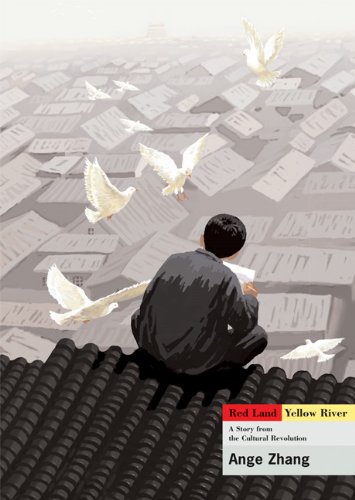
Zhang, Ange. 2004. Red Land, Yellow River: A Story from the Cultural Revolution. Toronto: Ground- wood.


Text Crafting: Fiction & Poetry
Adoff, Arnold. 1997. I Am the Darker Brother: An An- thology of Modern Poems by African Americans. New York: Simon & Schuster.
Bradbury, Ray. 1985. Dandelion Wine. New York: Bantam Books.Bruchac, Joseph. 2006. Wabi: A Hero’s Tale. NY: Dial.
Cheng, Andrea. 2004. Honeysuckle House. Asheville, NC: Front Street.
Compestine, Ying Chang. 2007. Revolution Is Not a Dinner Party. New York: Henry Holt.
Danticat, Edwidge. 2003. Behind the Mountains. New York: Scholastic.
Erdrich, Louise. 2002. The Range Eternal. Illustrated by Steve Johnson/Lou Fancher. NY: Hyperion.
Greenberg, Jan. 2001. Heart to Heart: New Poems Inspired by Twentieth-Century American Art. New York: Harry N. Abrams..
Johnston, Tony. 2007. Bone By Bone By Bone. New Milford, CT: Roaring Brook Press.
Lopez, L. Luis. 2000. Musings of a Barrio Sack Boy. Grand Junction, CO: Farolito Press. (Selections).
Mosley, Walter. 2005. 47. Boston: Little, Brown.
Myers, Walter Dean. 2006. Street Love. NY: Amistad.
Neri, G. 2007. Chess Rumble. Illustrated by Jesse Joshua Watson. NY: Lee & Low.
Nye, Naomi Shihab. 1998. The Space Between Our Footsteps: Poems and Paintings from the Middle East. New York: Simon & Schuster.
Smith, Charles R. 2007. Hoop Queens. Cambridge, MA: Candlewick Press.Sullivan, Charles (Ed.). 1994. Here Is My Kingdom: Hispanic-American Literature and Art for Young People. NY: Abrams.
Weatherford, Carole Boston. 2007. Birmingham, 1963. Honesdale, PA: Wordsong.

Ways with Genre
Abadzis, Nick. 2007. Laika. New York: First Second. Cardenas, Teresa. 2006. Letters to My Mother. Translated by David Unger. Toronto: Groundwood.
Ellis, Deborah. The Breadwinner Trilogy.
2000. The Breadwinner. Toronto: Groundwood.
2003. Mud City. Toronto: Groundwood.
2002. Parvana’s Journey. Toronto: Groundwood.
Grandits, John. 2007. Blue Lipstick: Concrete Poems. New York: Clarion.
Halilbegovich, Nadja. 2006. My Childhood Under Fire: A Sarajevo Diary. Tonawanda, NY: Kids Can Press.
Hubbard, Jim (Ed.). 1994. Shooting Back From the Reservation: A Photographic View of Life by Native American Youth. Foreword by Dennis Banks (Anishinaabe). NY: The New Press
Jiménez, Francisco. 2001. Breaking Through. Boston: Houghton.
Khan, Rukhsana. 1988. The Roses in My Carpets. Illustrated by Ronald Himler. Markham, Ontario: Fitzhenry and Whiteside.
Levine, Ellen. 2000. Freedom's Children: Young Civil Rights Activists Tell Their Own Stories. NY: Putnam Juvenile.
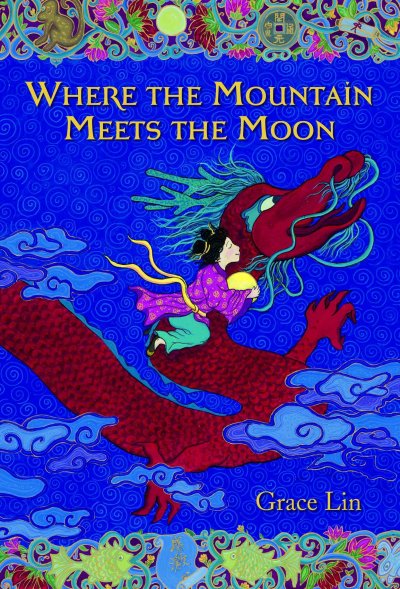
Lin, Grace. 2009. Where the Mountain Meets the Moon. NY: Little, Brown.
Lopez, Barry. 1997. Lessons from the Wolverine. Illustrated by Tom Pohrt. Athens, GA: University of Georgia Press.
Nelson, Marilyn. 2005. A Wreath for Emmett Till. Illustrated by Philippe Lardy. Boston: Houghton.
Patton, Christopher. 2007. Jack Pine. Illustrations by Cybele Young. Toronto: Groundwood.
Pinkney, Andrea Davis. 2000. Let it Shine: Stories of Black Women Freedom Fighters. Illustrated by Stephen Alcorn. San Diego: Harcourt.
Tan, Shaun. 2007. Arrival. NY: Arthur A. Levine.
Testa, Maria. 2007. Something About America. Cambridge, MA: Candlewick.
Yoo, Paula. 2005. Sixteen Years in Sixteen Seconds: The Sammy Lee Story. Illustrated by Dom Lee. NY: Lee & Low.

Wednesday, February 16, 2011

Cultural Characters: Or Why My Color Doesn't Wash Off - Book & Instruction Suggestions

Collection of Cultural Characters based on picture books.


A former college student of mine working in a "ritzy daycare in midtown" recently wrote to me asking for some book suggestions and lesson ideas she might use with  preschoolers in order to celebrate (and perhaps better understand) racial diversity.  She wrote: "to give you an idea of the mindset of the children, one asked me if I painted myself brown every morning and why doesn't it come off when I wash my hands."

In addition to privileged youngsters who often are represented in the stories featured in classrooms, the inclusion of high quality multicultural books and the use of characters from those books can provide important opportunities for all children to come to know self and other.  One only has to think of visual artist, Daryl Wells who recounts what she needed to do no in order to find herself in the books in school. Wells (Rohmer, 1997) writes: “When I was growing up, I didn’t understand why the crayon labeled ‘flesh’ in my crayon box wasn’t the color of my skin. As a way of proving that my color was also beautiful and real, I went through all my favorite storybooks and colored in the characters with brown crayon. In this way I was able to relate to them as if they really were a part of my world.”

In thinking about the challenges my former student faces in helping privileged children expand their understanding of the world, I thought of the idea of cultural characters. It is an instructional technique I routinely used in early primary grade classes and directly taught preservice teachers.

What is Cultural Characters?

Cultural characters is a book extension literacy practice based on Janice J. Beaty's and Linda Pratt's (2006) Early Literacy in Preschool & Kindergarten:A Multicultural Perspective (Upper Saddle River, NJ: Pearson). Teachers select a collection of global multicultural children's literature for read aloud and then extend the literature experience through different engagements focusing on the characters from the texts.  In creating cultural characters I scan images of the characters from the books and then use these images in centers.  I may make (or have children make) stick puppets (using self-adhesive craft sticks) and adhere fasteners in order for children to be able to use the images in a felt story.   Additionally, students "recreate" the characters through their own visual, musical, and movement art.

Cultural characters are characters taken from high quality global multicultural children's picture books that feature cultural characters that young children can identify with and interact with by:
  • Drawing/painting pictures of the characters and interpretations of the characters
  • Telling their own stories about the characters ( using book images and student created images made into stick puppets)
  • Building block structures/homes for the characters 
  • Pretending to be the characters 
  • Making make-believe meals for the characters 
  • Making costumes for the characters 
  • Rereading the books featuring the characters 
  • Painting scenes for the characters 
  • Writing, dancing, singing, rapping about the characters 
  • Using iPods to make and record sound effects related to the characters 

Cultural character, Danilito, from When The World Was New
D.H. Figueredo's When this World Was New, tells the moving story of Danilito who has come from the Caribbean to the New York City area. Scared at being new, the child awakes the next day to a snow field landscape and sets out with his Papa to explore their new home. Using an image created by the illustrator Enrique Sanchez or a student-created one, students could retell the story, extend the story (what next adventure might Danilito experience)or interrupt the story (blow out a section of the story not told). The physical prop would help students to create stories.

The work with cultural characters across a school year allows for students to come to know themselves through the development of characters and character situations, as well as come to better understand characters who are different from themselves.

To help you get started with cultural characters in the preschool and early primary grades I have compiled a chart that lists the name, gender, culture, title of book and author, and have suggested some possible activities and potential learning center locations for each character. 


Examples of Cultural Characters from Children's Literature
Compiled by Mary Ann Reilly


Name (Gender)
Culture
Title of Book
Author
Possible Activity
Learning Center
African American  (M)
African American
Summer Sun Risin
Nikola-Lisa, W.
Farm chores
Dramatic Play Center
unnamed narrator (M)
African American
Yesterday I Had the Blues
Frame, Jeron Ashford
Metaphor Making
Art center (paint)
Unnamed boy
African American

Yo! Yes!
Raschka, Chris
Perform Text
Dramatic Play Center
Cassie (F)
African American
Tar Beach
Ringgold, Faith
Conversation
Block Center
Clover (F),

African American
The Other Side
Woodson, Jacqueline
Create jump rope rhymes
Writing center/recording center
Rashaad (M)
African-American
The Barber’s Cutting Edge
Hest, Amy
Harvesting Words from the Room
Writing Center
George (M)
African-American
Mr. George Baker
Hest, Amy
Making Own Books
Art Center
Girlpie (F)
African-American
Homemade Love
hooks, bell
Retell story through paintings
Art Center
Joe-Joe (M)
African American
Joe-Joe’s First flight
Tarpley, Natasha Anastasia
Story Retelling
Art Center
Lena (F)
African American
The Color of Us
Katz, Karen
Painting
Art Center
Marcenia (F)
African American
Catching the Moon: The Story of a Young Girl’s Baseball Dream
Hubbard, Crystal
Ball playing
Large Motor Center
Max (M)
African-American
Max Found Two Sticks
Pinkney, Brian
Drumming (rhythm)
Music Center
Quinnie (F)
African American
Quinnie Blue
Johnson, Dinah
Questioning
Dramatic Play Center
Anna (F)
Anglo-American

Building a Bridge
Begaye, Lisa
Building a bridge
Block Center
Annie (F)
Anglo-American
The Other Side
Woodson, Jacqueline
Create jump rope rhymes
Writing center/recording center
Boy
Anglo
Dream Weaver
London, Jonathan
Recording observations
Science Center
Granddaughter (F)
Anglo-American
Thunder Cake
Polacco, Patricia
Cooking
Dramatic Play Center
Harry (M)

Anglo-American

Mr. George Baker
Hest, Amy
Making Own Books
Art Center
Lucy (F)
Anglo-American
Grandpa’s Corner Store
DiSalvo-Ryan, DyAnne
Build a neighborhood
Block Center
Mark (M)
Anglo-American
Night of the Moonjellies
Shasha, Mark
Working at a seaside hot dog stand
Dramatic Play Center
Max (M)
Anglo
Where The Wild Things Are
Sendak, Maurice
Dancing (rhythm)
Music center


Cultural Characters

Name (Gender)
Culture
Title of Book
Author
Possible Activity
Learning Center
Sophie (F)
Anglo-American
When Sophie Gets Angry…Really, Really Angry
Bang, Molly
Painting Center: What I Can Do When I Get Angry
Art Center
Monique (F)
Anglo
Unique Monique
Rousaki, Maria
Painting
Art Center
Unnamed boy
Anglo-American
Yo! Yes!
Raschka, Chris
Perform Text
Dramatic Play Center
Little girl
Asian
Tracks in the Snow
Yee, Wong Herbert
Questioning
Dramatic Play Center
Anu (F)
Asian American
Closet Ghosts
Krishnaswami, Uma
Phone Conversation
Dramatic Play Center
Emma(F)
Asian American
Emma’s Rug
Say, Allen
Painting
Art Center
Hannah (F)
Chinese
Hannah is My Name
Yang, Belle
Retell the Story
Book Center
Xiao Ming (M)
Chinese
At the Beach
Lee, Huy Youn
Write 10 Chinese Characters
Sand Table
Henry (M)
Chinese-American
Henry and the Kite Dragon
Hall, Bruce Edward
Kite Making & Decorating
Art Center
Ling Sung (M)
Chinese-American
Cleversticks
Ashley, Bernard
Using chopsticks
Dramatic play center
Narrator (B)
Chinese-American
Big Jimmy’s Kum Kau Chinese Take Out
Lewin, Ted
Making Food
Preparing Menus
Dramatic Play Center
Helen (F)
Chinese & Anglo American
Grandfather Counts
Cheng, Andrea
Counting in English & Chinese
Math Center
Nim (F)
Chinese-American
Nim and the War Effort
Lee, Milly
Build a neighborhood
Block Center
Chavi (F)
Cuban
Drum, Chavi, Drum
Dole, Mayra L.
Drumming (Rhythm)
Music Center
Ahmed (M)
Egyptian
The Day of Ahmed’s Secret
Heide, Florence
Writing Name
Writing Center
Lakas (M)
Filipino
Lakas and the Manilatown Fish/Si Lakas at ang Isdang Manilatown
Robles, Anthony D.
Flannel Board Story
Book Center
Esperanza (F)
Guatemalan
Abuela’s Weave
Castaneda, Omar S.
Weaving
Dramatic Play Center/Art Center
Pascual (M)
Guatemalan
Pascual’s Magic Pictures
Gage,  Amy
Writing Captions
Writing Center
Marisa (F)
Hawaiian
Dumpling Soup
Rattigan, Jama Kim
Making Food
Dramatic Play Center
Carlitos (M)
Hispanic
¡Si, Se Puede! Yes, We Can!
Herrera, Juan Felipe
Flannel Board Story
Book Center
Chico (M)
Hispanic
First Day in the Grapes
Perez, L. King
Role Play Resolving Conflicts
Dramatic Play Center
Danilito (M)
Hispanic
When This World Was New
Figueredo, D.H.
Pastel Snow Drawings
Art Center


 Cultural Characters

Name (Gender)
Culture
Title of Book
Author
Possible Activity
Learning Center
Francísco (M)
Hispanic
La Maríposa
Jiménez, Francísco
Drawing
Art Center
Luna (F)
Hispanic
Moony Luna: Luna, Lunita, Lunera
Argueta, Jorge
Retell the Story (Sequence)
Book Center
Pablo (M)
Hispanic
Pablo’s Tree
Mora, Pat
Cutting Decorations
Art Center
Rosa (F)
Hispanic
A Chair for My Mother
Williams, Vera B.
Counting coins
Math Center
Rosalba (F)
Hispanic
Abuela
Dorros, Arthur
Conversation
Block Center
Tomasito (M)
Hispanic (spina bifada)
Featherless/Desplumado
Herrera, Juan Felipe
Flannel Board Story
Book Center
Girl(F)
Indian
Monsoon
Krishnaswami, Uma
Making Cityscapes
Block Center
Eva (F)
Inuit
Very Last First Time
Andrews, Jan
Story Retelling
Book Center
Ida (F)
Jamaican
The Tangerine Tree
Hanson, Regina
Planting Seeds
Science Center
Mariko (F)
Japanese
Flowers from Mariko
Noguchi, Rick & Jenks, Doreen
Planting Seeds
Science Center
Sesshu Toyo (M)
Japanese
The Boy Who Drew Cats
Hodges, Margaret
Drawing
Art Center
Kiri (F)
Japanese-American
Butterflies for Kiri
Falwell, Cathryn
Origami
Art Center
Sang-hee (M)
Korean
The Firekeeper’s Son
Park, Linda Sue
Flannel Board Story
Book Center
Yoon (F)
Korean
My Name is Yoon
Recovits, Helen
Write Name
Writing Center
Unnamed Narrator (F)
Korean-American
The Trip Back Home
Wong, Janet
Retell the Story with Story Artifacts
Book Center
Mike (M)
Korean-American
The Have A Good Day Café
Park, Frances & Ginger Park
Running a Business
Dramatic Play Center
Cooper (M)
Korean, Anglo-American
Cooper’s Lesson
Shin, Sun Yung
Paint Self-Portrait
Art Center
María (F)
Mexican
Too Many Tamales
Soto, Gary
Making tamales
Dramatic Play Center
Mateo (M)
Mexican
Dream Carver
Cohn, Diana
Painting Wooden Toys
Art Center
Esmeralda (F)
Mexican
Hairs/Pelitos
Cisneros, Sandra
Metaphor writing
Writing Center
Esmeralda (F)
Mexican
Super Cilantro Girl/La superniña del cilantro
Herrera, Juan Felipe
Create a Super Hero/Heroine
Art Center
John Cloud (M)
Mohawk
Sky Dancers
Kirk, Connie Ann
Making Cityscapes
Block Center
Dear One (F)
Native Alaskan
Mama, Do You Love Me?
Joosse, Barbara M.
Questioning
Dramatic Play Center
Jenna (F)
Native American
Jingle Dancer
Smith, Cynthia Leitich
Dancing (Rhythm)
Music Center

Name (Gender)
Culture
Title of Book
Author
Possible Activity
Learning Center
Juanita (F)
Navajo

Building a Bridge
Begaye, Lisa
Building a bridge
Block Center
John (M)
Navajo

The Unbreakable Code
Hunter, Sara Hoagland
Create a code
Math center/art center
Allie (F) & Alex (F)
Ojibway
Skysisters
Waboose, Jan Bordeau
Conversation
Sand table
Art center
Mona (F)
Palestinian-American
Sitti’s Secrets
Nye, Naomi Shihab
Write/dictate a letter
Writing center/recording center
Sister Girl (F)
Plains Indian

The Star People: A Lakota Story
Nelson, S.D.
Imitate Ledger Art
Art center
Young Wolf (M)
Plains Indian

The Star People: A Lakota Story
Nelson, S.D.
Imitate Ledger Art
Art center
Flying Cloud (M)
Plains Indian

Gift Horse: A Lakota Story
Nelson, S.D.
Retell using Ledger Art
Art center
Zola, et al.
South African
At the Crossroads
Isadora, Rachel
Continuing the story
Book Center
Hannah (F)
Taiwanese
Hannah Is My Name
Yang, Belle
Making Food
Dramatic Play Center
Shay-yu (F)
Taiwanese
On My Way To Buy Eggs
Chen, Chin-Yuan
Retell story events
Art Center
Elizabeti (F)
Tanzanian
Elizabeti’s School
Stuve-Bodeen, Stephanie
Dancing and/or Counting
Dramtic Play Center/Math Center
Kiki (F)
Tiwa Indian

Kiki’s Journey
Orona-Ramirez, Kristy
Cooking
Dramatic Play Center
Kukamba (F)
Zimbabwean

Gugu’s House
Stock, Catherine
Painting
Art Center
  

Work Cited: 
Rohmer, Harriet, Ed. (1997). Just Like Me: Stories and Self-Portraits by Fourteen Artists. San Francisco: Children’s Book Press, p. 24.