Showing posts with label grade 2. Show all posts

Saturday, December 26, 2015

Text Set for 2nd Grade: Topic - Himalayan Mountains


from Jan Reynolds' Vanishing Cultures: Himalaya


Text Set for 2nd Grade: Topic - Himalayan Mountains


Read Aloud/Shared Reading
Note: Tenzin's Deer is the last read aloud in this text set and serves as a bridge to the next text set as it is a fable. Multiple copies of these texts are needed as students working in small groups reread the texts.
from Crane Boy
  1. Cohn, Diana. (2015). Crane Boy. Illustrated by Youme Landowne. El Paso, TX: Cinco Puntos Press. (40 pp.) (Narrative)
  2. Jenkins, Steve. (2002). The Top of the World: Climbing Mount Everest. New York: Sandpiper. (900L) (Informational)
  3. Martin, Jacqueline Briggs. (2010). The Chiru of High Tibet: A True Story. Illustrated byLinda Wingerter. Boston, MA: Houghton Mifflin Books. (900L) (Biography)
  4. Reynolds, Jan. (2007). Himalaya: Vanishing Cultures. New York: Lee & Low Books. (1000L) (Photo essay)
  5. Soros, Barbara. (2007). Tenzin’s Deer. Illustrated by Danuta Mayer. Cambridge, MA: Barefoot Books. (Lexile N/A) (Fable)

Browsing Books and Independent/Buddy Reading

Note: Because of the topic, few books used for traditional guided reading are included. Nonetheless, the topic fascinates children and through buddy reading, students can (and do) peruse these texts. Interest trumps 'reading level.'
screenshot 1
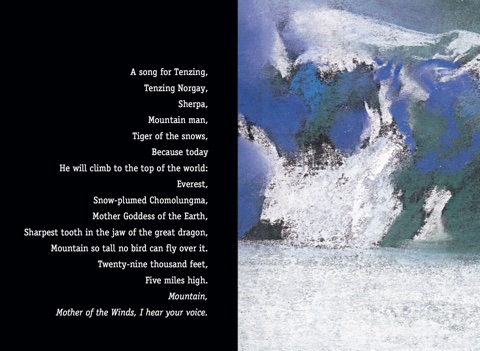
from Tiger of the Snows (iBook version)
  1. Adhikary,  Anita . (2011). N Is For Nepal Herndon, VA: Mascot Books Inc. (32 pp.) (ABC book, Informational)
  2. Blanc, Katherine. (2010). The Boy Who Conquered Everest: The Jordan Romero Story. Hay House.  (890L, 72 pp.) 
  3. Burleigh, Robert. (2014). Tiger of the Snows. Illustrated by Ed Young. New York: Atheneum Books for Young Readers. (40 pp.) (Biography of Tenzing Norgay) iBook version
  4. Cohn, Diana. (2009). Namaste! Illustrated by Amy Córdova. Herndon, VA: Steiner Books. (970L, 32 pp.) (Contemporary fiction)
  5. Donkin, Andrew. (2001). DK Readers: Danger on the Mountain -- Scaling the World's Highest Peaks (Level 4: Reading Alone). Washington, DC: DK Children. (870L, 48 pp.) (Informational text)
  6. Esbaum, Jill. (2014). Explore My World Snow Leopards. Washington, DC: National Geographic. (32 pp.) (Informational text)
  7. Gerstein, Mordicai. The Mountains of Tibet.  Cambridge, MA: Barefoot Books.
  8. Guiberson, Brenda Z.  (2010). Moon Bear. Illustrated by Ed Young. New York: Henry Holt. (Informational)
  9. Heine, Theresa. (2014). Chandra's Magic Light: A Story in Nepal.  Illustrated by Judith Gueyfier. Cambridge, MA: Barefoot Books.  (Fiction, picture book)
  10. Herman, Gail. (2015). Climbing Everest (Totally True Adventures). Illustrated by Michele Amatrula. New York: Random House Books for Young Readers. (570L, 112 pp.) (Account)
  11. King, Deide. (2010). I See the Sun in Nepal. Illustrated by Judith Inglese. Satya House Publications. (380L. 40 pp.) Bilingual in English and Nepalese (Devanagari) (Fiction, picture book)
  12. Kramer, Sydelle. (1993). To the Top! Climbing the World's Highest Mountain (Step-Into-Reading, Step 5). New York:  Random House Books for Young Readers. (620L. 48 pp.) (Account of Hillary and Norgay's ascent of Mount Everest)
  13. Kroll, Virginia. (2014). Snowbound Secrets. Illustrated by Nívola Uyá. Madrid, Spain: Cuento de Luz. (36 pp.) (Contemporary Tale.+
  14. Morris, Jackie. (2014). The Snow Leopard. London, UK: Frances Lincoln Children's Books. (32 pp.) (Fable)
  15. Novesky, Amy. (2004). Elephant Prince: The Story of Ganesh. Illustrated by Belgin K. Wedman. San Rafael, CA: Mandala Publishing. (32 pp.) (Myth)
  16. Rima Fujita. (2011). Save the Himalayas.  Long Island City, NY: One Peace Books. (44 pp.) (Contemporary tale)
  17. Shrestha, Sophie. (2007). In Search of the Thunder Dragon. Illustrated by Romio Shrestha. San Rafael, CA: Insight Kids. (32 pp.)
  18. Taylor-Butler, Christine. (2014). Sacred Mountain: Everest. New York: Lee and Low Books. (48 pp.)
  19. Tiwari, Hari. (2013). The Story of a Pumpkin: A Traditional Tale from Bhutan. Illustrated by Dal Rai. NH: New Hampshire Humanities Council. 
  20. Turner, Pamela S. (2008). A Life in the Wild: George Schaller's Struggle to Save the Last Great Beasts. New York: Farrar, Straus and Giroux. (1020L, 112 pp.) (Biography)

Friday, September 18, 2015

Text Sets in Grade 2: Fables - 9 Read Aloud & 99 Guided & Independent Reading Books

from Jerry Pinkney's The Lion and the Mouse
Text Set: Topic - Fables

All of the read alouds are fables. Joseph Bruchac's Turtle's Race with Beaver is a Seneca tale based on the Aesop fable, Tortoise and the Hare (Jerry Pinkney text). So too is Pat Mora's The Race of Toad and Deer, a Mayan fable. The morals of each fable are different though. Arnold Lobel tells 20 original fables in his text, each with an accompanying illustration. Pinkney also retells and illustrates The Grasshopper and the Ants and The Lion & the Mouse.
  
Read Aloud
Bruchac, Joseph (Abenaki). (2003). Turtle’s Race with Beaver. Illustrated by Jose Aruego and Ariane Dewey. New York: Dial. (Lexile N/A)
Lobel, Arnold. (1983). Fables. New York: HarperCollins. (540 L)
Mora, Pat.  (2001). The Race of Toad and Deer. Illustrated by Domi. Toronto, ON: Groundwood Books. (Lexile N/A)
The Race of Toad and Deer

Mora, Pat.  (2001). La Carrera del Sapo y el Venado. Illustrated by Domi. Toronto, ON: Groundwood Books. (Lexile N/A)
Pinkney, Jerry. (2015). The Grasshopper & the Ants.  New York: Little, Brown Books for Young Readers.
Pinkney, Jerry. (2013). The Tortoise & the Hare. New York: Little, Brown Books for Young Readers.
Pinkney, Jerry. (2009). The Lion & the Mouse. New York: Little, Brown Books for Young Readers. (Caldecott Medal)
Pinkney, Jerry. (2000). Aesop’s Fables. San Francisco, CA: Chronicle Books. (760L)
Pinkney, Jerry. (2000). Fabulas de Esopo. San Francisco, CA: Chronicle Books. (760L)


Guided Reading and Independent/Buddy Reading (Levels D - X)


Levels D - H 

  1. Dufresne, Michele. The Grasshopper and the AntIllustrated by Michael Chesworth. Pioneer Valley Books. (GR Level: D/6)
  2. Mattison, Ruth. The Country Mouse and a Town Mouse. Illustrated by Max Stasiuk. Pioneer Valley Books. (GR Level: E/7)
  3. Dufresne, Michele. The Tortoise and the Hare. Illustrated by Ann Caranci. Pioneer Valley Books. (GR Level: E/8)
  4. Dufresne, Michele. The Lion and the MouseIllustrated by Max Stasiuk. Pioneer Valley Books. (GR Level: F/10)
  5. Dufresne, Michele. The Boy Who Cried Wolf. Illustrated by Tracy La Rue Hohn. Pioneer Valley Books. (GR Level: G/11)
  6. Dufresne, Michele. The Goose and the Golden EggIllustrated by Michelle Morse. Pioneer Valley Books. (GR Level: G/12)
  7. Arnold, Tedd.  Green Wilma. New York: Scholastic. (600L, GR Level: H/14)
  8. Dufresne, Michele. The Milkmaid and Her Pail. Illustrated by Farida Zaman. Pioneer Valley Books. (GR Level: H/13)
  9. Helmer, Ingrid. The Boy Who Cried Wolf. Illustrated by Natalia Vasquez. New York: Scholastic. (GR Level H/14)

Level I

  1. Blair, Eric. (2012). The Boy Who Cried Wolf: A Retelling of Aesop's Fable. Illustrated by Dianne Silverman. North Mankato, MN: Capstone Press. (360L, GR Level I)
  2. Blair, Eric. (2006). El Pastorcito Mentiroso: A Retelling  of Aesop’s Fable/Versión de la fábula de Esopo. Illustrated by Dianne Silverman. North Mankato, MN: Capstone Press. (410L, GR Level I)
  3. Blair, Eric. (2012). Belling the Cat: A Retelling of Aesop's Fable. Illustrated by Dianne Silverman. North Mankato, MN: Capstone Press. (470L, GR Level I))
  4. Blair, Eric. (2012). The Country Mouse and the City Mouse: : A Retelling of Aesop's Fable. Illustrated by Dianne Silverman. North Mankato, MN: Capstone Press. (400L, GR Level I))
  5. Blair, Eric. (2006). El raton de campo y el raton de ciudad: Versión de la fábula de EsopoIllustrated by Dianne Silverman. North Mankato, MN: Capstone Press. (490L, GR Level I))
  6. Blair, Eric. (2012).  The Donkey in the Lion's Skin: A Retelling of Aesop's Fable. Illustrated by Dianne Silverman. North Mankato, MN: Capstone Press. (370L, GR Level I))
  7. Blair, Eric. (2006). El cuervo y la jarra: Versión de la fábula de Esopo. Illustrated by Dianne Silverman. North Mankato, MN: Capstone Press. (400L, GR Level: I)
  8. Forest, Heather. (2013). The Contest Between the Sun and the Wind: An Aesop's Fable. Illustrated by Susan Gaber. Atlanta, GA: August House.  (460L, GR Level I)
  9. Guillain, Charlotte. (2013). The Kitten Who Cried Dog. Illustrated by Dawn Beacon. North Mankato, MN: Capstone Press. (630L, GR Level: I)
  10. Lionni, Leo. (1997). A Color of His Own. New York: Dragonfly Books. (640L, GR Level: I/16)
  11. White, Mark. (2012). The Ant and the Grasshopper: A Retelling of Aesop's Fable. Illustrated by Sara Rojo Pérez. North Mankato, MN: Capstone Press. (370L, GR Level I))
  12. White, Mark. (2006). La cigarra y la hormiga: Versión de la fábula de Esopo. Illustrated by Sara Rojo Pérez. North Mankato, MN: Capstone Press. (380L, GR Level I)
  13. White, Mark. (2012). The Lion and the Mouse: A Retelling of Aesop's Fable.  Illustrated by Sara Rojo Pérez. North Mankato, MN: Capstone Press. (380L, GR Level I)

  14. White, Mark. (2012). The Fox and the Grapes: A Retelling of Aesop's Fable. Illustrated by Sara Rojo Pérez. North Mankato, MN: Capstone Press. (420L, GR Level I)
  15. White, Mark. (2012). The Wolf in Sheep's Clothing: A Retelling of Aesop's Fable. Illustrated by Sara Rojo Pérez. North Mankato, MN: Capstone Press. (460L, GR Level I)
  16. Trussell- Cullen, Alan. (2012). The Crow and the Rain Barrel. Los Angeles, CA: Hameray Publishing Group. (GR Level I/16)
from You Read to Me, I'll Read to You: Very Short Fables to Read Together.

Level J
  1. Charles, Faustin. (2010). The Greedy Crocodile. Illustrated by Michael Terry. Bloomsbury Publishing. (580L, GR Level: J)
  2. Hoberman, Mary Ann. (2013). You Read to Me, I'll Read to You: Very Short Fables to Read Together. Illustrated by Michael Emberley.  New York: Little, Brown Books for Young Readers. (GR Level: J)
  3. Lionni, Leo. (1993). A Busy Year. New York: Scholastic. (370L, GR Level: J/16)
  4. Ross, Tony. (1992). The Boy Who Cried Wolf. New York: Puffin Books. (GR Level: J)
  5. Smith, Annette. (2006). The Greedy Dog and the Bone. Rigby. (400L, GR Level: J/17)
  6. Wallner, John. City Mouse–Country Mouse and Two More Mouse Tales from Aesop. New York: Scholastic.  (500L, GR Level: J/17)


Level K
  1. Andreae, Giles. (2004). Leo, the Lovable Lion. Illustrated by David Wojtowycz. New York: Scholastic. (GR Level: K)
  2. Berendes, Mary. (2011). The Boy Who Cried Wolf North Mankato, MN: Child's World. (GR Level: K)
  3. Berendes, Mary. (2011). The Fox and the Grapes. North Mankato, MN: Child's World. (GR Level: K)
  4. Cleveland, Rob. (2006). The Little Red Hen: An Old Fable. Illustrated by Baird Hoffmire Atlanta, GA: August House.  (740L, GR Level K)
  5. Forest, Heather. (2013). The Contest Between the Sun and the Wind: An Aesop's Fable. Illustrated by Susan Gaber. Atlanta, GA: August House.  (510L, GR Level I)
  6. Giles, Jenny. (1998). The Boy Who Cried Wolf. Illustrated by Naomi C. Lewis. Rigby. (350L, GR Level: K)
  7. Giles, Jenny. (1998). The Sly Fox and the Red HenIllustrated by Isabel Lowe. Rigby. (350L, GR Level: K)
  8. Giles, Jenny. (1998). The Hare and the Tortoise. Illustrated by Naomi C. Lewis. Rigby. (350L, GR Level: K)
  9. Giles, Jenny. (1998). Town Mouse and the Country Mouse. Illustrated by Naomi C. Lewis. Rigby. (350L, GR Level K/19-20)
  10. Lionni, Leo. (2010). Tille and the Wall. New York: Dragonfly Books. (490L, GR Level: K/18)
  11. Piumini, Roberto. (2011). The Raven and the Fox. Illustrated by Raffaella Bolaffio. North Mankato, MN: Capstone Press.  (680L, GR Level: K)
  12. Piumini, Roberto. (2011). The Tortoise and the Hare. Illustrated by Barbara Nascimbeni. North Mankato, MN: Capstone Press.  (610L. GR Level: K)
  13. Trussell- Cullen, Alan. (2012). The Greedy Dog and the Very Big BoneIllustrated by Steven Pileggi. Los Angeles, CA: Hameray Publishing Group. (GR Level: K)
  14. Watts, Bernadette. (2007). The Lion and the Mouse. New York: North-South Books. (360L, GR Level: K 16-18)
  15. White, Mark. (2006). El leon y el raton: Versión de la fábula de Esopo. Illustrated by Sara Rojo Pérez. North Mankato, MN: Capstone Press. (390L, GR Level: K)
Level L

  1. Buckley, Richard. (2012). The Greedy Python. Illustrated by Eric Carle. New York: Simon Spotlight. (GR Level: L/20)
  2. Giles, Jenny. (2000). The Wind and the Sun: An Aesop FableIllustrated by Pat Reynolds. Rigby. (GR Level L/27)
  3. Lionni, Leo. (1994). Cornelius. New York: Dragonfly Books. (270L, GR Level: L/20 )
  4. Lionni, Leo. (2000). Tico and the Golden Wings. New York: Dragonfly Books. (270L, GR Level: L/20
  5. Lionni, Leo. (1973). Swimmy. New York: Dragonfly Books. (620L, GR Level: L/20)
  6. Lionni, Leo. (1974). Alexander and the Wind-Up Mouse. New York: Dragonfly Books.  (490L, GR Level: L/20)
  7. Lionni, Leo. (1974). Fish Is Fish. New York: Dragonfly Books. (690L, GR Level: L/20)
  8. Lionni, Leo. (1977). A Flea Story. New York: Knopf Books. (310L, GR Level: L/20) Video of story
  9. Lionni, Leo. (1992).  Mr. McMouse. New York: Knopf Books for Young Readers. (390L, GR Level: L/20)
  10. Mattison, Ruth. The Pigeons and the Crow: An Indian Folk Tale. Illustrated by Max Stasiuk. Pioneer Valley Books. (L/22)
  11. Paxton, Tom. (1997). The Ant and the Grasshopper. Celebration Press. (GR Level L/24)
  12. Reynolds, Peter H. (2003). The Dot. Somerville, MA: Candlewick. (500L, GR Level: L/20)
  13. Tang Greg. (2004). Math Fables: Lessons that Count. Illustrated by Heather Cahoon. New York: Scholastic. (GR Level: L/20)
from Graham Percy's The Tortoise and the Hare
Level M
  1. Berendes, Mary. (2011). The Maid and the Milk Pail.  North Mankato, MN: Child's World. (GR Level, M)
  2. Berendes, Mary. (2011). The Wolf in Sheep's Clothing. North Mankato, MN: Child's World. (GR Level: M)
  3. Brett, Jan. (2003). Town Mouse, Country Mouse. New York: Puffin. (530L, GR Level: M/24)
  4. Buehner, Caorlyn. (2000). I Did It, I'm Sorry. Illustrated by Mark Buehner. New York: Puffin Books. (460L, GR Level: M/20-24)
  5. Lionni, Leo. (1973). Frederick. New York: Dragonfly (500L  GR: Level M)
  6. McElligott, Matthew. (2012).  The Lion's Share. New York: Walker Childrens. (550L, GR Level: M/20-24)
  7. Muth, John J.  (2002). The Three Questions: Based on a Story by Leo Tolstoy. New York: Scholastic. (410L, GR Level: M/24)
  8. Percy, Graham. (2010). The Ant and the GrasshopperNorth Mankato, MN: Child's World. (GR Level: M)
  9. Percy, Graham. (2010). The Fox and the Crow. North Mankato, MN: Child's World. (GR Level: M)
  10. Percy, Graham. (2010). The Fox and the Stork. North Mankato, MN: Child's World. (GR Level: M)
  11. Percy, Graham. (2010). The Lion and the Mouse. North Mankato, MN: Child's World. (GR Level: M)
  12. Add caption
  13. Percy, Graham. (2010). The Tortoise and the Hare. North Mankato, MN: Child's World. (GR Level M)
  14. Percy, Graham. (2010). The Mice in Council. North Mankato, MN: Child's World. (GR Level: M)
  15. Reynolds, Peter H. (2004). Ish. Somerville, MA: Candlewick. (440L, GR Level: M)
  16. Tingle, Tim. (2013). When Turtle Grew Feathers: A Tale from the Choctaw Nation. Illustrated by Stacey Schuett. Atlanta, GA: August House. (550L, GR Level: M) 
  17. Trussell- Cullen, Alan. (2012). The Lion and the Mouse. Illustrated by Steven Pileggi. Los Angeles, CA: Hameray Publishing Group. (GR Level: M)
from The Foolish Tortoise
Level N
  1. Buckley, Richard. (2015). The Foolish Tortoise. Illustrated by Eric Carle. New York: Simon Spotlight. (610L, GR Level: N/30)
  2. Hamilton, Martha & Mitch Weiss. (2015). Forty Fun Fables: Tales that Trick, Tickle and Teach. Atlanta, GA: August House. (GR Level: N)
  3. Lionni, Leo. (2010). Six Crows. New York: Knopf Books for Young Readers. (480L, GR Level: N/30)
  4. Medearis, Angela Shelf. (2000). Seven Spools of Thread. Illustrated by Daniel Minter. New York: Scholastic. (430L, GR Level: N/30)
  5. Percy, Graham. (2010). The City Mouse and the Country Mouse. North Mankato, MN: Child's World. (GR Level: N/30)
  6. Percy, Graham. (2010). The Heron and the Fish. North Mankato, MN: Child's World. (GR Level: N/30)
  7. Steig, William. (2010). Doctor De Soto. New York: Square Fish. (560L, GR Level: N)

Level O
  1. MacDonald, Margaret Read. (2005). Five-Minute Tales. Atlanta, GA: August House. (600L, GR Level: O)
  2. MacDonald, Margaret Read. (2005). Three-Minute Tales. Atlanta, GA: August House. (590L, GR Level: O)
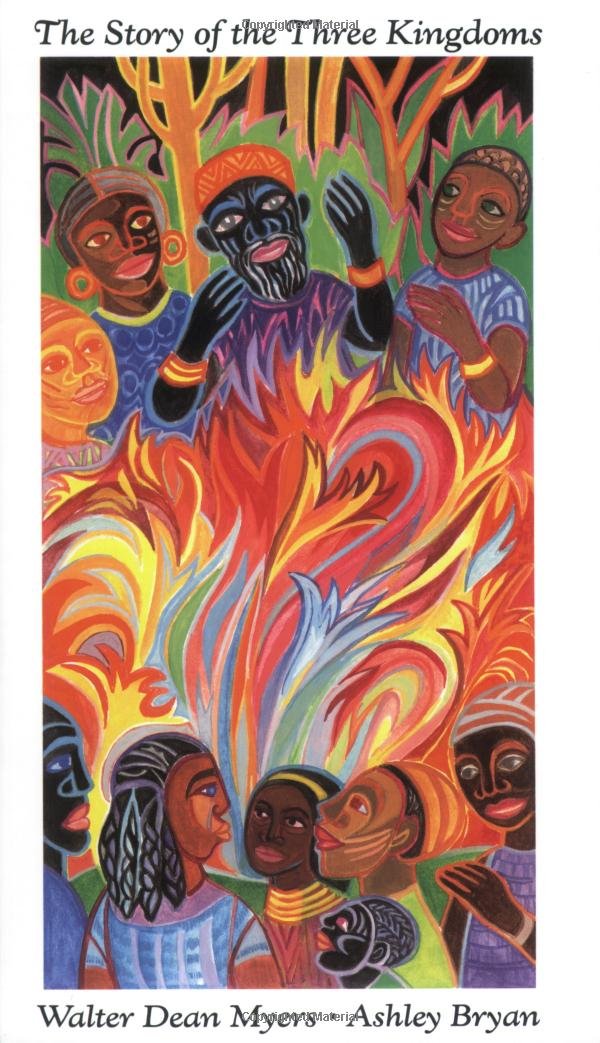
  3. Myers, Walter Dean. (1997). The Story of the Three Kingdoms. Illustrated by Ashley Bryan. New York: HarperCollins. (570L, GR Level: O/34-38)
Level P
  1. Lionni, Leo. (1996). It's Mine. New York: Dragonfly Books. (470L, GR: Level P)
  2. Lionni, Leo. (1995). Matthew's Dream. New York: Dragonfly Books.  (560L, GR Level: P)
Levels Q -X
  1. Osei, Leah. (2013).  The Boy Who Cried Wolf and Other Aesop Fables.  Teacher Created Materials. (750L, GR Level Q)
  2. Hamilton, Martha. (2006). Through the Grapevine: World Tales Kids Can Read & Tell. Illustrated by Mitch Weiss.  Atlanta, GA: August House.  (880L, GR Level R)
  3. McGovern. Ann. (2013). Aesop's Fables. Illustrated by Ricardo Tercio. New York: Scholastic. (780L, GR Level: T/50)
  4. Sherman, Joseph. (2005). Rachel The Clever and Other Jewish Folktales. Illustrated by Jeanne Seagle. Atlanta, GA: August House. (690L, GR Level: W)
  5. Stevens, Janet. (1985). The Tortoise and the Hare: An Aesop Fable. New York: Holiday House.  (540L, GR Level :X)
No Guided Reading Level
  1. Carle, Eric. (2008). The Rabbit and the Turtle: Aesop's Fables Retold and Illustrated by Eric Carle. New York: Orchard Books. (650L)
  2. Dan, Lari. (2013). The Hungry Wolf: A Story from North America. Illustrated by Melanie Williamson. Cambridge MA: Barefoot Books. (630L)
  3. Dan, Lari. (2012). Never Trust a Tiger: A Story from Korea. Illustrated by Melanie Williamson. Cambridge MA: Barefoot Books. (510L)
  4. Hartman, Bob. (2004). The Wolf Who Cried Boy. Illustrated by Tim Raglin. New York: Puffin Books. (640L)
  5. Husain, Shahrukh. (2011).  The Wise Fool: Fables from the Islamic World. Illustrated by Micha Archer. Cambridge, MA: Barefoot Books. (780L)
  6. Nunes, Shiho S. (2013). Chinese Fables: The Dragon Slayer and Other Timeless Tales of Wisdom. Illustrated by Lak-Khee Tay-Audouard.  Boston, MA: Tuttle Publishing. (Aesop Prize for Children's and Young Adult Literature, 2014)
  7. Scieszka, Jon. (2003). Squids Will be Squids : Fresh Morals, Beastly Fables.  Illustrated by Lane Smith. New York: Puffin Books. (650L)


Wednesday, April 8, 2015

Spring into Spring with 30 Pre-K - 3 Books

from King for a Day.
After a long winter, cold and snowy here in the Northeast United States, we see the first signs that spring may be taking hold.  So it's time to celebrate and go outside with your little ones and after running around and playing, playing, playing -- take some time to read a few of these aloud.

Spring Focus

  1. Agell, Charlotte. (1994). Mud Makes Me Dance In the Spring.  Maine: Tilbury House. 
  2. Alarcón, Francisco. (2005). Laughing Tomatoes and Other Spring Poems / Jitomates Risueños y otros poemas de primavera. Illustrated by Maya Christina Gonzalez. New York: Lee & Low Books.
  3. Bauer, Marion Dane. (2015). Crinkle, Crackle, Crack: It's Spring!  Illustrated by John Shelley. New York: Holiday House.
  4. Berger, Carin. (2105). Finding Spring. New York: Greenwillow Books. New York: Puffin Books. 
  5. Clifton, Lucille. (1992). The Boy Who Didn't Believe in Spring.  Illustrated by Brinton Turkle. 
  6. Ehlert, Lois. (2001). Waiting for Wings. New York: HMH Books for Young Readers.
  7. Fernandes, Eugenie. (2012). Kitten's Spring. Tonawanda, NY: Kids Can Press.
  8. Fogliano, Julie. (2012). And Then It's Spring. Illustrated by Erin E. Stead. New York: Roaring Brook Press.
  9. Frost, Helen. (2012). Step Gently Out. Illustrated by Rick Lieder. Somerville, MA: Candlewick.
  10. Gerber, Carole. (2015). Spring Blossoms. Illustrated by Leslie Evans. Watertown, MA: Charlesbridge. (Reissued)
  11. Glaser, Laura.  (2002). It's Spring. Illustrated by Susan Swan.  Minneapolis, MN: Millbrook Press.
  12. Hillenbrand, Will. (2011).  Spring is Here. New York: Holiday House.
  13. Jackson, Ellen. (2001). The Spring Equinox. Illustrated by Jan Davey Ellis. Minneapolis, MN: Millbrook Press.
  14. Khan, Rukhsana. (2014). King for a Day. Illustrated by Christiane Krömer.  New York: Lee & Low Books.
  15. Kimura, Ken. (2013). 999 Frogs Wake Up. Illustrated by Yasumari Murakami. New York: NorthSouth. 
  16. Lewin, Ted & Betsy Lewin. (2012). Puffling Patrol. New York: Lee & Low Books.
  17. Liu, Jae Soo. (2002). Yellow Umbrella. La Jolla, CA; Kane/Miller Book.
  18. Ray, Mary Lyn. (2001). Mud. Illustrated by Lauren Stringer. New York: HMH Books for Young Readers.
  19. Seeger, Laura Vaccaro. (2012). Green. New York: Roaring Brook Press.
  20. Tamara, Erika. (1996). The Garden of Happiness. Illustrated by Barbara Lambase.  New York: HMH Books for Young Readers.
  21. Schnur, Steven. (2000). Spring Thaw. Illustrated by Stacey Schuett. New York: Viking.
  22. Schnur, Steven.  Spring: An Alphabet Acrostic.  Illustrated by  Leslie Evans. New York: Clarion.
  23. Seuling, Barbara. (2001).  Spring Song. Illustrated by Greg Newbold. Orlando, FL: Harcourt.
  24. Snow, Virginia Brimhall. (2015). Spring Walk.  Layton, UT: Gibbs Smith.
  25. Stewart, Sarah. (2007). The Gardner. Illustrated by David Small. New York: SquareFish.
  26. Wahl, Charis. (2015). Rosario's Fig Tree. Illustrated by Luc Melanson. Toronto, ON: Groundwood Books.
  27. Yee, Wong Herbert. (2007). Who Likes Rain? New York: Henry Holt.


Four Seasons


  1. Berner, Rotraut Susanne. (2008). In the Town All Year 'Round. San Francisco, CA: Chronicle.
  2. Lyon George Ella. (2014). What Forest Knows. Illustrated by August Hall. New York: Atheneum Books for Young Readers. (4 seasons)
  3. Messner, Kate. (2015). Up in the Garden and Down in the Dirt. Illustrated by Christopher Silas Neal. San Francisco, CA: Chronicle Books. (4 seasons)


Thursday, April 2, 2015

Deep Learning in 2nd Grade: One Child's Questions

Suzanne reading aloud in 2nd grade.
I.

What do we make of these questions that Christopher, a 2nd grader wrote while listening to his teacher, Suzanne Capuano read aloud chapter 8 of Cynthia Rylant's Gooseberry Park?


  1. What is the danger that is going to come?
  2. What are Stumpy and her babies doing during this ice storm?
  3. What are Top, Bottom, and Sparrow doing while Stumpy is worrieng?


In the second grade where Christopher is a student, he and his classmates are engaged in a novel study that Suzanne (posts about Suzanne: hereherehere) has created. After the novel was anchored and students cared about the text, they began to write questions during the read aloud that they were wondering.

As I read Christopher's questions I thought about Nel Nodding's notions of caring and noticed that he wonders often about the welfare of major and minor characters. Noddings would tell us that an ethics of caring is an essential foundation that (in)forms ethical decision-making. I'd certainly agree.

In writing about care theory, Noddings notes that caring-about can be connected to cared-for.

The key, central to care theory, is this: caring-about (or, perhaps a sense of justice) must be seen as instrumental in establishing the conditions under which caring-for can flourish. Although the preferred form of caring is cared-for, caring-about can help in establishing, maintaining, and enhancing it. Those who care about others in the justice sense must keep in mind that the objective is to ensure that caring actually occurs. Caring-about is empty if it does not culminate in caring relations. (Noddings 2002: 23-4)

Christopher's questions reinforce the belief that the study of literature can provide opportunities for children to try on caring roles that begin with noticing other and lead to making ethical decisions based on the text. What is Kona willing to sacrifice to save his friend?  At the age of 8, these book-informed decisions are life-like. For example, there's an immediacy to Christopher's questions that suggest he is right there alongside Stumpy, Top, Bottom, and Sparrow.  Christopher's use of the definite article, this, in question 2 suggests an intimacy with the story's action. It's not an or even the ice storm, but rather this ice storm. He's right there.

The range of questions the children posed during the half-hour was extraordinary and could make for an interesting study about how young children think across a novel. As I listened and read, I wondered what patterns might emerge with regard to the children's question posing, such as Christopher's concern for the welfare of the characters.  Here's just a few of the questions children posed (orally and in writing) while I was there:

  • Will Kona risk saving Stumpy? 
  • Because Stumpy is his best friend, will Kona find a way to save him? 
  • Now that Stumpy is scared will she change? Will she continue to be a great mom? 
  • What's making us think Kona will do whatever is necessary to save Stumpy? 
  • Isn't Stumpy already in serious trouble? Can Kona really help?
  • What is Stumpy doing while Kona is worrying about Stumpy and her babies? 
  • Why is Kona trying to save Stumpy when he will get hurt? 
  • Why is Kona willing to risk him(self) to help Stumpy? Is that love? Friendship?
  • Does it matter more that Kona is willing to risk than what happens?


II.

As I think about the importance of literature in Suzanne's class, I think of Alice Walker's critical question: If art doesn't make us better, then what on earth is it for?  I realize that becoming better human beings isn't something Pearson can aptly test (and we may be the better for that) and doesn't show up as an explicit standard, but surely we don't need others to tell us that learning how to make ethical decisions in the safety of the classroom is apt and important learning. I'd be so bold as to say it could well be the most critical learning we can occasion. Years ago I was listening to Noddings lecture.  It was May of 2004, two weeks after 60 Minutes reported about Abu Grahib and Seymour Hersch's article about the abuses and torture at the prison was published in The New Yorker.  That day at Columbia University, Noddings raised the question about how outcomes might have been different if students learning how to make ethical decisions throughout their school lives was privileged. Might some of the soldiers have thought or acted differently?

Today while in Suzanne's class I was thinking about caring and the power that often accompanies such commitments. I noticed several things that could get lost given our rather singular focus on the CCSS & the various tests that accompany it.  These included:


  1. Posing questions suggests an emancipation of sorts.  There's power to question making as opposed to the often singular role children occupy. They answer questions given to them day after day after day. One of the shortfalls of the high stakes testing in the United States is the servitude that accompanies question answering, not question posing. One only needs to think of the Walmart Greeter whose job it is to answer customers' questions to see how narrow such experience might be. In contrast, CEOs and others with power are expected to problem frame and question. 
  2. I noticed that the children did not have to write questions, nor did they follow the directions at the top of the sheet. I'm guessing that Suzanne who has helped them to study question-posing all year used the sheet as it provided space for writing. 
  3. Suzanne didn't stop reading in order for the children to write questions.  They did so at will. It's tedious to have to do everything together as a class and in some ways such requirements can be anti-intellectual. I loved the spirit here that children determine when and what to write. This makes sense.
  4. The freedom to write or not, along with the joy the teacher and the students take in the text and each other gives me hope. There was a lot of giggling and some gasping as chapter 8 unfolded. No one needed to sit in a particular way, ask permission to get a tissue or drink of water, etc. and choice (in seat/standing, etc.) remained present throughout the reading. 
  5. There's an intimacy that happens when literature is shared. This class cares for one another. The applause for 'smart thinking' and the way the children wait for their peers to finish a thought is significant. They help each other which is Nodding's cared-for in action.
  6. Children talk to one another, look at each other, respect each other all without having to use 'accountable talk' tag lines that many adults think are important. They try on caring using their own language: "I hear you..." "See, that's what we're talking about..." "Yes, like that..." "Conner, Con, it's easy...".  They also demonstrate respect and encouragement by applauding one another's great thinking rather spontaneously.
I hope next fall when Pearson or PARCC or the State of NJ releases test scores that we will pause and remember this slice of learning and others like it. The most important things we do in the company of children are rarely measured by our high stakes tests.


Cited

Noddings, Nel (2002) Starting at Home. Caring and social policy. Berkeley, CA: University of California Press.


Monday, March 16, 2015

Building Theories in Grade 2 (#SOL15, Day 16)

James and Julia buddy reading Demi's The Emperor's New Clothes
I. 

Earlier in the day, the children partner read and then we discuss Demi's version of The Emperor's New Clothes. They are quick to volunteer connections between the setting of this version and two other stories their teacher, Ms. Ruisanchez has read aloud to them: Barbara Soros's fable Tenzin's Deer: A Tibetan Tale and Jacqueline Briggs Martin's The Chiru of High Tibet.  They also take delight in the beauty of Demi's book, marveling at the many fold-out pages that open into panoramas, as well as the gold trimmed paintings. 


Four Panel Spread in Demi's The Emperor's New Clothes

We are gathered around a table in the classroom as the other children work in centers trying to figure out additional themes for the tale. We have previously discussed the ways the emperor is a poor leader. Today we begin to discuss how the emperor doesn't trust what he knows. 

"He can look down and see he's got no clothes."
"Yeah, he just has to look."
"All he has to do is look and it's like he doesn't. You know. He doesn't."
"Trust?"
"Why do you think he doesn't seem to be trusting what he can actually see?"
"That's the problem. He believes the swindlers. He thinks they're right"
"Yeah, he trust them, not him."
"You know, the emperor isn't very smart."
"And even though he can see he has no clothes on except his underwear, he has to pretend he does cause he wants to be the emperor."
"He still believes the swindlers."
"That he has no clothes on?"
"No, that he isn't honest or smart."


Three Versions of the Fairy Tale, The Emperor's New Clothes that 2nd Graders Read (2.14.15)

Earlier in the week I had given the teacher 6 copies of Hans Christian Anderson's fairy tales that include The Emperor's New Clothes for the children.  She has passed these along to them. Without any adult prompting, the children begin reading the Anderson text too. They also request to have the initial story we read, The Emperor's New Clothes published by Pioneer Valley in hand. 

When adults don't lead children to specific outcomes, but rather take time to simply notice what they do in unprompted situations, the learning for adults and children can be significant. 

II. 


James Noticing 
Later in the morning, James came rushing up to the table where his teacher and I are seated. I have just finished teaching another small group of children and Ms. Ruisanchez and I are conferring. James places three different versions of The Emperor's New Clothes on the table and quickly launches into a story about how the illustrations in the Hans Christian Anderson original text and the text by Pioneer Valley are similar.

"See. See. The swindlers look the same," he says pointing to the two line drawings in each text. 

He aligns the books so we can better see. He wants us to notice that the illustrations of the swindlers are very similar and indeed they are. 

"It's interesting, isn't, it?"
James nods, as does his teacher.

"See how they look alike," he says while pointing to the jaw area.
"I see what you mean," I say to James. "The tall swindlers' faces look very similar."
"I wonder how that happened?" he asks.
"I'm not sure. The original tale was first published in the 1800s," I volunteer as we all continue to study the illustrations.
"Wow, that's a long time ago."
"Yes it is." I'm curious now about the things James has been noticing and so I ask, "James, did you notice any other similarities?"
"Well." He takes a minute to look again at the books and says, "The stories (plot) are the same even though this one takes place in China. And some of the words used in these two stories are the same. Like swindlers, and weavers and I think loom is in both too. I'll have to look more."
With the final pronouncement James is done. He's closing books and getting ready to return to the other side of the classroom.
"Let us know what you find," I say.

III.

Theory is knowledge.  James is working on something big. Unlike the emperor whose faith rests in what others think and say, James is trying on his own ideas, following hunches, and trusting that what he notices and thinks matter. As he and his peers continue to work together in the small reading group, I'll continue to watch and note how they make knowledge. Through observation, classification, and association they create understandings of how the world works (and/or fails to work). This is some of the important work of school.