Friday, December 23, 2011

Guest Blog -- Rob Cohen: "social mapping... (based on the library of babel)"

Alas, poor Yorick...

Guest Blog: Rob Cohen

Rob had posted this response to a blog post I had written. I was so taken by the poem that I decided it needed its own post.  Rob is a poet, middle school English teacher, father to Dev and husband to me.

Contact: @rcohen54


social mapping... (based on the library of babel)


this too is infinite (a cluster of infinities...

a cluster of round tables each equidistant from the next,
or maybe a table to one side of the staircase
in each of Borges' chambers--

the people at each table,
standing
sitting
leaning in to listen closely,
leaning out to think and overhear
the conversation at the next table;
loitering in doorways
sitting on steps, browsing shelves
wandering
from room to room
taking language with them,
leaving it behind

& in each room
mounted at the very center
with a set of omnidirectional microphones
connected to a universal recording device
that gets it all down
and sends it all on
to a meta-processing nexus
that hovers invisibly just above
and beyond
the palpable world
to be mapped, charted, parsed & compared
in a hapless attempt to reveal pattern
& form--

how much of what is said alters
another's thoughts
or forms
or ends
a universe;
which parts of what is said is what is heard
and how much of what is heard is repeated

(hearsay, i say, and inadmissible at that:
groucho rising
in an impromptu marx brothers manifesto
of subversion, inversion & dissipation,
a cacophonous collaboration of chaos,
of pulse,
except maybe this time
it's not so funny--

is a belief
in a discreetly discernable separation
of contexts
& ideas.

Wednesday, December 21, 2011

Social Mapping, Lines of Flight, and Late Night W(a/o)ndering

Tonight a provocative statement was posed by Pam Moran (@pammoran) and then responded to by Chad Sansing (@chadsansing) over at Twitter.

Take a look:


So I am thinking about social mapping inside systems and wondering if anyone can point me/us in a direction that might show examples of the thinking that informs the generation of a social map.

I know I have rhizomes on the brain, but I can just about hear Deleuze and Guattari saying something relevant about all this.

Something about maps, tracings, and lines of flight.

Thinking about @chadsansing's tweet. And perhaps it is the presence of lines of flight that signals the collapsed space of hierarchy.  Perhaps these are the sparks.  Could critical mass of a system collapsing be brought about through the generation of idiosyncratic lines of flight?

A line of flight is a rupture in an established system.

Like the various actions that comprise the 'Occupy Movement'.

"A line of flight is a line of becoming that brings the system to yet another level of complexity by virtue
of the new knowledge, new concepts, new meanings," writes Inna Semetsky*.

So could you map lines of flight: lines that signal becoming?
Has someone done this?

Do not these lines represent the non-linearity of a system?


*Not by breadth along: Imagining a self-organised classroom. Complicity, 2005.

Tuesday, December 20, 2011

(Mis)Leading in a Web 2.0 World: 60 Ways to Stay Out of Touch

Dear Education Leader:

When we think about the phrase 'digital divide' we often think of it as economic advantages or disadvantages that affords or limits Internet access.  But there is another type of digital divide that is as crucial and it could well be happening where you lead.  This is a divide that happens when school leaders, especially those holding the most power, confine their schools to a Web 1.0 world and continue to invest in metaphors that no longer work (or at least work well): those based solely on encoder/decoder models.


Consider these scenarios and see which ones (if any) resonate.

  1. You call a monthly admin meeting of the principals, supervisors, central office leaders in the district where you lead and upon arrival at each meeting you direct everyone to turn off their cell phones and close their laptops. "You won't be needing any of that," you tell the group.
  2. You continue to use email as the sole method for communicating with your admin staff and consider this method novel.
  3. You use your computer primarily to send and receive email; write memos, policies, and agendas; access the Internet for searching purposes, and occasionally to make a purchase on line.
  4. You distrust the 'notion' that there are new literacies to be learned. You stand firm on the belief that reading is reading and writing is writing.  
  5. The Director of Pupil Services advocates for assisted technologies and you understand that to mean every child is issued x (fill in your favorite hardware).
  6. Your district web page is set up to 'push out' information.  There is a link where viewers can email those in the organization, but no other types of interactions are permitted.
  7. You do not allow schools to have their own web page designs.  All web pages are standardized and controlled by the District 'point person'.
  8. Virtual learning is new and you support purchasing it by commercial providers.
  9. You will not allow any student web presence for any reason. There are no school or course specific web pages that feature student work.
  10. No principal or school can have its own Facebook page.
  11. No district educator is allowed to communicate with any student using Facebook or Twitter (or any other social media sites).
  12. You think of Flikr as a receptacle for family and friend photographs but not as a potential educational site.
  13. You believe that video games belong in the arcade, not in the classroom and enforce such thinking by controlling curriculum.
  14. No Internet ready devices can be brought into any school or district office.
  15. All wireless networks are pass-worded to protect the system.
  16. School library funding has remained static.  You see no reason to increase the funding.
  17. You support the purchase of desktop computers (they are sturdy) and computer labs and are skeptical about the purchase of handheld devices and entering any leasing agreement.
  18. You support educators who want to use the textbook accounts to purchase textbooks and are skeptical about those in your organization who recommend using Open source materials and want to reallocate textbook monies to purchase other types of materials/services.
  19. Texting isn't something you understand or do and certainly you don't condone its use during school.
  20. Instead of Drop Everything and Read program being limited to books,  a middle school principal is advocating that students develop their own Google Readers as a source for sustained reading. You have have not supported this idea as you worry that students will spend the time 'surfing' the net not actually reading.
  21. You do not support young children using computers as you think it is dangerous to them physically, emotionally, intellectually and morally.
  22. You require all employees to ensure in writing that nothing of their home life can be found on school-issued technology.
  23. Going "paperless" is impossible. Best not to try something that radical.
  24. You support the purchase of software, but have not established any process to purchase e-books or apps. You're not sure these 'extras' are really necessary.
  25. You still insist that teachers include at least two "technology-based" lessons each year as a method for increasing 'technology' use in the classroom.
  26. You have a separate technology plan from your district's education plan. 
  27. Technology is handed out by teachers.
  28. You support a 1-to-1 program and believe issuing everyone the same hardware is progressive.
  29. Cell phones are not allowed to be used for any reason at school by students and only during a preparation period, lunch, or before and after school by the Staff.
  30. You believe in scaling up.
  31. You are proud that every classroom has a 'Smart' board or an 'Elmo'  and consider that purchase to be wise.
  32. You direct the high school principal to put an end to 'Twitter" conversations that teachers and students are having as they violate district policy.
  33. PD is a scheduled event where everyone learns X or Y.
  34. You think of technology as computer use.
  35. You are suspect of principals who "Tweet" as you wonder how they have all that time on their hands.
  36. You understand social media to mean Facebook.
  37. You are unaware of social bookmarking and have never heard of stumbleupon, diigo, slashdot, clipmarks, reddit, scoopit, newsvine, mixx, and so on...
  38. You understand that 'curation' is something that happens in museums by experts, not classrooms.
  39. You believe in the primacy of explicit knowledge recall as an indicator of students learning well.
  40. Blogging is a fad and should not be used in English classes.
  41. You do not advocate for student-developed multimedia texts as the whole issue of 'storage' continues to be a problem.
  42. You believe that protecting your email system requires you to host it on your own servers. You are security conscious.
  43. You are considering investing in 5 desktop computers that have Internet access for every classroom in the district so that all can have access to 'computers'.
  44.  Every quarter the head librarian sends you the "Quarterly Report" in a format you don't understand (Slideshare, Mashup, Issuu, and so on).
  45. You require teachers to "do a Powerpoint lesson" each year.
  46. You understand YouTube to be a site where people watch movies and block it at all schools. 
  47. Your technology director is not an educator.
  48. Given the expense, you see no need to "rush into" wireless networks.
  49. You know there's a Cloud, but feel it is 'safer' to keep your data, products, email on your own servers.
  50. The District's technology director and a few selected admins determine technology priorities and policies for the district.
  51. Professional development is important and that's why you support teaching educators how to use software such as the "Word Suite" which is loaded on to all computers.
  52. You think procuring hardware is the most important expenditure the district can make an as such you reallocate professional learning funds in order to purchase more hardware.
  53. You require every teacher to have a standardized district web page, including those who already have established their own web presence.
  54. Plagiarism is plagiarism and copyright is copyright and you support the enforcement of these strict rules. You have no understanding of Remix via Creative Commons license.
  55. Your district has spent a lot of funds on 'science technology' and you have mandated that all science teachers must use specific technologies (probes, sensors, meters, monitors, computer-based simulations, computer-based modeling tools, etc.) at least once a week.
  56. You have mandated that one of the four observations conducted on all non-tenured teachers must be a 'technology' lesson.
  57. You support teachers and their students connecting to others in the world and that is why you have established a "Skype" center in every school that teachers can sign up to use.
  58. You believe technology 'know how' is important and that is why you have a mandated semester-long technology course that all high school students must take in their freshmen year.
  59. You once tried to use Google docs in order to develop a admin agenda, but believe that it is more productive to email the document to your staff and get individual feedback.
  60. You have no idea what any of these symbols mean:


Visually Exploring Rhizomes

Found this video exploring rhizomes by BlairArtEd (Theories & Research in Art Ed) fascinating.

Monday, December 19, 2011

Recommended Nonfiction for Middle School Learners

Armstrong, Jennifer. 2005. Photo by Brady: A Picture of the Civil War. NY: Atheneum.
Armstrong, Jennifer. 2000. Shipwreck at the Bottom of the World: the Extraordinary True Story of Shackleton and the Endurance. NY: Crown.
Aronson, Marc. 2011. Trapped: How the World Rescued 33 Miners from 2,000 Feet Below the Chilean Desert. NY: Atheneum.

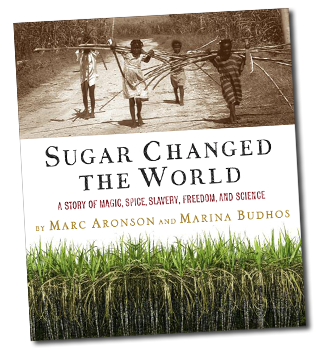
Aronson, Marc & Marina Budhos. 2010. Sugar Changed the World: The Story of Magic, Spice, Slavery and Freedom. NY: Clarion.
Aronson, Marc & Mike Parker Pearson. 2010. If Stones Could Speak: Unlocking the Secrets of Stonehenge. Washington DC: National Geographic Children's Books.
Atkin, S. Beth. 2000. Voices from the Field: Children of Migrant Farmworkers Tell Their Stories. New York: Little Brown Young Readers
Bartoletti, Susan Campbell. 2010. They Called Themselves the K.K.K.: The Birth of an American Terrorist Group. NY: Houghton Mifflin.
------------------------------. 2005. Hitler Youth: Growing Up In Hitler's Shadow. NY: Scholastic.
------------------------------. 2005. Black Potatoes: The Story of the Great Irish Famine. NY: Sandpiper.
------------------------------. 1999. Growing Up in Coal Country.  NY: Sandpiper.
Bausum, Ann. 2009. Denied, Detained, Deported: Stories from the Dark Side of American Immigration. Washington, DC: National Geographic.
Bial, Raymond. 2002. Tenement Life on the Lower East Side. Boston: Houghton Mifflin.
Blakey, Ron and Wayne Ranney. 2008. Ancient Landscapes of the Colorado Plateau. Grand Canyon, AZ: Grand Canyon Association.
Bledsoe, Lucy Jane. 2006. How to Survive in Antarctica. NY: Holiday House.
Brimner, Larry Dane. 2010. Birmingham Sunday. Honesdale, PA: Boyds Mills Press.
Bruchac, Joseph. 2008. Sacajawea. Boston: Harcourt.
--------------------. 2008. Jim Thorpe: Original All-American. NY: Speak.
Budhos, Marina. 2007. Remix: Conversations with Immigrant Teenagers. New York: Henry Holt/Resource Publications.
Burns, Loree Griffin. 2010. The Hive Detectives: Chronicle of a Honey Bee Catastrophe. Illustrated with photographs by Ellen Harasimowicz. Boston, MA: Houghton Mifflin Harcourt.
Caputo, Philip. 2005. 10,000 Days of Thunder: A History of the Vietnam War. NY:Atheneum.
Chassman, Gary. 2002. In the Spirit of Martin: The Living Legacy of Dr. Martin Luther King Jr.  NY: Tinwood Books.
Collier, Michael. 2009. Over the Coast: An Aerial View of Geology. NY: Mikaya Press.
Collier, Michael. 2008. Over the Rivers: An Aerial View of Geology. NY: Mikaya Press.
Collier, Michael. 2007. Over the Mountains: An Aerial View of Geology. NY: Mikaya Press.
From A Black Hole is NOT A Hole.
DeCristofano, Carolyn Cinami. 2012. A Black Hole is NOT a Hole. Illustrated by Michael Carroll. Watertown, MA: Charlesbridge Publishers..
Einstein, Albert, 1950s. An Ideal Service to Our Fellow Man. As heard on NPR’s This I Believe.
Ellis, Deborah. 2009. Children of War: Voices of Iraqi Refugees. Toronto, ON: Groundwood Books.
------------------. 2008. Off to War: Voices of Soldiers’ Children. Toronto, ON: Groundwood Books.
------------------. 2004. Three Wishes. Toronto, ON: Groundwood Books.
Evans, Kate. 2007. Weird Weather: Everything You Didn’t Want to Know About Climate Change But Probably Should Find Out. Toronto, ON: Groundwood Books.
Feelings, Tom. 1995. The Middle Passage: White Ships/Black Cargo. New York: Dial.
Ferri, Daniel. 2005. The Kindness of Strangers. As heard on NPR’s Morning Edition, December 5, 2005.
Fleischman, John. 2004. Phineas Gage: A Gruesome but True Story About Brain Science. NY: Sandpiper.
Freedman, Russell. 2010. The War to End All Wars: World War I. NY: Clarion.
----------------------. 2004. The Voice that Challenged a Nation: Marian Anderson and the Struggle for Equal Rights. NY: Clarion.
------------------------. 1998. Kids at Work: Lewis Hine and the Crusade Against Child Labor. NY: Sandpiper.
Gallo, Gary. 2010. Jimi: Sounds Like a Rainbow: the Story of the Young Jimi Hendrix. Illustrated by Javaka Steptoe. NY: Clarion.
Grady, Wayne. 2010. Technology: A Groundwood Guide. Toronto: Groundwood Books.
Grainfield, Linda. 2001. 97 Orchard Street, New York: Stories of Immigrant Life. Illustrated by Arlene Alda. Toronto, Ontario: Tundra Books.
http://www.juniorlibraryguild.com/images/9780805077186/InteriorArt/9780805077186-lifeborealcrane_zoom.jpg
Illustration by Gennady Spirin. from Life in the Boreal Forest
Guiberson, Brenda Z. 2009. Life in the Boreal Forest. Illustrated by Gennady Spirin. Toronto: Groundwood Books.
Guibert, Emmanuel. 2009. The Photographer: Into War-torn Afghanistan with Doctors Without Borders. Photographs by Lefevre. NY: FirstSecond.
Hall, Laura. 2008. From Hip Hop Comes Hope. As heard on NPR’s Tell Me More.
Hall, Susan, 2011. A Powerful Act of Love. As heard on The Bob Edwards Show, December 16, 2011.
Heinlein, Robert. 2010. Our Nobel, Essential Decency. As heard on The Bob Edwards Show, 3.12.10.
Herrera, Nicholas. 2011. High Riders, Saints and Death Cars: A Life Saved by Art. Illustrated by John T. Deene. Toronto: Groundwood Books.
Higgins, Dalton. 2010. Hip Hop World: Groundwood Series. Toronto: Groundwood Books.
http://img2.imagesbn.com/images/146310000/146313546.JPG

Hill, Laban Carrick. 2009. Harlem Stomp! A Cultural History of the Harlem Renaissance. NY: Little Brown
-----------------------. 2007.  America Dreaming: How Youth Changed America in the 60s.  NY: Little Brown.
Hubbard, Jim. 1994. Shooting Back from the Reservation: A Photographic View of Life by Native Americans. NY: New Press.
Kops, Deborah. 2012. The Great Molasses Flood: Boston 1919. Watertown, MA: Charlesbridge Publishers.
Kuklin, Susan. 1996. Irrepressible Spirit: Conversations with Human Rights Activists. New York: Putnam.
Kurlansky, Mark. 2001. The Cod's Tale. Illustrated by S.D. Schindler. NY: Putnam.
Laxer, James. 2009. Democracy: A Groundwood Guide. Toronto, ON: Groundwood Books.
Levine, Macklin. 2009. The Beatles Live On. As Heard on NPR’s Weekend Edition, March 15, 2009.
Lisa. 2005. This I Believe. NPR. July 13, 2005.
Lorinc, John. 2008. Cities: A Groundwood Guide. Toronto, ON: Groundwood Books.
Lourie, Peter. 2009. Whaling Season: A Year in the Life of an Arctic Whale Scientist. NY: Houghton Mifflin.
Mann, Charles C. 2009. Before Columbus: The Americas of 1491. NY: Atheneum.
Marin, Reeve. 2008. Oscar: The Life and Music of Oscar Peterson. Toronto, ON: Groundwood Books.
Marrin, Albert. 2011. Flesh and Blood So Cheap: The Triangle Fire and Its Legacy. NY: Knopf.
------------------. 2006. Saving the Buffalo. NY: Scholastic.
Martin, Russell & Lydia Nibley. 2009. The Mysteries of Beethoven's Hair. Watertown, MA: Charlesbridge Publishers.
McDowall, Catherine. 2011. Everyone is Included. As heard on The Bob Edwards Show, October 14, 2011.
McLain, Tarak. 2009. Thirty Things I Believe. As heard on NPR’s Weekend Edition, January 18, 2009.  (Note: Tarak is 7-years-old).
McWhorter, Diane. 2004. A Dream of Freedom: the Civil Rights Movement from 1954 to 1968. NY: Scholastic.
Mills, Kay, 1994. This Little Light of Mine: The Life of Fannie Lou Hamer. NY: Plume.
Montgomery, Sy. 2010. Kakapo Rescue: Saving the World's Strangest Parrot. Photographs by Nic Bishop. NY: Houghton Mifflin.
Moody, Rick. 2005. The Joy and Enthusiasm of Reading. As heard on NPR’s This I Believe, August 29, 2005.

Murphy, Jim. 2011. Weird  & Wacky Inventions. NY: Sky Pony Press.
Myers, Walter Dean. 1994. Malcolm X: By Any Means Necessary. NY: Scholastic.
Black Elk's Vision: A Lakota Story

Nelson, S.D. (Standing Rock Sioux). 2010. Black Elk's Vision: A Lakota Story. NY: Abrams Books for Young Readers.
O’Brien, Perry Edmond and Ann Sibley O’Brien. 2009. After Gandhi: One Hundred Years of Nonviolent Resistance. Watertown, MA: Charlesbridge Publishing.
Orr, Gregory. 2006. The Making of Poems. As heard on NPR’s All Things Considered, February 20, 2006.
Phuc, Kim. 2008. The Long Road to Forgiveness. As heard on NPR’s All Things Considered, June 30, 2008.
Roach, Mary 2004. Stiff: The Curious Lives of Human Cadavers. NY: W.W. Norton.
From Secret Subway
Rubalcaba, Jill  and Peter Robertshaw. 2010. Every Bone Tells a Story: Hominin Discoveries, Deductions, and Debates. Watertown MA: Charlesbridge Publishing.
Sandler, Martin W. 2009. Secret Subway: The Fascinating Tale of an Amazing Feat of Engineering.  Washington DC: National Geographic Children's Books.
Siddiqui, Haroon. 2008. Being Muslin: A Groundwood Guide. Toronto, ON: Groundwood Books.
Singh, Rina. 2010. Guru Nanak: The First Sikh Guru. Illustrated by Andrée Pouliot. Toronto, ON: Groundwood Books.
Sitarkski, Anita. 2007. Cold Light: Creatures, Discoveries, and Inventions that Glow. Honesdale, PA: Boyds Mills Press.
Siy, Alexandria. 2011. Bug Shots: The Good, the Bad, and the Bugly. NY: Holiday House.
------------------. 2009. Cars on Mars: Roving the Red Planet. Watertown MA: Charlesbridge Publishing.
Steven, Peter. 2010. The News: A Groundwood Guide. Toronto, ON: Groundwood Books.
Stokes, John, Herman Viola and Lois Wolfe. 2007. Students on Strike: Jim Crow, Civil Rights, Brown, and Me. Illustrated with Photographs. Washington DC: National Geographic Children’s Books.
Stone, Tonya Lee. 2009. Almost Astronauts:13 Women Who Dared to Dream. Boston, MA: Candlewick Press.
Sullivan, George. 2009. Berenice Abbott, Photographer: An Independent Vision. NY: Clarion.
Tanaka, Shelley. 2006. Climate Change: A Groundwood Guide. Toronto, ON: Groundwood Books.

Terkel, Studs. 2005. Community in Action. As heard on NPR’s Morning Edition, October 24, 2005.
Turner, Pamela S. 2008. Life on Earth: An Astrobiologist's Quest. Watertown, MA: Charlesbridge.
Urban, Lex. 2011. Finding Out What’s Under Second Base. As heard on The Bob Edwards Show, July 22, 2011.
Valverde, Mariana. 2010. The Force of Law: A Groundwood Guide. Toronto, ON: Groundwood Books.
Walker, David & Peter Hinks (ed). 1829/2000. David Walker's Appeal: To the Coloured Citizens of the World. Pennsylvania State University. (Link is for an online source)
Walker, Sally M. 2005. Secrets of a Civil War Submarines: Solving the Mysteries of the H.L. Hunley. Carolrhoda.
Weatherford, Carole Boston. 2007. Birmingham, 1963. (Poetry). Honesdale, PA: Wordsong.
Wright, Simeon and Herb Boyd. 2010. Simeon's Story: An Eyewitness Account of the Kidnapping of Emmett Till. Chicago, IL: Lawrence Hill Books.
Yerxa, Leo. 2006. Ancient Thunder. Toronto, ON: Groundwood Books.
Zhang, Ange. 2004. Red Land, Yellow River: A Story from the Cultural Revolution. Toronto, ON: Groundwood Books.

This I Believe Essays Written by Middle and High School Students

Charles. 2010. Juice. Entered on November 29, 2010.
Earley, Brighton. 2008. Finding the Flexibility to Survive. As heard on NPR’s All Things Considered, June 2, 2008.
El-Saad, Alaa. 2009. America’s Beauty is in Its Diversity.  As heard on NPR’s Tell Me More, January 29, 2009.
Levine, Macklin. 2009. The Beatles Live On. As Heard on NPR’s Weekend Edition, March 15, 2009.
Lupi, Nora, 2008. My Opinions Matter. As heard on NPR’s Tell Me More, November 4, 2008.
Majeed, Kamaal. 2007. Being Content with Myself. As heard on NPR’s All Things Considered, May 7, 2007.
Rittenberg, Josh. 2006. Tomorrow Will Be A Better Day. As heard on NPR’s Morning Edition, February 27, 2006.
Sophia. 2005. This I Believe. (about magic)
Yu, Ying Ying, 2006. A Duty to Family, Heritage and Country. As heard on NPR’s Morning Edition, July 17, 2006.
Yuchasz, Joshua. 2006. We’re All Different in Our Own Ways. As heard on All things Considered, October 16, 2006.

Sunday, December 18, 2011

When Things Fall Apart: Slow Walking on Made Roads


I.

For the last year I have been writing about learning while walking.  This has been no accident.   And now as I leave my current job and step into that which I cannot define, I recognize that this is and will continue to be a time of significant growth and wonder, fueled by a disequilibrium that has not been soothed by simply taking the next job offer.  I am learning that there's real courage in saying no to job offers, especially in an economy as challenging as this one and with responsibilities to family.  Saying no is not easy.  And yet, I am reminded that simply agreeing to the next job offer that resembles what I am leaving at best 'resettles' my disequilibrium by providing a direction, a baseline, that repeats the same dynamic of schools as mechanistic places.

I want to compose schools as places where people work in the middle of things in fluid ways based on relationships and commitments we make/remake to one another.  I seek the rhizome, not the tree. I'm so tired of trees, too. (A nod to Deleuze & Guattari). I am saying no to organizations that rely on boxes, charts, roles, and polices to describe and limit its people.  These are systems of control.  They seem to fail--to fall apart as the systems initially embrace meaningful change, but then resettle in order to maintain power.

Such systems become more conservative, laying down rules of behavior with alarming predictability, issuing new organization charts, reshuffling the deck chairs if you will in an attempt to define ever 'new' boxes in which to stand.  Yet no amount of workplace shuffling will create the necessary occasions in which learning might flourish. Fear fuels control, stymies possibilities, replaces emphasis on making and sustaining relationships with marshaling people to choose different camps and guard territories.  Make no mistake,  a garden for learning cannot grow where chance has no foothold.

Meg Wheatley (1999) explains how schools systems aren't systems and yet within these non-systems, smaller systems arise.
"...most school systems aren't systems. They are only boundary lines drawn by somebody, somewhere. They are not systems because they do not arise from a core of shared beliefs about the purpose of public education. In the absence of shared beliefs and desires, people are not motivated to seek out one another and develop relationships. Instead, they co-inhabit the same organizational and community space without weaving together mutually sustaining relationships. They co-exist by defining clear boundaries, creating respectful and disrespectful distances, developing self-protective behaviors, and using power politics to get what they want.

Yet everyone who participates in a school district is a living being, responding to the same dynamics that characterize all other life. Within the artificial boundary lines and well-defended territories, people are self-organizing into real systems, reaching out to network with those who share similar beliefs or aspirations..." Meg Wheatley, Bringing Schools Back to Life
I am wondering if you would agree with Meg Wheatley.  Does her description capture what you know of schools--the dynamics?  Within school districts are there self-organizing systems among people who share core beliefs?  Can they remain viable, alive and to do so must they walk out and on? 


II.

Several weeks ago I had coffee with a friend and she shared how she had placed herself in a situation where she changed the ground rules of how she worked and what she did resulting in her leaving a well established position and venturing out on her own.  She described a ten year journey she is still composing.  These changes required her to step into not knowing, to unsettle her life and her family's lives, as she realized the box she had been standing in could no longer contain her spirit.  

Make no mistake, these matters are matters of life.

I recognized as I listened, even when I did not fully understand, that she was a kindred spirit and I leaned in to learn. A few weeks later I came across the book, Walk Out, Walk On and began reading it alongside a group of women--none of whom I have physically met, all of whom I recognize deeply.  I opened the book and was stopped when I read,  "When certainty collapses, it's often replaced by curiosity" (Location 134).  I knew that to be true and that alongside curiosity--anxiety, fear, and possibility co-mingle.  There are no simple causalities inside change, especially in the middle of things where bearings are at best blurry.

This book and my conversations online with these women (and now some men too) speak to my heart for I have walked out and am walking on.  I described it as being at the place of the comma: paused momentarily.  Walking on is about uncertainty, the difficulty in finding the language that allows me to name action taken as action. It is understanding that there are too many ready maps to follow, but they cannot be mistaken for the map that gets made by walking.


In describing what it means to 'walk out, walk on' Meg Wheatley and Deborah Frieze write (2011):
Walk Outs are people who bravely choose to leave behind situations, jobs, relationships, and ideas that restrict and confine them, anything that inhibits them. They walk on to the ideas, people, and practices that enable them to explore and discover new gifts, new possibilities...Whenever we choose to leave behind what confines us, whenever we courageously step forward to discover new capacities, then we can rightfully call ourselves Walk Outs Who Walk On (p.4).
Walk Outs who Walk On act like rhizomes.  They leave behind what cannot adequately define them, that which has felt ill suited, out of step and walk on to that which is self-determined and yet made and remade with others.   Again Wheatley and Frieze capture this well when they write:
Commotion is walking at the pace of the other, rather than at whatever pace you want to go. It is a horizontal movement that begins with being rooted in your own purpose and place, and then connects with others who are rooted in theirs (p. 25).
When the path can only be made by walking, the world I have known tilts and the center cannot hold.  Instead of trying to re-organize the world to fit the prescribed story, I am practicing a few behaviors, informed by beliefs that still feel very shaky.

Start anywhere, follow it everywhere. 
Make the path while walking. 
I have what I need.  No heroes needed.
Walk at the pace of the slowest.

Create spaces to listen to underprivileged voices.
Trust my camera to see what I had trouble seeing, my hands to make what I most need to learn.

Turn to one another.


The road before me is unmade.
Will send posts.

Works Cited:
Wheatley, Margaret & Deborah Frieze. (2011-04-11). Walk Out Walk On: A Learning Journey into Communities Daring to Live the Future Now. Berrett-Koehler Publishers. Kindle Edition.

Tuesday, December 13, 2011

I Do Not Know It/It Is Without Name/It Is A Word Unsaid*

Screen shot from Waiting for Superman
I've been thinking about what might be left of public education and democracy, what might be left for our children and their children after the current crop of methods to 'reform' public education fail.  In the pause between failure and the inevitable rise of a new crop of doing unto others, what will remain and for whom?

Efficiency seems to cross the various reform efforts. Scratch beneath the surface of the Common Core Standards, national assessments, for-profit schools, charters, vouchers, pop films like Waiting for Superman, teacher/principal evaluations based on test scores, removal of collective bargaining, increased co-payment by public school educators for health benefits, publicly displaying teacher 'effetciveness' ratings in national newspapers and you will find efficiency. Much of the reforms rest on a belief that 'optimization of the system' (and the people) will lead to better student outcomes as measured by state mathematics and reading assessments.

It's the mistake of substituting system for people when trying to optimize that most concerns me. It reminds me of this classic clip from Modern Times. Imagine this scene today. Perhaps you see Chaplin as the teacher who is being 'enhanced' by the efficient machine?  Or some might see him as the student who is being 'optimized' via the great testing machine.


Efficiency is often the excuse for doing onto others. We blindly pay homage to efficiency and allow it to excuses our worse actions.

***************
 The Downside of Efficiency

A week ago while reading Walk Out, Walk On, I came across Brian Walker and David Salt's (2006)  Resilience Thinking: Sustaining Ecosystems and People in a Changing World  who Meg Wheatley and Deborah Frieze quote:
“The more you optimize elements of a complex system of humans and nature for some specific goal, the more you diminish that system’s resilience. A drive for an efficient optimal state outcome has the effect of making the total system more vulnerable to shocks and disturbances" (p.9).
This quote sent me in search of more by Walker and Salt. Later int he boo they write:
"When we aim to increase the efficiency of returns from some part of the system by trying to tightly control it, we usually do so at the cost of the system's resilience. Other parts of the system begin to change in response to his new state of affairs--a part of the system, now constant, that used to vary in concert with others. A system with little resilience is vulnerable to being shifted over a threshold into a new regime of function and structure. And as we have seen this new regime is frequently one that doesn't provide us with the goods and services we want. And, very importantly, i is not a space from which we can easily return" (p. 141).
The observation, 'Other parts of the system begin to change in response to his new state of affairs--a part of the system, now constant, that used to vary in concert with others,' is particularly chilling.  It made me think about how the relentless push to ever increasing efficiency often pushes us to value fast fast fast as if it was our very self we have been trained to out run.

We speed up.

Our lives, in and out of school become ever more crazy.  We begin to resemble a scene out of Godfrey Reggio's Koyaanisqatsi.


So who remains? Who gets lost? Who is abandoned in the efficient new world order of school reform? Will we notice?  Will we exercise the will to care?

Screen Shot from Koyaanisqatsi
A Different Way

There are alternatives we can embrace, especially when the certainty of standards, testing, charters, speed up, and so on collapses under its own weight. In Walk Out, Walk On, the authors tell us, 'when certainty collapses, it’s often replaced by curiosity'.  This curiosity, I suspect, leads some to walk out and on from restrictive systems.


Wheatley & Frieze explain that "Walk Outs' are:

people who bravely choose to leave behind situations, jobs, relationships, and ideas that restrict and confine them, anything that inhibits them. They walk on to the ideas, people, and practices that enable them to explore and discover new gifts, new possibilities (p.4).
I tend to agree with poet, Adrienne Rich, when she observes: 
I have to cast my lot
with those who age
after age,
perversely,
and with no extraordinary power,
reconstitute the world.
Reconstituting the world (or at best a local parcel you call home) is situated well in a root belief of the Berkana Exchange. Again Wheatley and Frieze write:

We create healthy and resilient communities by relying on the wisdom and wealth available in our people, traditions and environment. This belief has led us to know that we must include the elders and the youth, we must invite in the wisdom of women, we must reinvigorate our history and traditions and discover their gifts for today’s world (p. 220).
The Exchange offers 8 principles to guide Walk Outs' work.  They include (pp. 221- 224):

  1. Start anywhere, follow it everywhere.
  2. We make our path by walking it.
  3. We have what we need.
  4. The leaders we need are already here.
  5. We are living the worlds we want today.
  6. We walk at the pace of the slowest.
  7. We listen, even to the whispers.
  8. We turn to one another.

There are those who have walked this open road before us. 

Listen.


Start anywhere?

Follow it everywhere?

Yes.

*Title is from Walt Whitman's Song of Myself.

Works Cited

Walker, Brian and David Salt 2006.  Resilience Thinking: Sustaining Ecosystems and People in a Changing World. Seattle: Island Press.

Wheatley, Margaret; Frieze, Deborah (2011-04-11). Walk Out Walk On: A Learning Journey into Communities Daring to Live the Future Now . Berrett-Koehler Publishers. Kindle Edition.