Sunday, July 31, 2011

Washington DC - #SOSMARCH


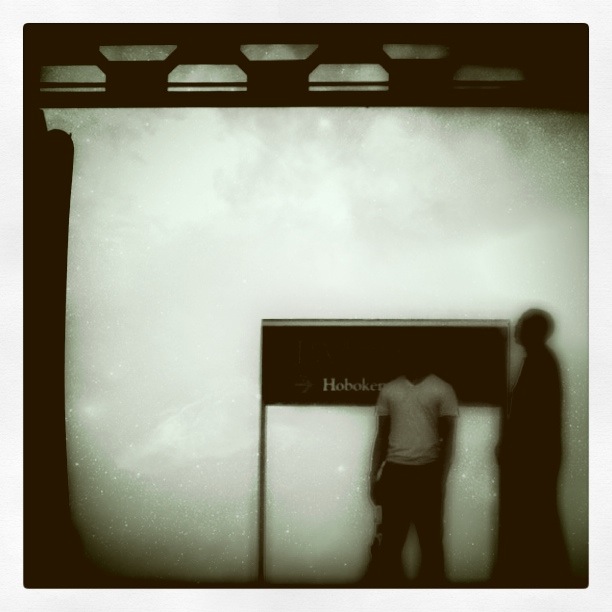
On Saturday, July 30, 2011 a  few thousand people gathered in Washington D.C. to support public education.  I was disappointed by the small number of people given the immense need to support public education at this time. I am not sure what the numbers suggest and will leave that to others who I am confident are writing about such things.

This is one small record of that day and perhaps that is enough.


Thursday, July 28, 2011

Reclaiming Public Learning Spaces: We are Pando

I read with much interest Will Richardson's recent post, "How the Hell Could They Let this Happen"? Will writes:
As Kohn suggests later in the article, educators need to drive these conversations, not politicians and businessmen. And I get the sense from the comments on my last post that people are looking for ways to do just that but are frustrated with the lack of scale. We can only start so many wikis…
He closes by asking what we might do.  I began my response by writing:
I think the way public education is reclaimed as a public institution is by leveraging the long tail, the rhizome. There is a movement of people who are designing public learning spaces that offer a public alternative to for profit and industrial schooling. Via internet we are connecting. It is this type of force that can and hopefully will counter the for-profit scheme being foisted on the public as the only alternative. It will be the average person who will make this decision--this choice.
Will's comment that there are only so many wikis one can compose is interesting. In some ways I think the underlying approach of raising voices in protest and in guidance is an approach we have known.  In doing so we attempt to meet force with equal force.  But these times may no longer require such strategy, or at least such single strategy.  I've been puzzling over the issue as well (as I suspect you too have done) and I want to suggest that a way (not the way) of response is to leverage the Internet to connect us and to begin to build a rhizomatic response to our government and the corporations that seem to own our government.  Every day via Twitter and those I have met on Twitter I am learning about some amazing responses to industrial education.

For example, there's Monika Hardy in Colorado, Ian Chia in Melbourne, Rob Greco in San Diego, Thomas Steele-Maley in rural Maine, Thedisruptdept in St Louis, Mission VHQ and Liam Dunphy in Ireland, Pam Moran in Virgina, Ira Socol in Michigan, Cristina Milos in Romania, Michael McCabe in Wisconsin,  Rob Cohen, Scott Klepesch, Mark Gutkowski, & Micheal Doyle in NJ, Mike Ritzius from NJ/PA and more and more than time and space can permit.  It's a very long tail when you consider that these people are connected to so many others and those people are connected to others, and so on.

Chris Anderson explains:
The theory of the Long Tail is that our culture and economy is increasingly shifting away from a focus on a relatively small number of "hits" (mainstream products and markets) at the head of the demand curve and toward a huge number of niches in the tail.
As the costs of production and distribution fall, especially online, there is now less need to lump products and consumers into one-size-fits-all containers.

Oddly,  public schools are being squeezed more and more into a one size fits all through standardization, standards, national curriculum, Race to the Top, and national and state testing.  We have been too long trying to find a single reform. To disrupt such established power requires a long tail revolution which is inherently a rhizomatic response.

From Leaf and Limb Tree Service Blog
It's not about being the reform answer or being at the top of something as a way to maintain power, but rather remaining in the middle where connections can be made and remade.  It's about each of us doing great work, not work that needs to be replicated, but rather work that is unique, native to its own ground.  The challenge is to know we are there and to connect our work. To connect great work is an antidote to mass standardization.

Leveraging social media to share stories and work, to try on tentative ideas, and to establish patterns are all critical.  Connecting and showcasing the small triumphs that by themselves may feel insubstantial, represents a mass. This is the work before each of us.   


On my own, I am Mary Ann Reilly.  Alongside you I am  Pando*, a rhizomatic triumph.

Let's do great education work, local to our ground, informed by Wendell Berry's 17 rules for a sustainable local community.

Let's value local funds of knowledge as Luis Moll's most important work has taught us to value.

Let's connect with one another and act as conduits connecting others.

I hope you'll join me as I am making my way.

I'll be looking for you...waiting for you.


*"2. Pando: Also known as the Trembling Giant, Pando is a clonal colony of a single male Quaking Aspen located in Utah. Each genetically-identical individual tree (or “stem”) is connected by a single root system. Spreading across more than 100 acres, Pando is believed to be over 80,000 years old and collectively weighs over 6,600 tons, making it the heaviest organism on the planet, as well as one of the oldest." from Leaf and Limb Tree Service blog

Wednesday, July 27, 2011

Remix as Composition: Getting Past the 1950s

When I peruse the Common Core Standards for ELA, I can't seem to find the word, remix or the word, bricolage. I find this odd, a bit off putting as remix, a form of bricolage, is an important art form.  Remix is composing and a method we surely want learners to know about, experience, and try their hands at. 

As a mom, I want my child to learn how to remix work in order to create an original piece.  I realize it will be years before the USDOE, state departments of education, Pearson, Achieve and the other non-trend setters even begin to recognize remix as composing, but we shouldn't wait for them.  They reify a past our children cannot afford.

In this video ReMix, Breakdown, a political work remixes film footage.  Give the debt crisis  chatter I can;t help but wonder if this isn't a film for our times. 

The blurb reads:
Remixed by Kasumi: Ever wonder what a condensed, psychedelic version of Michael Moore's "Capitalism a Love Story" would look and sound like? See what the Vimeo Best Remix award-winner says about the right-wing Capitalist lying machine in "BREAKDOWN the remix." THE NEW YORK TIMES called BREAKDOWN, a satirical look at the military-industrial complex, "an uproarious bricolage of alien-invasion panic, financial distress, military might and patriotic sentiment." This is a shorter remix of BREAKDOWN the video - and winner of the Vimeo Remix Awards.


Sunday, July 24, 2011

Borderlands

Last Train (Paterson, NJ)
The struggle is inner: Chicano, indio, American Indian, mojado, mexicano, immigrant Latino, Anglo in power, working class Anglo, Black, Asian--our psyches resemble the bordertowns and are populated by the same people. The struggle has always been inner, and is played out in outer terrains. Awareness of our situation must come before inner changes, which in turn come before changes in society. Nothing happens in the "real" world unless it first happens in the images in our heads.  -  Gloria E. Anzaldúa
At the Border (California)

Something Like a Wish (Paterson, NJ)
Caminante, no hay puentes, se hace puentes al andar. (Voyager, there are no bridges, one builds them as one walks.) -  Gloria E. Anzaldúa

Waiting (Paterson, NJ)

Out on the Street (Paterson, NJ)
What we say and what we do ultimately comes back to us so let us own our responsibility, place it in our hands, and carry it with dignity and strength.  - Gloria E. Anzaldúa

Swirl (San Antonio, Texas)
How I See You (Ringwood, NJ)
The possibilities are numerous once we decide to act and not react. - Gloria E. Anzaldúa

To Run (West Milford, NJ)

Dependent Upon the People Alone

A time is marked not so much by ideas that are argued about as by ideas that are taken for granted. The character of an era hangs upon what needs no defense. Power runs with ideas that only the crazy would draw into doubt. The “taken for granted” is the test of sanity; “what everyone knows” is the line between us and them. (Lawrence Lessig, The Future of Ideas, 2001. p. 5). 

In a talk, Lawrence Lessig gave earlier this year, he outlines 3 "taken for granted thoughts". 


1. Private interest is equated with public policy.
2. Katrina Effect: Our government ignores the losers and helps the winners.
3. We architect regulatory policy in order to raise campaign funds for these who are running the system.


Lessig argues that these taken for granted thoughts, especially the last, have created a dependency by our government not on the people as was the intention of the Republic, but on the funders who help to maintain politicians presence as government.


He tells us we, who are citizens, need to act to save our representative democracy dependent upon the people alone, not the funders.

Those of us in public education surely see the parallels between the stories Lessig uses to outline his charge and the "taken for granted thoughts" about public education. Some taken for granted thoughts I hear include:

1. The Common Core Standards will lead to quality education and an improved US economy.
Watch former Michigan Governor, Jennifer M. Granholm explain this taken for granted thought.


2. The ONLY way for parents, policy makers, and administrators to know if children are learning and if schools are effectively serving students is through annual "on-line" assessments developed externally by for profit companies.
Watch Doug Kubach, President and CEO of Pearson Assessment and Information explain this to you as he did for Congress (Education & Labor Committee).


3. Data driven decision making through technology represents a virtuous cycle that can help to remove faulty assessments from classrooms and replace these with scientifically sanctioned assessments that will result in continuous improvement.
Watch Larry Berger, CEO and co-founder of Wireless Generation (acquired by Rupert Murdock in 2010, along with Joel Klein) explain this to you as he did for Congress (Education & Labor Committee).


II. Rootstrikers


"There are a thousand hacking at the branches of evil to one who is striking at the root." (Henry David Thoreau. Walden)

This is a brief slideshare by Lessig in which he outlines the challenges.  As always,  I am curious as to what you think.

You can learn more about Rootstrikers, here.


Friday, July 22, 2011

And So I Dream A Bass Will Join Me: The Pleasure of We


I have been thinking about a line of thought that begins with Descartes' Cogito ergo sum, tours through American literature with its overt celebrations of the individual, and ends by wondering how we might shift schools from privileging thinking as a solo act to ensuring we design learning at schools that privileges neighbor interactions (Davis & Simmt 2003). Brent Davis and Elaine Simmt explain that ‘neighbors’ that interact ‘are not physical bodies or social groupings ... Rather ... these neighbors that must “bump” against one another are ideas’ (156). Neighbor interactions are group members’ ideas that are blended and juxtaposed through discussion, resulting at times in novel ideas that do not belong to any one individual.

It is in schools organized to leverage neighbor interactions that complexity of ideas bloom.  In many ways it is what happens in social media when ideas bump into ideas at such a rate that the origin of an idea becomes murky with the intentions of other.  Think about a twitter exchange such as the furious and fast exchanges via an Edchat  or English or social studies chat.  Ideas get retweeted, altered, morphed, triggering other ideas, slightly different and if you are like me, I often leave with some new understanding that would be impossible to trace as the idea(s) did not originate from one other person, but rather via the group in a nomadic fashion.

Yet in school we model assessment (think report cards, state testing) as if it is the lone individual who can best demonstrates knowledge. Why? Doesn't it seem foolish that in a world where we know knowledge is unstable that we keep issuing measures based on stability and say that these are our most profound indicators of learning? 

We need new narratives to guide us.

We continue to maintain the myth of the individual. American literature, like recounted U.S. history, is filled with stories about the plight and triumph of the individual, even when the official story does not adhere to such renderings.  Consider the distance between Longfellow's Hiawatha based on the trickster-transformer of the Ojibwe and the realities that framed Native Americans at the time from native perspective. In retrospective it is less than imaginable to think that a Native American would tell tribe members to trust the white man as if the missionaries arriving on the shore as Hiawatha is leaving were bringing justice, empathy, and cultural understanding alongside their desire to "get religion into the Indian".  The distance between the two is immeasurable and yet, Longfellow's Hiawatha emerges as a purveyor of cultural truths.

We have been told to love the individual and believe in his triumph.  Consider young Huck who reckons he has to light out for the territory ahead of the rest, or Nick who watches Jay Gatsby reach out his arms towards the water--towards the elusive green light at the end of Daisy' dock, or Holden who desires to be the catcher in the rye in order to save kids from falling off a cliff.  The individual be it boy, youth, or man is part of our make-up--our mythical sense of self and it has informed the way we produce schools and our emphasis on "the student."

From the very beginning, our education story has been a story about the individual rising up, acquiring the "smarts" on his (and later her) own to light out for the new territory.  We so believe this mythology that we have invented single user measures to ensure that students learn stuff as if the stuff was stable.  We hear the myth echoed in the SWBAT (student will be able to) statements based on Standards (fixed and measurable ideologies of power) and expressed through individual assessments that are routinely used in curriculum documents and teachers' plans.  We see it privileged in how we communicate learning: we issue report cards to individuals based on how they did or did not do or testing statements that recount how individuals have performed on a specific measure.  Our most privileged measurements that are tied to funding are supposed to tell us and the public how "much" each student knows based on a finite sense of content knowledge.  We neither invest in, nor represent the individual or the group in actual participatory practices.

And so I am wondering, are we myopic in our narrow expression of self as solitary hero; student as solo thinker?  The journey from "I think therefore I am" to "We participate therefore we are" is a difficult, albeit necessary, transition for U.S. schools. Instead of racing to be at the top, we need to be embracing participatory learning.

When I think of disrupting the myth of the individual, I considered all we can learn from a small song Harry Chapin recorded years ago, Six-String Orchestra. I think I am hearing strings way off in the distance.  How about you?


Work Cited
Davis, B., and E. Simmt. 2003. Understanding learning systems: Mathematics teaching and complexity science. Journal for Research in Mathematics Education 34, no. 2: 137–67.

Tuesday, July 19, 2011

Bearings Taken : Digital Essay

This is my first attempt at a Digital Essay that merges image, voice and music as essay.  All images were made during the last few years.