Showing posts with label literature. Show all posts

Saturday, March 7, 2015

Learning from Literature: Oh, Earth, You Are Too Wonderful (#SOL15, Day 7)

It May Not Be Written (M.A. Reilly 2015)

I.

In the final act of Our Town, Emily who has died in childbirth discovers that she can "return" to observe her former life.

Emily:  I'll choose a happy day.  
Mrs. Gibb:  No! At least, choose an unimportant day. Choose the least important day in your life. It will be important enough. 
Emily:  I can choose a birthday at least, can't I?

So she selects her twelfth birthday and upon returning to see herself  finds watching is unbearable. She has gained the type of distance that allows her to note the significance of each motion, each glance, every word said and not spoken.  This is what literature does for us as well.  It recasts our ordinariness. It allows us distance from our own lives so that we may see  and know differently, more astutely, often with a certain rawness or unspeakable joy.

So when Emily returns to her town, she observes her mother making breakfast for the family on an inconsequential day and even that banality is too beautiful to observe.

Emily: Oh, Mama, look at me one minute as though you really saw me. Mama, fourteen years have gone by. I'm dead. You're a grandmother, Mama! Wally's dead, too. His appendix burst on a camping trip to North Conway. We felt just terrible about it - don't you remember? But, just for a moment now we're all together.
Mama, just for a moment we're happy. Let's really look at one another!...I can't. I can't go on. It goes so fast. We don't have time to look at one another.
I didn't realize. So all that was going on and we never noticed. 
Take me back -- up the hill -- to my grave. 
But first: Wait! One more look. Good-bye , Good-bye world. Good-bye, Grover's Corners....Mama and Papa. Good-bye to clocks ticking....and Mama's sunflowers. And food and coffee. And new ironed dresses and hot baths....and sleeping and waking up. Oh, earth, you are too wonderful for anybody to realize you. Do any human beings ever realize life while they live it -- every, every minute? 
Stage Manager: No. (pause) The saints and poets, maybe they do some" (Wilder.)

II.

We learn from literature. And feeling bold I would say that the most important learning we glean at school are those lessons that are preserved in the words of others--words we try on like a comfortable sweater our father used to wear.


Saturday, November 1, 2014

Guiding Reading: A Necessity

I. Thinking on Your Feet

Here's the thing I don't quite grasp--why is guided reading so hotly debated and often debated by people who don't seem to actually teach? Now I admit that I get some of the problems folks have with 'guided reading' as there seems to be a lot of rules about book choices, book levels, lesson planning, length of lesson, and other dos and don'ts. These rules often obfuscate our role which gets lost among the clutter.

When we guide reading, we act as Vygotsky's more knowledgeable other, scaffolding readers' attempts at making meaning while problem solving.

It's a think on your feet role. It's privileged work.

Now, I'm not suggesting that it's easy to do. I get how comprehension is complex and anything human ups the complexity meter significantly.  I mean I just spent the better part of a week figuring out how I might engage middle and high school English teachers in Walter Kintsch's (1998) Construction and Integration Model (Comprehension: A Paradigm for Cognition) so that the theory can be embodied.  I just have to finish cutting 40 strips of paper, collect a bunch of scissors, pencils and tape so we can make, mark (center line or two parallel lines) and cut Möbius strips and use these to ground Kintsch's theory. 

Comprehension is rhizomatic.


Look,  anyone who uses a Magritte painting as the cover 
for his cognitive science text already has my attention.


II. The Possibility of Hope: Gaiman's Hansel and Gretel in 5th Grade

So I will be modeling a few guided reading lessons with intermediate grade students during the next few weeks.  I have decided to push at the boundaries of text selection by using books I think the students will love because they are catalysts for thinking.

That's my criteria. I want them to love books that help them to unlearn, unfix, unsettle.

As I have said in other posts, I am less concerned about text level or lexile level as all of these students are well past emergent and early reading stages. I'm more concerned about the quality of thought that the text they compose might occasion.

With some fifth graders, I am thinking that Neil Gaiman's (illustrated by Lorenzo Mattotti) newly published Hansel and Gretel looks so promising.  I plan to read it on Monday when a copy of the book arrives.

Here's how he opens the work:


I'm wondering what the group of students I have in mind ( I met them last Wednesday) will make of Gaiman's sparse language or the darkness of the illustrations or the dropped-cap letters in red--the only source of color.   How do these contrasts echo potential themes a reader might make from the work? Is form here an extension of content? What might this text suggest about love and its limitations and excesses?

Do we live, metaphorically, at the edge of the great forest?

There's so much waiting here for us. And that's the point.


III. Grade 3: Fireflies and the Price of Moonlight

With some amazing third graders I have taught for the last few years, I want to introduce them to Thoreau (they have learned to walk like Gandhi) and decided to pair D.B. Johnson's Henry's Night, with Julie Brinkloe's Fireflies.

Brinkloe's text chronicles a young boy's joy that comes from filling a jar with fireflies he has caught and then confronting a difficult and necessary choice he will make.

Johnson's text, the fifth in the Henry series, channels Henry David Thoreau as a bear whose restlessness one evening has him taking to the night (walking of course) with a jar of fireflies to light his way in search of an elusive bird.

What escapes us often interests us.


Both texts are beautifully written (lots of figurative language) and Johnson's angular art is as inviting as it is compelling. I'm curious as to what the children will make of each text and the effect from placing them side-by-side.  What might Henry think about the young boy's capture and release of fireflies? How might the young boy empathize with Henry's desire to find the whippoorwill--a night bird no one sees?

What stuff dreams are made of.


Thursday, December 27, 2012

Lincoln, Euclid and a CCSS Cautionary Tale

Lincoln (M.A. Reilly, 2012)

I. A Small Story

I couldn't help but think of how we often redress truths we have learned from one discipline in the cloak of story.  I thought about this as I viewed Steven Spielberg's Lincoln last week. In the scene below, Abraham Lincoln is determining what to say in a telegram and uses Greek mathematician, Euclid's notions of geometry as an illustrative story about reasoning and equality.  Lincoln illustrates the significance of the then pending 13th Amendment by situating Euclid's reasoning that, "Things that are equal to the same things are equal to each other" as a story.

Specifically he tells the young telegraph operator:
Euclid's first common notion is this: Things which are equal to the same things are equal to each other. That's a rule of mathematical reasoning and its true because it works - has done and always will do. In his book Euclid says this is self evident. You see there it is even in that 2000 year old book of mechanical law it is the self evident truth that things which are equal to the same things are equal to each other.   


Although Lincoln is speaking to the operator, it seems as if he most needs to hear the story in order to finalize his decision not to sacrifice the chances for ratification of the 13th Amendment in order to end the fighting.

II. A Cautionary Tale

Australian economist, Allan Fels says, "As humans we are hardwired to tell stories and hardwired to listen to stories." At the 2011 Creative Innovation Conference, he told the audience that "70% of what we learn is through stories" and that "storytelling is essential for innovation."

I think of the scene from Lincoln and Fels' words in light of some interpretations of the ELA Common Core State Standards which advocates significant increases in students reading and teachers utilizing informational text in order for students to be "college and career ready."  By high school, 70 percent of the texts taught are supposed to be informational.  Although David Coleman, co-author of these standards says that the percentage is spread across disciplines as a response to concerns from English teachers about the role of literature, Sandra Stotsky and Mark Baurerlein insist that "Literature will inevitably have a lesser presence" in curricula.  Further they state that the claim that reading informational texts leads to being college and career ready appears to be unfounded. Baurerlein writes:
“We could find no research to support the assertion that substituting informational texts for literature will improve students’ college readiness,” said Professor Bauerlein. “In fact, experience suggests that exactly the opposite is likely to happen.”
Beyond the obvious need for human story, it is a mistake to assign specific percentages of text types to be read at a national level as such action reduces teachers' capacity to place into individual students' hands touchstone books and for students to exert agency and select works that resonate.  Keeping track of percentages may well take us off course  by redirecting our attention and energies from intellectual exercises to accounting.

It is agency, more so than titles or genre, that lead learners to become avid readers, not simply compulsory ones.  It is the breadth and depth of read and appreciated texts that allow readers to couple ideas and insights gleaned with circumstances they now confront.  It is this action of making and applying meaning to lived contexts that better represents signs of being 'ready' for adulthood.


Monday, April 16, 2012

Imagining A to Z: N is for Notice Deeply

N is for Notice Deeply

I've Been to Sea Before (M.A. Reilly, from The Linen Series, 2011)
Authors understand this--this need, compelling really to notice deeply. Later I will be traveling across the sea and so I guess the sea is on my mind.  Here are a few examples of authors noticing the details of the edges of sea deeply and a few images I've made of the sea.  I hope to make more images of the sea while in England.

Nothing fuels the imagination like noticing.

HESTER bade little Pearl run down to the margin of the water, and play with the shells and tangled sea-weed, until she should have talked awhile with yonder gatherer of herbs. So the child flew away like a bird, and, making bare her small white feet, went pattering along the moist margin of the sea. Here and there, she came to a full stop, and peeped curiously into a pool, left by the retiring tide as a mirror for Pearl to see her face in. Forth peeped at her, out of the pool, with dark, glistening curls around her head, and an elf-smile in her eyes, the image of a little maid, whom Pearl, having no other playmate, invited to take her hand and run a race with her. But the visionary little maid, on her part, beckoned likewise, as if to say,—“This is a better place! Come thou into the pool!” And Pearl, stepping in, mid-leg deep, beheld her own white feet at the bottom; while, out of a still lower depth, came the gleam of a kind of fragmentary smile, floating to and fro in the agitated water.  - Nathaniel Hawthorne, The Scarlet Letter, Chapter XIV
Sea Impression, I (M.A. Reilly. from The Linen Series, 2011)

The sea-reach of the Thames stretched before us like the beginning of an interminable waterway. In the offing the sea and the sky were welded together without a joint, and in the luminous space the tanned sails of the barges drifting up with the tide seemed to stand still in red clusters of canvas sharply peaked, with gleams of varnished sprits. A haze rested on the low shores that ran out to sea in vanishing flatness. The air was dark above Gravesend, and farther back still seemed condensed into a mournful gloom, brooding motionless over the biggest, and the greatest, town on earth.  - Joseph Conrad, Heart of Darkness, p. 1.
Sea Impression, IV (M.A. Reilly. from The Linen Series, 2011)
When gliding by the Bashee isles we emerged at last upon the great South Sea; were it not for other things I could have greeted my dear Pacific with uncounted thanks, for now the long supplication of my youth was answered; that serene ocean rolled eastwards from me a thousand leagues of blue.

There is, one knows not what sweet mystery about this sea, whose gently awful stirrings seems to speak of some hidden soul beneath; like those fabled undulations of the Ephesian sod over the buried Evangelist St. John. And meet it is, that over these sea-pastures, wide-rolling watery prairies and Potters' Fields of all four continents, the waves should rise and fall, and ebb and flow unceasingly; for here, millions of mixed shades and shadows, drowned dreams, somnambulisms, reveries; all that we call lives and souls, lie dreaming, dreaming, still; tossing like slumberers in their beds; the ever-rolling waves but made so by their restlessness. - Herman Melville, Chapter 111, Moby Dick

Storm and Sea (M.A. Reilly, 2010)

His throat ached with a desire to cry aloud, the cry of a hawk or eagle on high, to cry piercingly of his deliverance to the winds. This was the call of life to his soul not the dull gross voice of the world of duties and despair, not the inhuman voice that had called him to the pale service of the altar. An instant of wild flight had delivered him and the cry of triumph which his lips withheld cleft his brain.

– Stephaneforos!

What were they now but cerements shaken from the body of death – the fear he had walked in night and day, the incertitude that had ringed him round, the shame that had abased him within and without – cerements, the linens of the grave?

His soul had arisen from the grave of boyhood, spurning her grave-clothes. Yes! Yes! Yes! He would create proudly out of the freedom and power of his soul, as the great artificer whose name he bore, a living thing, new and soaring and beautiful, impalpable, imperishable.

He started up nervously from the stone-block for he could no longer quench the flame in his blood. He felt his cheeks aflame and his throat throbbing with song. There was a lust of wandering in his feet that burned to set out for the ends of the earth. On! On! his heart seemed to cry. Evening would deepen above the sea, night fall upon the plains, dawn glimmer before the wanderer and show him strange fields and hills and faces. Where?

He looked northward towards Howth. The sea had fallen below the line0of seawrack on the shallow side of the breakwater and already the tide was running out fast along the foreshore. Already one long oval bank of sand lay warm and dry amid the wavelets. Here and there warm isles of sand gleamed above the shallow tide and about the isles and around the long bank and amid the shallow currents of the beach were lightclad figures, wading and delving.

Inca few moments he was barefoot, his stockings folded in his pockets and his canvas shoes dangling by their knotted laces over his shoulders and, picking a pointed salt-eaten stick out of the jetsam among the rocks, he clambered down the slope of the breakwater.

There was a long rivulet in the strand and, as he waded slowly up its course, he wondered at the endless drift of seaweed. Emerald and black and russet and olive, it moved beneath the current, swaying and turning. The water of the rivulet was dark with endless drift and mirrored the high-drifting clouds. The clouds were drifting above him silently and silently the seatangle was drifting below him and the grey warm air was still and a new wild life was singing in his veins.

Where was his boyhood now? Where was the soul that had hung back from her destiny, to brood alone upon the shame of her wounds and in her house of squalor and subterfuge to queen it in faded cerements and in wreaths that withered at the touch? Or where was he?
He was alone. He was unheeded, happy and near to the wild heart of life. He was alone and young and wilful and wildhearted, alone amid a waste of wild air and brackish waters and the sea-harvest of shells and tangle and veiled grey sunlight and gayclad lightclad figures of children and girls and voices childish and girlish in the air.
A girl stood before him in midstream, alone and still, gazing out to sea. She seemed like one whom magic had changed into the likeness of a strange and beautiful seabird. Her long slender bare legs were delicate as a crane's and pure save where an emerald trail of seaweed had fashioned itself as a sign upon the flesh. Her thighs, fuller and soft-hued as ivory, were bared almost to the hips, where the white fringes of her drawers were like feathering of soft white down. Her slate-blue skirts were kilted boldly about her waist and dovetailed behind her. Her bosom was as a bird's, soft and slight, slight and soft as the breast of some dark-plumaged dove. But her long fair hair was girlish: and girlish, and touched with the wonder of mortal beauty, her face.
She was alone and still, gazing out to sea; and when she felt his presence and the worship of his eyes her eyes turned to him in quiet sufferance of his gaze, without shame or wantonness. Long, long she suffered his gaze and then quietly withdrew her eyes from his and bent them towards the stream, gently stirring the water with her foot hither and thither. The first faint noise of gently moving water broke the silence, low and faint and whispering, faint as the bells of sleep; hither and thither, hither and thither; and a faint flame trembled on her cheek.
-- Heavenly God! cried Stephen's soul, in an outburst of profane joy.

He turned away from her suddenly and set off across the strand. His cheeks were aflame; his body was aglow; his limbs were trembling. On and on and on and on he strode, far out over the sands, singing wildly to the sea, crying to greet the advent of the life that had cried to him.

Her image had passed into his soul for ever and no word had broken the holy silence of his ecstasy. Her eyes had called him and his soul had leaped at the call. To live, to err, to fall, to triumph, to recreate life out of life! A wild angel had appeared to him, the angel of mortal youth and beauty, an envoy from the fair courts of life, to throw open before him in an instant of ecstasy the gates of all the ways of error and glory. On and on and on and on!

He halted suddenly and heard his heart in the silence. How far had he walked? What hour was it?
There was no human figure near him nor any sound borne to him over the air. But the tide was near the turn and already the day was on the wane. He turned landward and ran towards the shore and, running up the sloping beach, reckless of the sharp shingle, found a sandy nook amid a ring of tufted sandknolls and lay down there that the peace and silence of the evening might still the riot of his blood.

He felt above him the vast indifferent dome and the calm processes of the heavenly bodies; and the earth beneath him, the earth that had borne him, had taken him to her breast.

He closed his eyes in the languor of sleep. His eyelids trembled as if they felt the vast cyclic movement of the earth and her watchers, trembled as if they felt the strange light of some new world. His soul was swooning into some new world, fantastic, dim, uncertain as under sea, traversed by cloudy shapes and beings. A world, a glimmer or a flower?
Glimmering and trembling, trembling and unfolding, a breaking light, an opening flower, it spread in endless succession to itself, breaking in full crimson and unfolding and fading to palest rose, leaf by leaf and wave of light by wave of light, flooding all the heavens with its soft flushes, every flush deeper than the other.

Evening had fallen when he woke and the sand and arid grasses of his bed glowed no longer. He rose slowly and, recalling the rapture of his sleep, sighed at its joy.

He climbed to the crest of the sandhill and gazed about him. Evening had fallen. A rim of the young moon cleft the pale waste of skyline, the rim of a silver hoop embedded in grey sand; and the tide was flowing in fast to the land with a low whisper of her waves, islanding a few last figures in distant pools.

 - James Joyce, Portrait of the Artist as a Young Man, Chapter 4.

Sea Impression, II (M.A. Reilly. from The Linen Series, 2011)


Note: In this series of post during the month of April, I am participating in the A to Z blogging challenge, with each day focusing on a letter.  In order to bring some cohesion to this process--releasing the imagination is the focus of each post.

Monday, April 4, 2011

Books for Grade 7

Mirror & Window Books
Alvarez, Julia.  2002. Before We Were Free. NY: Knopf.
Emerson, Kevin. 2008. Carlos is Gonna Get It. NY: Arthur A. Levine.
Flake, Sharon. 2004. Who Am I Without Him? Short Stories about Girls and the Boys in Their Lives. NY: Hyperion.
Hiaasen, Carl. 2002. Hoot. NY: Knopf.
Johnson, Angela. 2003. The First Part Last. NY: Simon & Schuster.
---------------------. 1999. Heaven. NY: Scholastic.
Kent, Rose. 2007. Kimchi & Calamari. NY: HarperCollins.
Mikaelsen, Ben, 2001. Touching Spirit Bear. NY: HarperCollins.
Mosher, Richard. 2001. Zazoo. NY: Clarion.
Myers, Walter Dean. 2010. Cruisers Book 1. NY: Scholastic.
Saldana, Rene. 2004. Finding Our Way. NY: Laurel Leaf.
Sones, Sonya. 2001. What My Mother Doesn’t Know. NY: Simon & Schuster.
Spinelli, Jerry. 2000. Stargirl. NY: Knopf.
Trueman, Terry. Stuck in Neutral. NY: HarperCollins.
Weeks, Sarah. 2005. So B. It. NY: HarperCollins.
Whelan, Gloria. 2000. Homeless Bird. NY: HarperCollins.

Text to Text
1. Graphic Novels

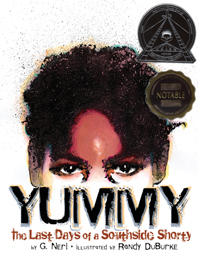
Yummy: The Last Days of a Southside Shorty CoverButzer, C.M. 2008. Gettysburg: The Graphic Novel. NY: Harper Collins.
Coy, John. 2003. Around the World. Illustrated by Antonio Reonegro and Tom Lynch. NY: Lee & Low.
Gaiman, Nel. 2009. Coraline: The Graphic Novel. Illustrated by P. Craig Russell. NY: Harper Collins.
Lutes, Jasson. 2007. Houdini: The Handcuff King. Illustrated by Nick Bertozzi. NY: Hyperion.
Neri, G. 2008. Yummy: The Last Days of a Southside Shorty. Illustrated by Randy DuBurke. NY: Lee & Low.
Sturm, James. 2007. Satchel Paige: Striking Out Jim Crow. Illustrated by Rich Tommaso. NY: Hyperion.
Tan, Shaun 2011. Lost and Found: Three. NY: Scholastic.
Varon, Sara. 2007. Robot Dreams. Raring Brook.
Vollmar, Rob. 2007. The Castaways. Illustrated by Pablo G. Callejo. NBM/ComicLit.
Yang, Gene Luen. 2011. Level Up. Illustrated by Thien Pham. NY: First Second Books.
Young, Karen Romano. 2010. Doodlebug:A Novel n Doodles. NY: Feiwel & Friends.
 
2. Historical Fiction
Anderson, Laurie Halse. 2000. Fever 1793. NY: Simon & Schuster.
Auch, Mary Jane. 2002. Ashes of Roses. NY: Holt.
Bruchac, Joseph (Abenaki). 2006. Codetalker, a Novel about Navajo Marines in WWII. NY: Speak.
Crowe, Chris. 2002. Mississippi Trial, 1955. NY: Fogelman.
Erdrich, Louise. 1999. The Birchbark House. NY: Hyperion.
------------------. 2006. The Game of Silence. NY: HarperCollins.
-----------------. 2010. The Porcupine Year. NY: HarperCollins.
Hesse, Karen. 2001. Witness. NY: Scholastic.
Lester, Julius.  2005. Day of Tears: A Novel in Dialogue. NY: Hyperion.
Mazer, Harry. 2001. A Boy at War: A Novel of Pearl Harbor. NY: Simon & Schuster.
Myers, Walter Dean. 2010. Riot. NY: Egmont.
Taylor, Mildred D. 2001. The Land. NY: Fogelman.
Yee, Paul. 2004. Dead Man's Gold and Other Stories. Illustrated by Harvey Chan. Toronto: Groundwood Books.

3. Science Fiction & Fantasy
Bruchac, Joseph (Abenaki). 2007. Wabi: A Hero's Tale. NY: Speak.
Card, Orson Scott. 1974/2010. Ender's Game. Tor Books.
Crichton, Michael. 1991. Jurassic Park. NY: Ballantine Books.
DuPrau, Jeanne. 2003. The City of Ember. NY: Random.
Farmer, Nancy. 2002. The House of the Scorpion. NY: Atheneum.
Horowitz, Anthony. 2006. Stormbreaker. NY: Speak.
MacHale, D.J. 2007. Pendragon: The Merchant of Death. NY: Aladdin.
Paolini, Christopher. 2005. Eldest. NY:  Knopf.
------------------------. 2003. Eragon. NY:  Knopf.
Philbrick, Rodman. 2000. The Last Book in the Universe. NY: Blue Sky.
Pierce, Tamora. 2003. Trickster’s Choice. NY: Random.
Rowling, J.K. 2005. Harry Potter and the Half-Blood Prince. NY: Levine.
Text to World
Barakat, Ibtisam. 2007. Tasting the Sky: A Palestinian Childhood. NY: Farrar, Straus and Giroux.
Burg, Ann E. 2009. All the Broken Pieces. NY: Scholastic.
Ellis, Deborah. 2010. No Safe Place. Toronto: Groundwood Books.
----------------. 2010. Childlren of War: Voices of Iraqi Refugees. Toronto: Groundwood Books.
Glover, Savion and Bruce Weber. 2000. Savion!: My Life in Tap. NY: HarperCollins.
Hobbs, Will. 2007. Crossing the Wire. NY: HarperCollins.
Park, Linda Sue. 2010. A Long Walk to Freedom. NY: Clarion
Rhodes, Jewell Parker. 2010. Ninth Ward. NY: Little Brown.
Schlosser, Eric & CharlesWilson. 2007. Chew on This: Everything You Don't Want to Know about Fast Food. NY: Houghton Mifflin.
 Zenatti, Valerie. 2008. A Bottle in the Gaza Sea. Bloomsbury.

Creating Visual Images
Du Bois, William. 2005. The Twenty One Balloons. NY: Pufflin.
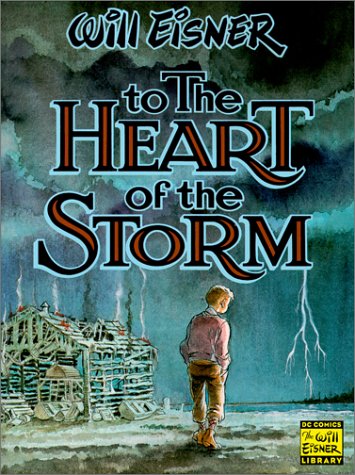
Eisner, Will. 2007. To the Heart of the Storm. NY: W.W. Norton.
Gaiman, Neil. 2010. The Graveyard Book. Illustrated by Dave McKean. NY: HarperCollins.
Govenar, Alan. 2006. Extraordinary Ordinary People: Five Americn Masters of Traditonal Art. Cambridge, MA: Candlewick.
Landowne, Youme, 2008. Pitch Black. Illustrated by Anthony Horton. El Paso, TX: Cinco Puntos Press.
Lyons, Mary E. 1993. Stitching Stars: The Story Quilts of Harriet Powers. NY: Atheneum.
Morice, David. 2002. Poetry Comics: An Animated Anthology. NY: T & W Books.Sis, Peter. 2007. The Wall: Growing Up Behind the Iron Curtain. NY: Farrar, Straus and Giroux.
Tan, Shaun. 2007. The Arrival. NY: Arthur A. Levine.
Watt, Key. 2008. Alabama Moon. NY: Square Fish.


Wonderings... 
Bacigalupi, Paola. 2010. Ship Breaker. Boston: Little, Brown.
Bloor, Edward, 2001. Tangerine. NY: Scholastic.
Cortez, Sarah (Ed). 2011. You Don't Have A Clue: Latino Mystery Stories for Teens. Pinata Books.
Crowe, Chris. 2003. Getting Away with Murder: The True Story of the Emmett Till Case. NY: Phyllis Fogelman Books / Penguin.
Hobbs, Will. 2001. Down the Yukon. NY: HarperCollins.
Hopkinson. Deborah. 2006. Up Before Daybreak: Cotton and People in America. NY: Scholastic.
Janeczko, Paul B. 2010. The Dark Game: True Spy Stories. Cambridge, MA: Candlewick.
Naidoo, Beverkey. 2008. Burn My Heart. NY: Amistad.
Reinhardt, Jung. 2003. Dreaming in Black and White. NY: Dial.
Wulf, Linda Press. 2006. The Night of the Burning: Devorah's Story. NY: Farrar, Straus and Groux.
Wynne-Jones, Tim. 1999. Stephen Fair. Toronto: Groundwood Books.

Determining Importance
Armstrong, Jennifer. 2005. Photo by Brady: A Picture of the Civil War. NY: Atheneum.
Bartoletti, Susan Campbell. 2005. Hitler Youth: Growing Up In Hitler's Shadow. NY: Scholastic.
Bledsoe, Lucy Jane. 2006. How to Survive in Antarctica. NY: Holiday House.
Fleischman, John. 2004. Phineas Gage: A Gruesome but True Story About Brain Science. NY: Sandpiper.
Mann, Charles C. 2009. Before Columbus: The Americas of 1491. NY: Atheneum.
Roach, Mary 2004. Stiff: The Curious Lives of Human Cadavers. NY:W.W. Norton.
Wright, Simeon and Herb Boyd. 2010. Simeon's Story: An Eyewitness Account of the Kidnapping of Emmett Till. Chicago, IL: Lawrence Hill Books.
Walker, Sally M. 2005. Secrets of a Civil War Submarines: Solving the Mysteries of the H.L. Hunley. Carolrhoda.

Synthesis
Armstrong, Jennifer. 2000. Shipwreck at the Bottom of the World: the Extraordinary True Story of Shackleton and the Endurance. NY: Crown.
D;Adamo, Francesco. 2005. Iqbal. NY: Aladdin.
Freedman, Russell. 2004. The Voice that Challenged a Nation: Marian Anderson and the Struggle for Equal Rights. NY: Clarion.
------------------------. 1998. Kids at Work: Lewis Hine and the Crusade Against Child Labor. NY: Sandpiper.
Grines, Nikki. 2010. Dark Sons. Kindle Eition. Zondervan.
Janeczko, Paul B. 2007. Worlds Afire. Cambridge, MA Candlewick.
Lang, Gene Yuen. 2009. The Eternal Smile. Illustrated by Derek Kirk Kim. NY: First Second.
Nelson, Marilyn. 2005. A Wreath for Emmett Till. Illustrated by Philippe Lardy. Boston: Houghton.
Ottaviani, Jim. 2001. Two-Fisted Science. G.T. Labs.

Sunday, February 27, 2011

Recommended Books for High School

Mirror & Window Books
 Alexie, Sherman. 2007. The Absolutely True Diary of a Part-Time Indian. New York: Little Brown.
Budhos, Marina. 2007. Ask Me No Questions. NY: Simon Pulse.
Cardenas, Teresa. 2006. Letters to My Mother. Translated by David Unger. Toronto: Groundwood Books.
--------------------. 2006. Cartas a mi mama. Toronto: Groundwood Books.
Combres, Elisabeth. 2011. Broken Memory: A Novel of Rwanda. Toronto:  Groundwood Books.
de la Pena, Matt. 2010. Mexican WhiteBoy. NY: Delacorte Books for Young Readers.
Herrera, Juan Felipe. 1999. CrashBoomLove: A Novel in Verse. Albuquerque, NM: University of New Mexico Press.
Jaramillo, Ann. 2006. La Linea. New Milford, CT: Roaring Brook Press.
Luen, Gene. 2006. American Born Chinese. New York: First 
Quinonez, Ernesto. 2000. Bodega Dreams: A Novel. NY: Vintage.
1. Beyond Plot: Vignettes & Writer's Notebooks
Alvarez, Julia. 2010. How the Garcia Girls Lost their Accents.NY: Algonquin Books.
Bradbury, Ray. 1985. Dandelion Wine. New York: Bantam Books.
Cisneros, Sandra. 1991. The House on Mango Street. New York: Vintage.
Cofer, Judith Ortiz. 1996. An Island Like You: Stories of the Barrio. NY: Puffin.
Herrera, Juan Felipe. 2002. Notebooks of a Chile Verde Smuggler. Phoenix: University of Arizona Press. 
Myers, Walter Dean. 2010. Lockdown. NY: Amistad.
------------------------. 2001. 145th Street: Short Stories. New York: Laurel Leaf.
Wolff, Virginia Euwer. 1993. Make Lemonade. New York: Henry Holt.

2. Exploring the Essay
Baca, Jimmy Santiago. 1994. Working in the Dark: Reflections of a Poet from the Barrio. Santa Fe, NM: Red Crane Books.
Baxter-Stoltzfus, Amelia. 2009. “Returning to What’s Natural.” This I Believe.
Disney, Stephanie. 2008. Seeing with the Heart. This I Believe essay.
Dunsworth, Holly. 2008. I Believe Evolution. This I Believe Essay.
Gallagher, Hugh. 1990. College Essay. Harper's Magazine, p. 36.  (Very funny).

Gutierrez, Thelma and Wayne Dresh. 2008. Girl from Iconic Depression Photo: "We Were Ashamed" . 12.3.2008.
Hogan, Linda (Chickasaw). 2007. Dwellings: A Spiritual History of the Living World. NY:
W.W. Norton.
Kingsolver, Barbara. 2003. Small Wonder: Essays. NY: Harper.
"Migrant Mother, 1936" Eyewtness to History.
Orlean, Susan (Ed.). 2005.  The Best American Essays. Boston: Houghton.
Redsand, Anna S. 2006. Viktor Frankl: A Life Worth Living. NY: Clarion Books.
Stone, Lucy. Disappointment Is the Lot of Women. ClassZone. 1855.
This I Believe essays from NPR
Urrea, Luis Alberto. 2004. The Devil’s Highway: A True Story. New York: Little Brown.


3. Because the Environment Matters

Abbey, Edward. 1990. Desert Solitaire: A Season in the Wilderness. Drawings by Peter Parnall. NY: Touchstone.
Berry. Wendell. 1996. The Unsettling of America: Culture & Agriculture. Sierra Book Clubs.
Carson, Rachel. 1962/2002. Silent Spring. Boston: Mariner Book.
Dillard, Annie. 2007. Pilgrim at Tinker Creek. NY: Harper.

Harr, Jonathan. 1996. A Civil Action. NY: Vintage.
Jacons, Jane. 1961/1992. The Death and Life of Great American Cities. NY: Vintage.Leopold, Aldo. 1986. A Sand County Almanac.NY: Ballantine.
Lopez, Barry. 2004. Field Notes: The Grace Note of the Canyon Wren. NY: Viking.
---------------. 1989. Crossing Open Ground. NY: Vintage.
McKibben, Bill. 2006. The End of Nature. NY: Random House.
Momaday, N. Scott (Kiowa-Cherokee). 1976. The Way to Rainy Mountain. University of New Mexico Press.
Powers, Richard. 2009. Gain: A Novel. NY: Picador.
Smith, Kimberly K. 2007. African American Environmental Thought: Foundations. Wichita, KA: University Press of Kansas.
Suzuki, David. 1997/2007. The Sacred Balance: Rediscovering Our Place in Nature. Vancouver: Greystone Books.


From: Pyongyang: A Journey in North Korea.

Text to World
Delisle, Guy. 2005. Pyongyang: A Journey in North Korea. Translated by Helge Dascher. Montreal: Drawn & Quarterly.
Jansen, Hanna. 2006. Over a Thousand Hills I Walk with You. Minneapolis, MN: Carolrhoda.
Kubert, Joe. 1998. Fax from Sarajevo. Milwaukee, OR: Dark Horse Comic.
Siddiqui, Haroun. 2008. Being Muslim (Groundwork Guides). Tornoto: Groundwood Books.


Creating Visual Images
Translated by Tomás H. Lucero and Liz Fania Werner.


Saco, Joe. 2010. Footnotes in Gaza. NY: Metropolitan
Satrapi, Marijane. 2004. Persepolis.
Stafford, William. 1994. The Darkness Around Us is Deep. NY: Harper.
Wilson, August. 1988. Joe Turner's  Come and Gone. NY: Plume.

Asking Questions
Bruchac, Joseph (Abenaki). 1999. No Borders. Duluth, MN: Holy Cow Press.
Libura, Krystyna, Claudia Burr and Maria Cristina Urrutia. 1997.  Broken Shields. Toronto: Groundwood Books.
Merrell, Billy. 2003. Talking in the Dark: A Poetry Memoir. NY: Push.
Osa, Nancy. 2005. Cuba 15. NY: Delacorte.
Rosoff, Meg. 2006. How I Live Now. New York: Wendy Lamb Books.

A Chance of Sunshine (Creative Editions)Making Inferences
Lester, Julius. 1998. Othello. New York: Scholastic.
Liao, Jimmy. 2003. Chance of Love. NY: Hallmark.
---------------. 2000. A Chance of Sunshine. Creative Education.
Lightman, Alan. 2004. Einstein's Dreams (6th printing ed.). NY: Viking.
Small, David. 2010. Stitches. NY: Norton.
Smith. Sheri L. 2010. Flygirl. NY: Speak.
Spiegelman, Art. 1986. Maus I: A Survivor's Tale: My Father Bleeds History. New York: Pantheon.

Determining Importance
Heiligman, Deborah. 2009.  Charles and Emma: The Darwins' Leap of Faith. NY: Henry Holt.
Hemphill, Stephanie. 2010. Wicked Girls: A Novel of the Salem Witch Trials. Kindle Edition.
Miller, Arthur. 2003. The Crucible. NY: Penguin (Kindle Edition).
Sáenz, Benjamin Alire. 2009. Last Night I Sang to the Monster. El Paso, TX: Cinco Puntos Press.

Synthesis
Alvarez, Julia. 2004. Before We Were Free. New York: Laurel Leaf.
----------------. 2004. Antes de ser libres. New York Laurel Leaf.
Anaya, Rudolfo. 1972. Bless Me Ultima. NY: Warner Books.
Laxer, James. 2006. Empire. Toronto, Ontario: Groundwood Books.
Springer, Jane. 2007. Genocide. Toronto, Ontario: Groundwood Books.
Vonnegut, Kurt. 1999. Slaughterhouse-Five. New York: Dial.

Thursday, January 6, 2011

Just Say No to Nonsense: Kamil, Wiggins and Poor Huck - Why Literature Matters

Ever since Nancy Reagan first uttered her anti-drug slogan, Just Say No, it has been co-opted for all sorts of situations such as  Proposition 19, taxes, and now—fiction in the classroom. I first heard about the just say no to reading fiction in classrooms a few years ago while I was attending of all things—a reading conference.  Michael Kamil concluded a keynote speech about the shift to including more informational texts on the NAEP assessment by saying that he had never learned anything from fiction.  Not sure I had actually heard him correctly, I spoke with him after his lecture.  I immediately brought up James Joyce, not only because I come from Dublin, but also because well, I am pretty sure it would be impossible to read Dubliners, Portrait or Ulysses and come away having learned nothing.  It has been my experience that all fiction leads to the possibility of learning.  Nonetheless, Kamil was adamant and reiterated that he had not learned anything from fiction. I wondered then, as I do now, if he believed that only that which could be measured by national and state tests was representative of important learning given the context of his talk. 


More recently, in the Education Week blog, Teaching Now, Caroline Cournoyer posed the question: Should We Ban Fiction Books from Schools? The question was raised in response to a Center for Education Policy report indicating that girls outperform boys on reading measures internationally.  Cournoyer dedicates most of the blog to quoting Grant Wiggins who indicated that in response to the "boy reading crisis," most fiction should be banned from classrooms. Bold words for sure. Cournoyer writes:
ASCD blogger and president of an education consulting firm Grant Wiggins ... thinks schools should ban most fiction books from the curriculum altogether because they don't prepare students for the future, when the bulk of the reading they'll do as adults is non-fiction. And, he says, fiction bores boys.
"I recall with horror having to read Jane Austen and Nathaniel Hawthorne as a student," Wiggins says. "Worse, look at current favorites in younger grades, such as Sarah Plain and Tall: utterly boring, with no action and endless overly-fine detail for page after page."
With books like this, he says, it is easy to see how boys have become uninterested in reading.
Let me first say that anytime someone is making a claim for something better based on preparation for a fictive future, I am alert and concerned.  I often wonder whose vision of "the future" is being privileged and what is lost given that particular point of view.  As a mom, I want my son to love the pleasure of reading. Regardless of the life he composes, I hope this for him.  As such I am joyful each and every time he reaches for a book to read.  I am less concerned with the text type as I know reading often inspires more reading.

With all of that aside—Kamil and Wiggins nonetheless undervalue narrative text (what they call fiction) and fail to understand that meaning does not reside in any text, but rather is composed during one's transaction with a text (See Louise Rosenblatt).  As such, there is no "extra" meaning or value in informational text, which often includes narrative structures (just think Loren Eiseley or Bill Bryson).  Nor will eliminating particular types of text cause boys to desire to read. Empowerment cannot be realized by eliminating choice. 


If all of this wasn't bad enough, at the same time Wiggins is spouting his anti-fiction rhetoric, Auburn English Professor Alan Gribben is guiding NewSouth Books in "improving" Mark Twain's The Adventures of Huckleberry Finn by replacing the "N" word with slave and replacing Injun with Indian. Gribben  says he is doing this in order to increase readership.  He is quoted as saying, "I'm hoping that people will welcome this new option, but I suspect that textual purists will be horrified."

I think he is right to expect that many will be horrified, textual purist and not.  Whereas I do empathize with Gribben's assessment that teaching Huck Finn is challenging, sanitizing the text undermines its power and the reader's.  I can recall the deliberateness with which I approached the novel each time students and I read the text, taking time to explain to students that the representation of people of color in the text surely would be painful to read.  This is not so different  than the talk we would have had when reading Swift's "A Modest Proposal".  Racial and ethnic hatred hurts and pretending such hatred was and is not real does not make it so. What NewSouth Books fails to understand is that an important teaching point requires the accuracy of the text as Twain wrote it.  A teacher's work is to help students understand how the casual and consistent use of racial slurs by young Huck and other Whites in the story represent the dominant culture's beliefs about the value of people of color at both the time of the novel's setting and the time in which Twain is writing.  Against such beliefs, Twain situates Jim as the moral compass in the text and it is a triumphant moment when young Huck decides he can't pray a lie (from Chapter XXXI):
 It made me shiver. And I about made up my mind to pray, and see if I couldn't try to quit being the kind of a boy I was and be better. So I kneeled down. But the words wouldn't come. Why wouldn't they? It warn't no use to try and hide it from Him. Nor from ME, neither. I knowed very well why they wouldn't come. It was because my heart warn't right; it was because I warn't square; it was because I was playing double. I was letting ON to give up sin, but away inside of me I was holding on to the biggest one of all. I was trying to make my mouth SAY I would do the right thing and the clean thing, and go and write to that nigger's owner and tell where he was; but deep down in me I knowed it was a lie, and He knowed it. You can't pray a lie — I found that out.
   So I was full of trouble, full as I could be; and didn't know what to do. At last I had an idea; and I says, I'll go and write the letter — and then see if I can pray. Why, it was astonishing, the way I felt as light as a feather right straight off, and my troubles all gone. So I got a piece of paper and a pencil, all glad and excited, and set down and wrote:
   Miss Watson, your runaway nigger Jim is down here two mile below Pikesville, and Mr. Phelps has got him and he will give him up for the reward if you send.
   HUCK FINN.
   I felt good and all washed clean of sin for the first time I had ever felt so in my life, and I knowed I could pray now. But I didn't do it straight off, but laid the paper down and set there thinking — thinking how good it was all this happened so, and how near I come to being lost and going to hell. And went on thinking. And got to thinking over our trip down the river; and I see Jim before me all the time: in the day and in the night-time, sometimes moonlight, sometimes storms, and we a-floating along, talking and singing and laughing. But somehow I couldn't seem to strike no places to harden me against him, but only the other kind. I'd see him standing my watch on top of his'n, 'stead of calling me, so I could go on sleeping; and see him how glad he was when I come back out of the fog; and when I come to him again in the swamp, up there where the feud was; and such-like times; and would always call me honey, and pet me and do everything he could think of for me, and how good he always was; and at last I struck the time I saved him by telling the men we had small-pox aboard, and he was so grateful, and said I was the best friend old Jim ever had in the world, and the ONLY one he's got now; and then I happened to look around and see that paper.
   It was a close place. I took it up, and held it in my hand. I was a-trembling, because I'd got to decide, forever, betwixt two things, and I knowed it. I studied a minute, sort of holding my breath, and then says to myself:
   "All right, then, I'll GO to hell" — and tore it up.
Readers deserve the actual text, not a sanitized one.  However painful that trip down the river with Huck and Jim is, it is pain worth coming to name.  That is the art.  Such important learning cannot be named if we remove the text from the classroom because it is fiction or we offer students a sanitized version in order to make it "acceptable".  Neither should happen and we should say so often and loudly.


In Burn this Book: PEN Writers Speak Out on the Power of the Word, a collection of essays by writers about the power of the written word  and censorship, Toni Morrison asserts in the opening essay, "Peril," that it is our very lives that are jeopardized when writers' voices are silenced and removed—a perspective that Kamil, Wiggins, and Gribben would do well to understand.  Morrison (2009) writes:
And it is imperative not only to save the besieged writers but to save ourselves. The thought that leads me to contemplate with dread the erasure of other voices, of unwritten novels, poems whispered or swallowed for fear of being overheard by the wrong people, outlawed languages flourishing underground, essayists' questions challenging authority never being posed, unstaged plays, canceled films—the thought is a nightmare. As though a whole universe is being described in invisible ink.

Certain kinds of trauma visited on people are so deep, so cruel, that unlike money, unlike vengeance, even unlike justice, or rights, or the good-will of others, only writers can translate such trauma and turn sorrow into meaning, sharpening the moral imagination.

A writer's life and work are not a gift to mankind; they are a necessity.
Morrison would have us understand that literature, in all its various genres, matters deeply and is a necessity--one we need to ensure continues. It is no less important than water and air.  Reading literature helps us to shape the meaning we make in our lives and helps us to imagine other possibilities of the lives we want to live and lives others do live.  It is wrong to remove fiction from classrooms and to remove an author's words from a text.  Both are terrible lies.

As Huck comes to know, he'd rather go to hell, than pray a lie.  We should be willing to do likewise.