Monday, September 12, 2011

Apps for Grades 3 and 4

During the next week I will begin working with three elementary teachers in a culturally relevant pedagogy pilot.  To that end, I will co-teach once a week with the teachers (when that makes sense) and have recently procured high quality global multicultural texts and technology (will blog about the books soon and the methods as the school year gets underway).  In this blog post I want to share the apps that will be available to students through iPod touches.

The school was recently made wireless and a tech infusion placed some new laptops and iPads in classrooms.  In addition, the three teachers will also have a cart with 40 iPod touches and a MacBook pro. On each iPod touch, teachers and students will be trying out the following apps.

Please note: Great big thanks go to Royan Lee who told me about Angie Harrison and her dynamite list of apps and Ian Chia for his list of apps on diigo.

So here's the starting collection:

Composing:
Phoster
FlipBook
Audioboo
In aWorld Drama
WordFoto
MadPad - Remix Your LifeStoryrobe
Puppet Pals
NoteMaster
Screen Shot from Project Noah
Dictionary!
Notes (Preloaded on the iPod Touch)
Evernote
iDo-Notepad
Story Buddy Jr
Strip Design
Story Wheel
ABC for Me
Rory's StoryCubes
Sock Puppets
MindNode
StoryKit 
Animoto
Hipstamatic App
Labelbox 
Project Noah
iNaturalist 
Photospeak

Creating: These apps are use for creating visuals 
Hipstamatic
Cartooonatic
360 Panorama
Instagram
Super8
JotNot Pro (Scanner)

Recording/Augmentattive Communciating/Communication
Dragon Dictation
Talking Tom Cat
Voice Memos (Preloaded on the iPod Touch)
TapToTalk
TapToTalk Uploader
Skype

Mathematics: Please note that Everyday Mathematics is used in the elementary schools and as such a lot of the apps connect with that program.
Everyday Mathematics Baseball Multiplication with 1-6 Facts
From this MirrorPaint
Everyday Mathematics Baseball Multiplication with  1-12 Facts
Everyday Mathematics Divisibility Dash
Everyday Mathematics Top-It Addition
Everyday Mathematics Beat the Computer Multiplication
Everyday Mathematics Fraction Equivalents
Everyday Mathematics Monster Squeeze
Everyday Mathematics Tric-Trac
Everyday Mathematics Top-It Subtraction
Multi Tables
Montesorri Counting Board
MirrorPaint
Calculator (Preloaded on the iPod Touch)

Books & Book Apps:
Velveteen Rabbit (Ruckus mobile media): Told by Meryl Streep
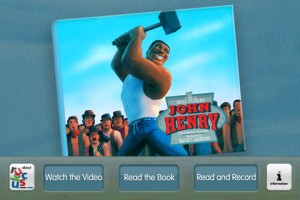
John Henry (Ruckus mobile media) : Told by Denzel Washington
Screen Shot from John Henry
Untying the Knot
The Four Seasons
Michelle Obama in Pictures
iBooks
Lola and Fred
Our Choice
Kindle
Lana Sultan's The Amazing Adventures of Eco Boy
Lana Sultan's The Amazing Adventures of Eco Boy 2
Cucumber Soup (Pic Pocket Books)
Pocket Zoo
Who Will Rule?
Fierce Grey Mouse
A Fine Musician
Bloom App

Music
SoundHound
Pandora
Bloom (also composing)

Indoor Recess/Games
Fantastic Four in a Row
Fragnets
Fruit Ninja
Geared 2
FridgePoet
GameCenter (Preloaded on the iPod Touch)
Yatzy HD
UNO
Myles & Ayesha Black Inventors Match Game
Pictureka!

Word Study/Sketching & Drawing
DoodleBoard
DoodleBuddy
Skywrite
Spell Number
Glow Draw
Anagram
Chalk Draw
Graffiti Draw!
Scrabble
Boggle
Snowdrift


Social Studies
Oregon Trail
Maps (Preloaded on the iPod Touch)
Google Earth
Compass
Fotopedia Heritage
Wikihood

osmos iphone ipad game app logo Osmos iPhone & iPad Game App Review
Osmos
Science
Star Walk
Weather (Preloaded on the iPod Touch)
Weather Channel
NASA
Dinosaurs: American Museum of Natural History
SciSpy
The Package
Osmos

Teacher Tools
OER Search
QR Code ReaderGoodreads
Fountas & Pinnell Prompting GuideTwitter
Yelp
YouTube (Preloaded on the iPod Touch)

On Opening Page
FaceTime (Preloaded on the iPod Touch)
Calendar (Preloaded on the iPod Touch)
Photos (Preloaded on the iPod Touch)
Camera (Preloaded on the iPod Touch)
iTunes (Preloaded on the iPod Touch)
Settings (Preloaded on the iPod Touch)
Diigo 
Dropbox
Google
Dragon Go
Clock (Preloaded on the iPod Touch)


Thursday, September 8, 2011

Local Learning: Talking Back to Seth Godin

I was reading Seth Godin's Blog post, Getting serious about your org chart and stopped when I read: "... when geography mattered more than it does now." Godin was asking readers to question their organization charts in order to determine whether the organization leverages the best people to get the job done. He makes the rather broad statement that geography mattered more in the past than it does now.

"Ordinary Angels."  Dun Laoghaire, Ireland. A bit south of where I was born. (Reilly, 2008)
Hmm.

I understand what he is pointing at given the ease of connectivity via the Internet. But I think that is a partial view of something far more complex. I am confident the issue of the local as situated in physical geography ought not to be confused with what technology allows us to do.  The former is about living deeply, deliberately. The latter is not.

The local is about memory and community and land.  Failure to recognize the complexity of local geographies will undoubtedly result in losses we simply may not be able to calculate especially at a time when we are still so dazzled by the novelty of global connections.

Does geography matter less, or perhaps more given the ease with which we may separate ourselves intellectually from the parcel of earth we live on? What happens to the local culture--the preservation of memory of place that is deeply (in)formed by earth or as Wendell Berry (1990) situates it: "the knowledge of how the place may be well and lovingly used" (p.166)?

In an interview with Jordan Fisher-Smith about the dead, Wendell Berry said:
Well, if you didn't know any of the past, you literally wouldn't know anything. You'd have no language, no history, and so the first result would be a kind of personal incompleteness.
But practicalities are involved also. If you had a settled, a really settled, thriving, locally adapted community, which we don't have anywhere, you wouldn't just be remembering the dead. You'd remember what they did and whether it worked or not. And so you'd have a kind of lexicon of possibilities that would tell you what you could do, what you could get away with, and what penalty to expect from what you couldn't get away with.
So the memory that a community has of its dead, and of the pasts of the living would be a precious sort of manual--a kind of handbook, a kind of operator's manual for the use of the immediate place. That's the only kind of operator's manual for the world that we're going to have.

As an educator, I try to relate what I read to what I know about learning and teaching and organizing occasions where one might do both.  I have borrowed Berry's idea of settled households as a metaphor for a place called school and coupled this with the idea of the rhizome-- a horizontal rendering of  communities of settled households.  The languaging that happens in households among seasoned educators, novices, and learners is a "kind of lexicon of possibilities."  It is not that these individuals are the "best at what they do".  Rather, and I want to stress more important, is that they are a collective force who shares and makes local history.  The lexicon is not born simply from "good" ideas, but is made in the physicality of living and remembering.
 
No ideas, but in things wrote William Carlos Williams and I think he might be right.

Whenever I travel to some place new, especially places where the landscape is shaped differently than what I normally experience, I am able when I return home to re-see my own small parcel of earth. This unsettling and resettling is not at first a thinking exercise,  but a "get out and walk about" exercise that reminds me we are of this earth. We are of place. Our self importance is manufactured and at best a distraction.

I want to suggest that given the ease of connecting with others who reside elsewhere, knowing our local geographies may be even more important than in previous times.


Works Cited
Berry, Wendell. 1990. What are people for?  San Francisco: North Point Press.


Monday, September 5, 2011

Answering Back: Listening to Poets Talk

In Carol Ann Duffy's (2009) recent work Answering Back, she invited contemporary poets to select a poem by a past poet and to respond to the poem via an original poem. Below, find "One Art", a villanelle* written by Elizabeth Bishop that Paula Meehan selected and then responded to writing in the form of a villanelle, too.  I love the idea of answering back and wonder if this type of thing isn't done in classes. I would love to showcase examples of this.

Instead of responding with words, I decided to post an image that answers back to Bishop and Meehan, trading on the idea of loss that each poem evokes in me.  Answering back continues the 'conversation'. 


Dear reader, feel comfortable, invited to answer back as well:)


 One Art
     - Elizabeth Bishop
 
The art of losing isn't hard to master;
 so many things seem filled with the intent
 to be lost that their loss is no disaster.

 Lose something every day.  Accept the fluster
 of lost door keys, the hour badly spent.
 The art of losing isn't hard to master.

 Then practice losing farther, losing faster:
 places, and names, and where it was you meant
 to travel.  None of these will bring disaster.

 I lost my mother's watch.  And look! my last, or
 next-to-last, of three loved houses went.
 The art of losing isn't hard to master.

 I lost two cities, lovely ones.  And, vaster,
 some realms I owned, two rivers, a continent.
 I miss them, but it wasn't a disaster.

 ---Even losing you (the joking voice, a gesture
 I love) I shan't have lied.  It's evident
 the art of losing's not too hard to master
 though it may look like (Write it!) like disaster.


Quitting the Bars

 - Paula Meehan

Quitting's hard but staying sober's harder.
The day by day; the drudge and boredom bit;
not sure if the self is cell or warder.

You quit the bars; you quit the sordid ardour;
you quit the tulpas sucking on your tit.
Quitting's hard but staying sober's harder.

You sometimes think you got away with murder.
The shady souls regard you as you sit -
you wonder if they are wards or warders

in this sad cafe. The mind's last border
dissolves. Guilt has done a midnight flit.
Quitting's hard but staying sober's harder.

So sip cool water; the light's a wonder
streaming out in wave-particles. You've lit
up bright your prison cell. Body - warder

of your dreams - will be the dream's recorder,
though wrapped now in a skin that doesn't fit.
Quitting's hard but staying sober's harder;
stranger for you being both ward and warder.


*The form of a villanelle requires that the first and third lines of the first stanza be used alternately as third-line refrains for the succeeding stanzas until the last stanza, which contains four lines, the last two of which repeat the refrain lines.

Aftermath (Image by Mary Ann Reilly, 9.2011)

Looking Past the Flood Waters: Seeing Paterson

Dear President Obama and Governor Christie,

I was pleased to know that yesterday you each made your way to Paterson, NJ to visit there a bit and have a look around at the destruction of property brought via Hurricane Irene. For the last 12 months, I have been shooting images in Paterson on a fairly regular basis. I am hoping that when you find a quiet place you will be able to look beyond the flood damage and see the human damage that is happening to the good people of Paterson. The damage is not simply because of a hurricane--however bad that damage has been--but more so as a result of the economic policies each of you endorses.

Settling America's debt on the shoulders of the poor has always been wrong. 

Here a few images I've made in Paterson, NJ during the last few months.

Mary Ann Reilly

Not Getting By

Waiting for Godot

Condemned

Chair

Trickle Down Economy

Brick City


Aftermath

At the Station, Again

Voyeur (Detail)

Down by the River

Something Like Wishing


Out Walking

Grace
Waiting
Pretty in Pink

Rainbow

Silk City

Sketching

After the Flood

Aftermath II

Winter's End

Ain't I a Woman?

Leaving

Sisyphus

All Hallow's Eve
At the Station

Late Fall

What's Left Behind


Saturday, September 3, 2011

9/11 Books for K-12


Please Note:
All images from, The Day Our World Changed: Children's Art of 9/11. NYU Child Study Center - http://www.AboutOurKids.org

 
Elementary Books
Joel Cruz, age 8
Collage. By Joel Cruz, Age 8.

Brown, Don. 2011. America is Under Attack: September 11, 2001: The Day the Towers Fell. New York: Flashpoint/Roaring Brook Press.

Curtiss, A.B. 2003. The Little Chapel that Stood. Illustrated by Mirto Golino. Escondido, CA: Old Castle Publishing.

Deedy, Carmen Agra. 2009. Fourteen Cows for America. Illustrated by Thomas Gonzalez. Atlanta, GA: Peachtree Publishers.

Engine 24 Ladder 5. 2002. Do Not Be Sad: A Chronicle of Healing - Children's Letters and Artwork Sent after 9/11 from Across America to Engine 24 Ladder 5 FDNY. New York: Welcome Books.

By Soobin Lim, 13 years old, entitled The Power of Love.
The Power of Love. By Soobin Lim, age 13.
Kalman, Maira. 2005. Fireboat: The Heroic Adventures of the John J. Harvey. New York: Puffin.

Patel, Andrea. 2002. On That Day: A Book of Hope for Children. San Francisco: Tricycle Press.

Ringgold, Faith. 2004. What Will You Do for Peace? Impact of 9/11 on New York City Youth. Hamden, CT: InterRelations Collaborative, Inc.

Rodriguez, Cindy J. 2009. I was Born on 9/11. Illustrated by Joyce L. Elliott. Baltimore, MD: Publish America.

Roth, Susan. 2001. It's Still a Dogs New York: A Book of Healing. Washington D.C.: National Geographic Books.

Winter, Jeanette. 2004. September Roses. New York: Farrar, Straus & Giroux.

Memorial. By Andrew Emil, Age 11


Intermediate to Middle School Books

Eisner, Will, Russell, P. Craig, McClure, John, Powell, Eric, Muth, Jon J. Chelsea, David, Russell, Drooker, Eric, Nowlan, Kevin, Sloboda, Paul, Chadwick, Pal, Stradley, Randy, and Gibbons, David. 2002. 9-11: Artists Respond. Dark Horse.

Frank, Mitch. 2002. A Nation Challenged: A Visual History of 9/11 and its Aftermath. New York: Scholastic.

Friedman, D. Dina. 2006. Playing Dad's Song. New York: Farrar, Straus, & Giroux. (Fiction)

Wachtel, Alan. 2009. September 11: A Primary Source History. Gareth Stevens Publishing.


High School/Adult Books: Fiction

Beigbeder, Frederic. 2006. Windows on the World. New York: Harper Perennial.

DeLillo, Don. 2008. Falling Man A Novel. New York: Scribner.

Hamid, Mohsin. 2008. The Reluctant Fundamentalist. Orlando, FL: Harvest Books.

By Jackie, age 14. It is entitled 'Trying to Find Safety Within Each Other'.
Trying To Find Safety Within One Another. By Jackie, Age 14.
Herrera, Juan Felipe. 2005. Cinnamon Girl: Letters Found Inside a Cereal Box. Rayo. (free verse novel).

Levithan, David. 2010.  Love is the Higher Law. New York: Knopf.

Safra, Jonathan. 2006. Extremely Loud and Incredibly Close: A Novel. New York: Mariner Books.

Schwartz, Lynne Sharon. 2006. The Writing on the Wall. New York: Counterpoint.


High School/Adult Books: Non-Fiction

Berry, Wendell. 2001. Thoughts in the Presence of Fear. Orion Magazine.


'Osama's Toys' is by Annie Mak, age 17.
Osama's Toys. By Annie Mak, Age 17
DiMarco, Damon. 2007. Tower Stories: An Oral History of 9/11. Santa Monica, CA: Santa Monica Press. 

Flynn, Thomas F. 2008. Bikeman.  Kansas City, Missouri: Andrews McNeel Pubishing.

Heyen, William (Ed.). 2002. September 11, 2001: American Writers Respond. Etruscan Press.

Jacobson, Sid. 2006. The 9/11 Report: A Graphic Adaptation. New York: Hill and Wang.

Kean, Thomas and Lee H. Hamilton. 2004. The 9/11 Report: The National Commission on Terrorist Attacks Upon the United states of America.  New York: St. Martin's Press.

Photographers of the New York City Police Department. 2002. Above Hallowed Ground: A Photographic Record of September 11, 2001. New York: Viking Studio.

Spiegelman, Art. 2004. In the Shadows of No Towers. New York: Pantheon.

Thoms, Annie. 2002. With Their Eyes: the View from a High School at Ground Zero. New York: Harper Collins.

http://rakstagemom.files.wordpress.com/2010/09/911-book-daytime-skyline-with-smoke2.jpg
Mourning Sun. By Wanda Martinez, Age 17.

Thursday, September 1, 2011

How Does School Environment Shape Teenagers' Behaviors?

Herb Childress (2000) in his ethnographic study, Landscapes of Betrayal, Landscapes of Joy, spent considerable time learning about teenagers from a northern California exurb and theorizing about how their environment affects the way they behave. Childress explains that there were three questions that framed his study:
I had built my study on three simple questions: How do teenagers use spaces? How do they apply meanings and values to any particular place? How do conflicts about those places arise between teens and adults and between particular subsets of teens, and how are those conflicts resolved? (p.254).
In the context of answering those questions, Childress comes to name thirteen pairs of competing ideas that he labels as modernist  and existential. I couldn't help but consider how the ambiguities that Childress frames in his study of how teenagers live and behave with the sensibilities that inform high school design. In what ways does our rather modernist secondary school environments shape teenager's behavior?  What might happen if the assumptions that informed school design were less modernist and more existential?

Childress's list:

Modernist idea #1: Kids and adults should be separate.
Existential idea #1: Kids and adults should be integrated, with teenagers welcome in the adult
world.

Modernist idea #2: Children are the passive receivers of education and services.
Existential idea #2: Real learning involves an active search for experience and knowledge.

Modernist idea #3: We live in a national and global economy, and mobility is inevitable.
Existential idea #3: The local is of deep and lasting importance.

Modernist idea #4: Conflicts are decided in favor of those who have the resources to prevail.
Existential idea #4: Conflicts are decided in favor of the person or group with fewer resources to buffer any ill effects.

Modernist idea #5: Economies of scale are sensible in all areas of life.
Existential idea #5: Small and many are beautiful.

Modernist #6: People are, most centrally, consumers.
Existential idea #6: People are, most centrally, citizens.

Modernist idea #7: Objective, consistent, and encompassing rules and codes are the basis for interaction.
Existential idea #7: Negotiated agreements are both achievable and desirable.

Modernist idea #8: Social classes and their neighborhoods should be separate.
Existential idea #8: Social classes should claim their own spaces, but should also come into regular contact with each other as citizens and equals.

Modernist idea #9: Business, services, and residences should be separate.
Existential idea #9: Zoning should be primarily by scale of development rather than by type.

Modernist idea #10: Countryside is a necessary refuge from undesirable city living.
Existential idea #10: Countryside and city life both contribute to a complex, satisfying landscape.

Modernist idea #11: High densities of people are unsafe and unhealthy.
Existential idea #11: Concentration of people can encourage social connection and public safety.

Modernist idea #12: Home and land ownership is the key to community.
Existential idea #12: Easy social contact is the key to community.

Modernist idea #13: Places should closely fit their specialized functions.
Existential idea #13: Environments should be easily converted to new and multiple uses.

Childress concludes his study by stating that the presence of joy is the factor most important in what works and doesn't seem to work in teenagers' lives.  Childress writes:

After a year, I think I know some of those answers, and the idea of joy is at the heart of all of them.
That sounds simple, perhaps naïve. But I came to Curtisville in July, and became more and more depressed the more I learned. Here I was, in this growing community of new homes and businesses; in a school with a multi-million dollar budget, mostly staffed with competent, concerned people. Both the kids and the adults were telling me that something was missing, and I could tell that something was missing, but I couldn’t tell what it was. I was more and more concerned about the lack of satisfaction and intensity and desire that I saw. I couldn’t put my finger on the problem.
And then, in the middle of November, I came to the short performances of the Advanced Theater Workshop. These kids did demanding work under difficult and tense conditions with a live audience, and they were absolutely great. And the difference was joy. The love for what they were doing was so clear, all over their faces and through their motions, it just burned off the stage. And joy was what I’d seen in those handful of classes that "worked." Joy was what I’d heard in the laughing, teasing conversations on the Quad and at the Arco station. Joy was the fuel that moved skateboards and horses and pickup trucks. And joy was what was missing from most of Curtisville, and from most of it’s high school as well. I just didn’t have the word before. (254-55)

How do we engender spaces where joy is more important, more salient than core content standards and an endless sea of standardized tests and the accompanying narrow pedagogy that gets enacted in order for students to get ready for such minutia?  How do we build spaces where the emphasis on learning is invitational?  Where error is not counted as points that detract from "proficiency", but is understood as an important marker along a road of learning?

Joy resides alongside agency.

Imagine 'school' as community, where the barriers between teenagers (all of them*) and their communities are not built on a segregationist model, but rather one that deliberately seeks to integrate, involve, and welcome the teen into the adult community as partner.


floorplan and connect these learners with adults in their own community?