Showing posts with label grade 4. Show all posts

Monday, March 21, 2016

#SOL16: The Ways Children Love

As many of you know, Rob and I worked in schools--mostly in Newark, NJ.  For the last four years, I have had the pleasure of working with teachers at the Robert Treat Academy in Newark, NJ.  I love the two schools. At the Jackie Robinson Campus, I have worked with the same group of children since they were first graders. Now they are in fourth grade and they are simply amazing learners--the brightest children I have ever known. I worked with their teacher, Jackie Perguero, when she taught the children in first grade and again this year.  I returned to work this week and the children made me a beautiful and inspiring book.  

Tonight I was feeling a bit down after dinner and noticed the book and took time to read and photograph each page. Below are photographs of the book.  Friends, there is no healing like the healing that happens when children give you a piece of their heart.

Thank you Jackie and children!


Saturday, September 12, 2015

Teaching With Text Sets in Grade 4: Space the Final Frontier

Text Set 1: Exploring the Universe - From Stardust

from How to Make a Planet: A Step-by-Step Guide to Building the Earth.
Shared Reading

1. Forbes, Scott. (2014). How to Make a Planet: A Step-by-Step Guide to Building the Earth. Illustrated by Jean Camden. Tonawanda, NY: Kids Can Press. (1070L)


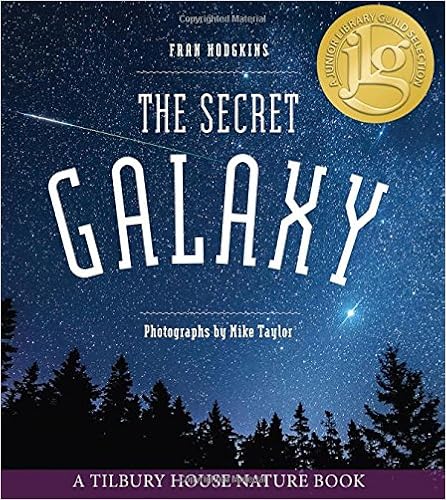
2. Hodgkins, Fran. (2014). The Secret Galaxy. Photographs by Mike Taylor. Thomaston, ME: Tilbury House.

3. Katrien. (4.49.4009).  Learn’d Astronomer. Video. Retrieved from http://www.youtube.com/watch?v=namVUer-bk8.  


from You Are Stardust

4. Kelsey, Elin. (2012). You Are Stardust. Illustrated by Soyeon Kim.  Toronto, ON: Owl Kids Books. (770L)


6. Schlickenmeyer, Max. (3.2.2012). The Most Astounding Fact - Neil deGrasse Tyson. Video. Retrieved from https://www.youtube.com/watch?v=9D05ej8u-gU 


from Professor Astro Cat's Frontiers of Space.
7. Walliman, Dominic. (2013). Professor Astro Cat's Frontiers of Space. Illustrated by Ben Newman. London UK: Flying Eye Books.

Exploring the Universe: From Stardust - Independent and Small Group Reading Texts:

  1. Arguilar, David. (2011). 13 Planets: The Latest View of the Solar System. Washington, D.C.: National Geographic. (1120L)
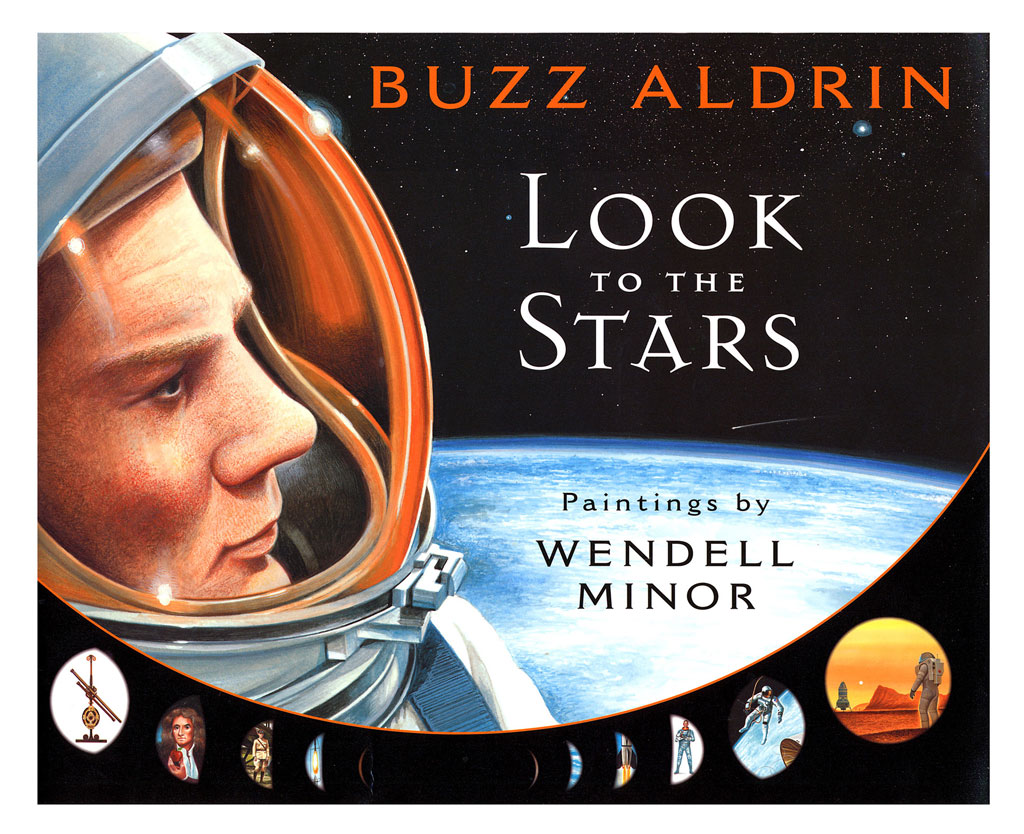
  2. Aldrin, Buzz. (2009). Look to the Stars. Paintings by Wendell Minor. New York: G.P. Putnam’s Sons.
  3. Bailey, Jacqui. (2004). Sun Up, Sun Down: The Story of Day and Night. North Mankato, MN: Picture Window Books. (800L)
  4. Branley, Franklyn Mansfield.  (1987). The Moon Seems to Change.  New York: HarperCollins.  (470L)
  5. Branley, Franklyn Mansfield. (1998). Floating in Space. New York: HarperCollins. (690L)
  6. Branley, Franklyn Mansfield. (1999). The Moon Seems to Change. New York: HarperCollins. (470L)
  7. Branley, Franklyn Mansfield. (2000). The International Space Station. New York: HarperCollins. (720L)
  8. Branley, Franklyn Mansfield. (2002). Mission to Mars. New York: HarperCollins. (720L)
  9. Branley, Franklyn Mansfield. (2000). The Sun Our Nearest Neighbor. New York: HarperCollins. (570L)
  10. Carney, Elizabeth. (2012). National Geographic Readers: Planets. Washington, D.C. National Geographic Children's Books. (660L)
  11. Carney, Elizabeth. (2014). National Geographic Readers: Mars. Washington, D.C. National Geographic Children's Books. (840L)
  12. Crelin, Bob. (2009). Faces of the Moon. Watertown, MA: Charlesbridge. (950L)
  13. Gibbons, Gail. (1998). The Moon Book. New York: Holiday House. (740L)
  14. Gibbons, Gail. (1999). Stargazers. New York: Holiday House
  15. Gibbons, Gail.  (2008). Galaxies, Galaxies! New York: Holiday House. (880L)
  16. Gibbons, Gail. (2008). The Planets.  New York: Holiday House. (6600L)
  17. Harrison, James. (2012 ). Kingfisher Readers L5: Space.  Kingfisher. (910L)
  18. Simon, Seymour. (1991). Galaxies. New York: HarperCollins. (1010L)
  19. Simon, Seymour. (2003). The Moon. New York: HarperCollins. (730L)
  20. Simon, Seymour. (2006).  Destination: Space. New York: HarperCollins.
  21. Simon, Seymour. (2006).  Stars. New York: HarperCollins.
  22. Simon, Seymour. (2007). Our Solar System (revised edition). New York: HarperCollins. (1020L)
  23. Stewart, Melissa. (2015).  National Geographic Readers: Meteors. Washington, D.C. National Geographic Children's Books. 
  24. Stone, Tanya Lee. (2009). Almost Astronauts: 13 Women Who Dared to Dream. Somerville, MA: Candlewick Press. (980L)
  25. Tomacek, Steve. (2006). Jump Into Science: Stars. Washington D.C.:  National Geographic Children's Books. (700L)
  26. Tomacek, Steve. (2006). Jump Into Science: Sun. Washington D.C.:  National Geographic Children's Books. (770L)
  27. Tomacek, Steve. (2008). Jump Into Science: Moon. Washington D.C.:  National Geographic Children's Books. (810L)
  28. Wittenstein,  Vicki Oransky. (2010). Planet Hunter: Geoff Marcy and the Search for Other Earths. Honesdale, PA: Bods Mills Press.  (1080L)

Text Set 2: Moon Landing, July 1969 

From Professor Astro Cat's Frontiers of Space.
Shared Reading

1. Aldrin, Buzz. (2008). Reaching for the Moon. Paintings by Wendell Minor. New York: HarperCollins. (860L)

2. Armstrong, Neil.  (1969). Video: First Steps on the Moon. Retrieved 6.24.15 from 


3. 60 Minutes Interview. (2002). Interview with Neil Armstrong. Retrieved 6.27.15 from https://www.youtube.com/watch?v=O3h1V3nzn0A


4. Collins, Michael. (1994). Flying to the Moon: An Astronaut’s Story.  New York: Farrar, Straus & Giroux. (1170L)

5. Floca, Brian. (2009). Moonshot: The Flight of Apollo 11. New York: Richard Jackson Books. (990L)

6. Granath, Bob. (2015). “Former Astronauts Recall Historic First Moon Landing. ” NASA's Kennedy Space Center, Florida. Retrieved from http://www.nasa.gov/content/former-astronauts-recall-historic-first-moon-landing 

7. Kennedy, John F. (1962). We Chose to Go to the Moon. Video. “Retrieved 7.1.15 from https://www.youtube.com/watch?v=g25G1M4EXrQ


8. Walliman, Dominic. (2013). Professor Astro Cat's Frontiers of Space. Illustrated by Ben Newman. London UK: Flying Eye Books.


Moon Landing, July 1969: Independent and Small Group Reading Texts:

  1. Brown, Don. (2001). One Giant Leap. New York: HMH Books for Young Readers . 
  2. Burleigh, Robert. (2014). One Giant Leap. Illustrated by Mike Wimmer. New York: Philomel. (470L)
  3. Chaikin, Andrew. (2009). Mission  Control, This is Apollo: The Story of the First Voyages to the Moon. New York: Viking Press. (1150). 
  4. Chaikin, Andrew. (2009). Voices from the Moon: Apollo Astronauts Describe Their Lunar Experiences. New York: Studio.
  5. Donnelly, Judy. (1989). Moonwalk: The First Trip to the Moon. New York: Random House. (550L)
  6. Hollingsworth, Tamara. (2010). Neil Armstrong: Man on the Moon. Huntington Beach, CA: Teacher Created Materials. (430L)
  7. McNulty, Faith. (2005). If You Decide To Go To The Moon. Illustrated by Steven Kellogg. New York: Scholastic. (690L)
  8. Schyffert, Bea Uusma. (2003). The Man Who Went to the Far Side of the Moon: The Story of Apollo 11 Astronaut Michael Collins. San Francisco, CA: Chronicle Books. (850L)
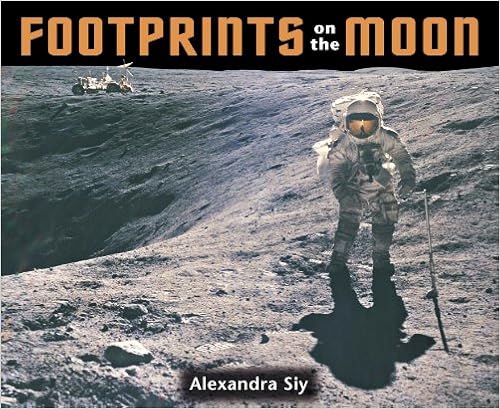
  9. Siy, Alexandra. (2001). Footprints on the Moon. Waterbury, MA: Charlesbridge. (920L)
  10. Thimmesh, Catherine. (2006). Team Moon: How 400,000 People Landed Apollo 11 on the Moon. New York: Houghton Mifflin. (1060L)
  11. Wikinson, Philip. (2012). DK Readers L3: Spacebusters: The Race to the Moon. New York: DK Readers. 
  12. Yomtov, Nel. (2014). The Apollo 11 Moon Landing: July 20, 1969.  Portsmouth, NH: Heinemann. (840L)

Wednesday, April 15, 2015

Knowledge and Reading: What Happens to 4th Grade Readers Who Struggle & Positive Role of Robust Reading Aloud

I was reading Gina Cervetti and Freddy Hiebert's article, Knowledge, Literacy and the Common Core, (Language Arts, 92 (4), 256-269) and thought a lot about the fourth grade children I have been working with who are in the middle of a study of Greek mythology and how their increasing knowledge of myths helps them to learn more about mythology and to read increasingly challenging texts. As Luis and others in the class have told me, we're Greek mythology experts.

In the article, Cervetti and Hiebert argue well that knowledge and comprehension are synergistically related and do so by providing four claims that are all research-supported.  Specifically, they find:

  1. "...knowledge of the topic has been found to influence comprehension" (p. 257).
  2. "...general world knowledge, not simply topic- or domain-specific knowledge associated with a text has also been found to aid comprehension" (p.257).
  3. "...knowledge supports inferring and higher-level comprehension processes, not simply remembering information from a text" (p. 258).
  4. "...while knowledge aids comprehension for all students, having a knowledge base can be particularly beneficial for students with lower levels of reading skill...Knowledge about a topic can compensate for reading skills" (p. 259).

Whereas all of these statements are interesting, it is the last claim that most interests me as I think about some of the students and how reading aloud first followed by small group comprehension conversations has proved valuable. In the design of the unit, we privileged reading a variety of Greek myths aloud first, along with independent reading (managed choice of texts) before beginning small group comprehension conversations. As I was modeling for teachers the process for comprehension conversations, I worked with the highest performing readers in the class in one group and the most struggling readers in a separate group. The text I had selected for the children who most often struggle as readers was Joan Holub's The One-Eyed People Eaters: The Story of Cyclops. The text has a lexile level of 400 and also is coded as a guided reading text level K (beginning of second grade). The four students in the group (2 boys and 2 girls) have a history of reading difficulty and all receive special education services.

Comprehension Conversations

A comprehension conversation is a scaffolded method for guiding students' reading.  Students read a text or portion of a text and write answers to a few questions the teacher has prepared. This helps the teacher to ascertain the children's understanding of the text and to prepare for the conversation she or he will have with students. Specifically, the teacher prepares factual, inferential, and when appropriate critical questions for students to answers and then reads the students' responses prior to meeting with them. The student responses help the teacher to determine the content of the conversation, by seeing how well students understood the factual aspects of the text and more inferential understandings. Some questions that help are:

  1. What did the children understand about what actually happened in the text? Did anything disrupt this understanding? What are my theories?
  2. When asked to infer, to what end were children able to do this?  Did anything disrupt this understanding? What are my theories?
  3. When asked to think critically across a text, were children able to do this?  Did anything disrupt this understanding? What are my theories?


Based on the interpretation of students' answers, the teacher then crafts an engagement with the students that will help to explicate the areas of comprehension strengths and challenges the students showed. Usually, I want to anchor a group's reading of a text before engaging in a such a conversation. In this case, I wanted to make sure the children could actually manage the reading before setting them out to read and respond to a few questions. 

The children's significant knowledge of different Greek myths and how they are related has impressed me as I've worked with this small group. Their knowledge of Odysseus allows them to understand the Holub book with greater ease.  Although they had not read about the Cyclops and how Odysseus outsmarts it, they did know about Odysseus, the Battle of Troy and the Trojan Horse.  So when Holub's book opens, we are met with a tired Odysseus who is making his way home after the Fall of Troy. The children's understanding of the text at a factual level allowed me to set a task for them that would help me to see how they inferred about Odysseus based on his actions and dialogue.

Tomorrow, I'll try out the charts with students and then use what they generate to inform the conversation we have on Friday.  In addition, I'll be sharing a collage by Romare Bearden, The Cyclops from his work, Romare Bearden: A Black Odyssey, so we can discuss how Bearden portrays the Cyclops.

Romare Bearden's Cyclops.


Saturday, April 11, 2015

The Power of Reading Aloud & Comprehension Conversations in Grade 4

Two fourth graders reading during small group comprehension conversation. 

I.  Big Questions 

It's early morning in a fourth grade classroom in Newark, NJ and the children and their teacher are at work studying Greek mythology. Beyond the classroom windows the weather hints at the possibility of spring.  But March has already been fickle and most anything could occur. Against the quiet of the classroom you can hear cars and trucks rumble by--the highway that splits this city runs just a few feet from the school. And in this mix of sounds it is the voice of one boy that we must pay attention to.

He turns and says to his teacher and classmates, "I've been thinking about the myths we are reading. How they are thousands of years old.  Do you think a thousand years from now people will think Christian and Muslim religions are myths, too?"

When the teacher tells about the child's question, I am contemplative--considering how children compose profound ideas in the company of their peers and alongside excellent teachers.


No gimmicks needed.
No scripts required.
No reform necessary.

What is needed are just a few well chosen texts, the agency to act, the mindfulness to notice singularities, and the intimacy of learning that gets made and remade alongside an exchange of ideas.

II. How Read Aloud Matters

As I listen to Mr. Watson, I'm reminded that in the right hands, read aloud can be a powerful method of knowledge building and need not be limited to the primary grades.  For the last several weeks, Watson has been reading Greek myths to his students and they have been talking, charting, and drawing what they understand, want to understand, and at times fail to understand. There's an intensity here as the children lean in physically, offer their comments, questions, and connections to one another.  You can feel the power that accompanies the made idea.  I tell you here that to see such learning is to know joy.

Children in this class have heard and read multiple versions of myths about: Prometheus, Epimetheus, Pandora, Persephone/Proserpina, Hades/Pluto, Demeter/Ceres, Echo, Narcissus, Hera, King Midas, Daedalus, Icarus, Pegasus, Bellerphon, Chimaera, Jason, Eros/Cupid, Perseus, Medusa, Hyperion, Zeus/Apollo, Poseidon, Aphrodite, Artemis, Cronus, Hercules, Aegeus, Heracles, the Minotaur, Theseus, Ariadne, Odysseus, Cyclops. I'm going to build on this foundation.  And it is a sturdy one.  As Luis will say about himself when I meet with him and three of his peers, You could say I'm an expert on Greek myths. 

III. Studying Hawthorne's Retelling of Greek Mythology: Small Group Comprehension Conversations

A example of a story map.
The work that Watson has been doing for the last few weeks provided the foundation for small group comprehension conversations about myths that I conducted with his students. In order to model what these conversations can encompass, I asked him to select students who I then worked with in order to demonstrate the process to other teachers.  On Thursday, I introduced Luis, Antoine, Dionni and Kamila to Nathaniel Hawthorne's short story, The Pomegranate Seeds, which is a retelling of Persephone but based on Roman deity.  In order to scaffold the students while reading, I provided questions for the four students to think about and discuss at various points in the text (blue print), word explanations (red print), and some background notes (blue print).

Below are the first two pages of the story that show how I altered the text.  Because the students had heard their teacher read two other versions of Persephone, they are well versed in the story and could easily retell it. They also are familiar with both the Greek and Roman gods/goddesses and are able to understand quickly the alignment between Persephone and Proserpina, etc.  A main focus during the read alouds is the construction of story maps. These help children to not only grasp a literal understanding the myths, but also to name possible themes and symbols.
Page 1

Page 2
After the retelling, the students and I began reading the first page to ourselves.  I used the first four guide questions as discussion points making sure that students were able to comprehend what they were reading. These questions were used to generate conversation among the group and because comprehension was excellent, I invited the students to work collaboratively to read through the next few pages, stopping to make a prediction where indicated and to draw, label, and discuss their visualization of the last paragraph on page 2 and to then read on from there. They would work for the next hour.

IV. Nocturnal Tendencies


Dionni' s Sketch and Word Selection. Dionni mentioned that she placed
the ? on the face to indicate that the king is unknown to Proserpina.
She explained later to me that she got the idea while speaking with Luis.
While these students worked in a different part of the room,  I demonstrated another comprehension conversation with a different group of students who were reading a text about Odysseus's encounter with Cyclops.  I had infused that text with a few questions too. Understanding was anchored with students reading, annotating, and discussing the first two chapters of the text.  One of these discussions led us to view online a few of Romare Bearden's collages from The Black Odyssey.

These students then worked together to read and respond to the next few chapters and I returned to the first group who by that time had read on through page 4 of the text.

Instead of working through the text question by question, I asked the students if there was a section of the text or a question that was unclear.  Luis indicated that he didn't understand this question:
What did King Pluto's reaction to twilight and his characterization of sunlight tell you about him?
I don't understand that at all, Luis said. None of it.
Okay. Reread the question and think about what part is most confusing you. 
We reread to ourselves and then Dionni read the question aloud.
I don't get his reaction to twilight or what he says about sunlight, explained Luis.
What if we reread? Might that help? The children nod and I continue by asking, Luis can you show us the section in the text where Hawthorne mentions Pluto's feelings about twilight and sunshine?
Luis quickly finds the appropriate section and we all turn to it.  This is a continuation of the scene where Pluto has stolen Proserpina and they are in his chariot speeding towards the Underworld.  They have left the familiar landmarks of her world behind.

We reread and then I read the section aloud asking them to think about how they might retell the passage.
"Ah this twilight is truly refreshing," said King Pluto, after being so tormented with the ugly and impertinent glare of the sun.  How much more agreeable is lamplight or torchlight, more particularly when reflected from diamonds! It will be a magnificent sight when we get to my palace."
The talk initially is tentative as the students determine what they know. Kamila states that Pluto does not like light. Antoine clarifies saying its not all light and that Pluto likes the refreshing feel of twilight.  The kids are trying on ideas largely using Hawthorne's words. The group works together to establish that twilight happens between dusk and night and between dawn and sunrise. We use my phone to help us define impertinent and the students settle on the synonym, rude which they write above the word. This initial work helps them to begin to interpret, but this quickly dissolves into more confusion.

I then ask them to paraphrase sentence by sentence what is happening and they are able to offer this translation:
Even though it is midday, they are cast in a gloominess as the chariot flies across the land. Pluto is relieved to be out of the sunshine and thinks how the lighting in his palace, especially given all the diamonds, is more agreeable than the light from the sun. He's pleased to be getting close to his home.
Throughout this retelling, Luis is quiet as he listens to Kamila, Dionni and Antoine work the paraphrase.

Luis, does that help you to make sense of the passage and question? I ask.
He nods and then says, Pluto is nocturnal in thought and deed.
Nocturnal? Wow that's an interesting way to see him. I'd write that down, I tell the children, making note of Luis's words on my copy of the text.

Later, the teachers who have been observing and I express interest in how Luis characterized Pluto using a simple, yet profound statement.  The intense work of small group comprehension conversations rests on the weeks and weeks of hearing, discussing, and charting Greek myths via the read aloud that Watson has been conducting each day with his class.

Yet, what also connects read aloud and small group conversations in this classroom goes well beyond content.  It's about the space of permission that gets generated by the daily actions of the teacher and the children. They all know that big ideas are permitted and often happen while groping towards meaning.  This requires being wrong, being less precise, and being mindful to really hear that odd comment that when attended to opens the class to reconsider, rethink, rename something really big.

I think here of Gilles Deleuze who expressed this best when he wrote about the play of singularities. He noted, "beneath the general operation of laws, however, there always remains the play of singularities" (1994, p. 25). 


At the end of the day as I leave the school I'm thinking that it is so often this play of singularities that we must most tune our ears to hear. 


Works Read Aloud (So far...)
  1. Burleigh, Robert. (2002). Pandora. Illustrated by Raul Colon. San Diego, CA: Silver Whistle/Harcourt.
  2. Byrd, Robert. (2005). The Hero and the Minotaur: The Fantastic Adventures of Theseus.  New York:  Dutton Children's Books. 
  3. Clayton, Sally Pomme.(2009). Persephone. Illustrated by Virginia Lee. Grand Rapids, MI: Eerdmans Books for Young Readers. 
  4. Craft, Charlotte M. (1999). King Midas and the Golden Touch. Illustrated by Kinuko Y. Craft. New York: HarperCollins. 
  5. Craft, Charlotte M.  (1996). Cupid and Psyche. Illustrated by Kinuko Y. Craft. New York: HarperCollins. 
  6. Fisher,  Leonard Everett. (1990). Jason and the Golden Fleece.  New York: Holiday House.
  7. Kimmel, Eric A. (Retold). (2008). The McElderry Book of Greek Myths. Illustrated by Pep Monetserrat. New York: Margaret L. McElderry Books. 
  8. Mayer, Marianna. (1998). Pegasus. Illustrated by Kinuko Y. Craft. New York: HarperCollins. ((960L)
  9. Osborne, Mary Pope. (1989). "The Four Tasks: The Story of Cupid and Psyche" (pp. 57-66). In Favorite  Greek Myths. New York: Scholastic.
  10. Russell, William F. (2010). Classic Myths to Read Aloud: The Great Stories of Greek and Roman Mythology, Specially Arranged for Children Five and Up by an Educational Expert. Crown Publishing  Group. Kindle Edition. 
Some of the Texts in Use for Small Group Comprehension Conversations
  1. Evslin, Bernard. (1984). Prometheus from Heroes, Gods and Monsters of the Greek Myths. New York: Laurel Leaf. 
  2. Hawthorne, Nathaniel. (1853/2014). Tanglewood Tales: Greek Mythology for Kids. Illustrated by Virginia Frances Sterrett. Cedar Lake, MI: ReadaClassic.  
  3. Hawthorne, Nathaniel. (1852/2011). A Wonder Book for Boys and Girls: Greek Mythology for Kids. Illustrated by Walter Crane.  Cedar Lake, MI: ReadaClassic. 
  4. Holub, Joan & Suzanne Williams. (2012). Zeus and the Thunderbolt of Doom. Illustrated by Craig Phillips. New York: Aladdin.
  5. Holub, Joan & Suzanne Williams. (2012). Poseidon and the Sea of Fury. Illustrated by Craig Phillips. New York: Aladdin.
  6. Holub, Joan & Suzanne Williams. (2013). Hyperion and the Great Balls of Fire. Illustrated by Craig Phillips. New York: Aladdin.
  7. Holub, Joan & Suzanne Williams. (2013). Hades and the Helm of Darkness. Illustrated by Craig Phillips. New York: Aladdin.
  8. Holub, Joan. (2014). The One-Eyed People Eater: The Story of Cyclops. Illustrated by Dani Jones. Simon Spotlight. 
  9. Little, Emily. (1988). The Trojan Horse: How the Greeks Won the War. New York: Random House Books for Young Readers. 
  10. O’Malley, Kevin. (2005).  Mount Olympus Basketball. New York: Walker Childrens. 
  11. Smith, Charles R (2008). The Mighty 12: Superheroes of Greek Myth. Illustrated by P. Craig Russell. New York: Little, Brown. 
  12. Williams, Marcia. (2011). Greek Myths. Somerville, MA: Candlewick.

Saturday, January 31, 2015

Writing Well Begins With Critical Reading: Talking Back to Scripted Programs


Pandora Story Map Based on Kimmell Version of the Myth
I. Greek Mythology Unit Designed by Teachers

For the last few weeks I have been working with a group of fourth grade teachers.  We co-designed a unit of study focusing on Greek Mythology that embedded reading, writing, speaking-listening, and language standards throughout the unit. Students had the opportunity and responsibility to listen to, read and view Greek myths--and to respond to those texts through discussion and writing. 

Through interactive read aloud with an emphasis on critically retelling and vocabulary development, and through guided reading that privileged comprehension conversations students read deeply.  They also engaged in shared, guided, and independent writing. Students were able to demonstrate a keen understanding of what they heard, read, and viewed through their whole class, small group and partner discussions and their writings.  Students heard, read and viewed multiple versions of each myth (print, visual arts, and video). This allowed them to compare versions and to complicate their understanding. This critical reading work represented the foundation that students' writings rested upon.


II. Anchoring What Is Heard/Viewed/Read

In order to anchor what was heard, viewed, and read--students created different types of story maps in response to the read aloud texts, such as the two Pandora story maps pictured here.  To analyze the myths, students first needed to be able to retell the story accurately.  It is impossible to analyze a text well if literal understanding is absent or faulty. Therefore, students with the help of their teachers, created a story map for each text. Teachers began this process by having students retell the myth. A deep retelling included:
Pandora Story Map Based on Burleigh/Colon Version of the Myth

  1. Retell what happened.
  2. Why it happened
  3. The effect on the characters’ mental state
  4. Be able to emphasize connections between earlier and later parts in the story.
  5. Retell with emphasis on character insight, touching on genre-specific elements and attempting to use the vocabulary or figurative language used in the text.


They also created character analysis anchor charts focusing on explicating indirect methods of characterization by naming and then analyzing what a character does, thinks, and says and then asking what might be inferred.  For example, when studying the Pandora myth, the class created an anchor chart. They named Pandora's actions, thoughts and speech and then analyzed what might be inferred. What did Pandora's actions, thoughts, and speech reveal about her character? This work allowed them to later step into the character in response to a writing task (see below).

III. Writing Rests on Reading

After studying two or more versions of the Pandora story (read aloud and guided reading), students responded to the prompt pictured below by writing a narrative that continues the story.
First major writing task in the mythology unit.


Attempting to enter into the myth at the point depicted in the visual art required students to read the painting, to consider the two or more versions of the story they had read, and to think about the inferences they had made in order to craft a believable text. I want to emphasize that no graphic organizers were used or needed during the writing because students deeply understood the myth.  Instead of some formula to guide their writing, students rested their work on what they had read and analyzed. By critically reading, discussing and writing they had already walked in Pandora's shoes. Because students had so closely studied different versions of the myth and had analyzed the characters--their responses were well grounded.

Standard W.4.9a asks students "to draw evidence from literary texts to support analysis, reflection, and research." Specifically, students are asked to "[a]pply grade 4 Reading standards to literature (e.g., “Describe in depth a character, setting, or event in a story or drama, drawing on specific details in the text [e.g., a character’s thoughts, words, or actions].”).  To do this well, students needed to use their knowledge of Pandora through the analyses they had done, drawing on specific details from one or more versions of the myth in order to extend the story.  Let's look closely at how one student did this.

IV. Studying One Student's Writing

Below is an example of one student's response (Catherine Esteves) from Jacqueline Peguero's fourth grade classroom in Newark, NJ.   Notice how the details Catherine crafts fits with the tone of the myth and re-establishes a credible setting ("Darkness circled around me..."). Notice how Catherine uses story language ("Then I sank into a deep sleep.") to forward the narrative. Notice her diction ("bat-like creatures hurrying," "ropes loosened") and the blend of narration and dialogue to forward the plot.  In Catherine's guided reading work she read Nathaniel Hawthorne's story, The Paradise of Children, and we can see how she borrows from Hawthorne's retelling of Pandora by having Epimetheus assume some of the blame for releasing evil into the world, as well. She also draws from the painting by Gerhartz by referencing the flowers. Yet she doesn't merely mimic what she has read or viewed for in Catherine's version she couples together the goodness of the world by having Love, Kindness, Grace and Caring (to name but a few) join Hope--thereby resettling the world. As Catherine has learned through reading, she closes her version of the myth with a statement to her reader: Remember, good will always be stronger and have more power than bad. We sense the author behind the work.

Page 1 from Catherine's writing.

Page 2 from Catherine's writing.


Through diction and character action, Catherine crafts a believable and controlled piece of writing that helps us to understand the painting and the written myths more fully. 


V. When Teachers Author

I have had the pleasure of working as an external consultant with Jackie and her colleagues (Waleska Burgos and John Feinstein) for the last few years.  In a conversation with Jackie a week ago she mentioned that her students' parents were commenting on how much their children were enjoying the mythology unit.  Jackie said that what surprised her the most was that parents had nothing to say during the Expeditionary Learning module they had done earlier in the year and that made her wonder how well that work had been received. 

When teachers author academic studies they can better respond to what emerges as well as build from one portion of the year to the next and from year to year. We had decided to write our own unit in order to replace an Expeditionary Learning (EL) module as the teachers and I thought that the EL work was not sturdy enough academically (especially with regard to writing and deep analysis), nor could a unit made by another in an earlier time and place be responsive to emerging academic and social needs and strengths we saw occurring with the children. We also wanted to ensure that students continued to explore mythology. 

Kindergarten children at these schools are listening to folk tales through read alouds and beginning in first grade students begin reading traditional literature in guided reading. These reading efforts are supported through read aloud units in grades 1, 2, and 3. In first grade, children are introduced to cautionary tales (Red Riding Hood versions), fables and tall tales in grade 2, and in grade 3 they study mythology generated by indigenous people. These earlier works set the stage for the work being conducted in grade 4. Alongside this work, teachers in earlier grades are able to help students respond to text through whole class shared writing and through guided practice during guided reading.  For example, in Suzanne Capuano's second grade I taught a small group of struggling reader last week. I taught the group in response to a concern Suzanne raised about the children's reading. She said that she noticed that the children were having difficulty remembering what they were reading during retelling. By identifying a learning challenge, Suzanne set the stage for us to problem solve.

During guided reading, I asked the students to respond to a Red Riding Hood story by charting the actions of the wolf or Red Riding Hood. The children read the text first and then during a rereading of the text, they partnered and completed the chart with guidance (see below). 


One of the teachers (grades 1, 2 an 3 teachers viewed) observing the lesson said that what was most notable was that the children's confidence increased  as did the lateral discussion that happened as the children worked through the text. The children knew they were successful, no gold star was necessary. 

Children in this class learned to think about what a character does and says during earlier read aloud units when their teacher created anchor charts that helped students to think about what a character says and does and what we infer based on those actions and speech. I built on that knowledge. Students also have daily opportunities to interpret what characters say as is evidence below in a second grader's response to a read aloud about Sonia Sotomayor.


Christopher's response to a quote from Jonah Winter's book about Sonia Sotomayor.
Christopher interprets through writing and drawing the quote: "Success comes to those who make the most of the chances they are offered in life."   He wisely tells us: "When you get chances that can change your life take risks. If you can't take (a) chance you might not succeed."

VI. Risk Taking

The weave among read aloud, guided and independent reading, and writing is critical and needs to be designed and organized by teachers who are working with children in the here and now--not by corporations who mass produce units of study and distributed them like cheap pens. We all ought to worry when we see teachers being confined to enacting scripted programs, not simply because the programs may or may not be lacking, but more importantly authoring is a critical and necessary practice for teaching and learning. At the schools where Jackie, Waleska, John and Suzanne work they are provided with the professional respect by their leadership to think, design, and redesign. Excellence does not come by handing teachers already completed units of study and limiting them to merely enacting them. This is a grave error.  We need to follow Christopher's advice and take risks.  'Fool' proofing curriculum is an epic failure. 


Saturday, August 9, 2014

Building a Love for Reading: Prompting Book Previewing During a Check It Out Circle

Fourth grader loving the book, Nelson Mandela.

Fourth grader reading the back blurb to the book This Land is My Land.
On Friday I had the pleasure of working with fourth grade teachers and their students by conducting a Check it Out Circle, similar to Franki Sibberson & Karen Szymusiak's description in Still Learning to Read--but with a few changes.

A Check it Out Circle is way to share and preview books.  On this past Friday, the fourth graders and I along with their teachers sat in a circle.  On the floor in front of us were different books I had selected from the classroom library. Sometimes when I do this I think about genre or topic. On this day, I simply wanted students to begin to delve into their classroom library and so I selected a range of texts: picture book biographies, picture books, informational texts, historical fiction, series books, poetry books, and drama. I began by asking the students to select a book that catches their eye from the books placed on the floor.  We each selected a book and then I began to prompt how we might preview it before passing it to the person to the right of us and receiving a new book from the person to our left.

 A fourth grader thinking about the unusual title to a book and previewing it.
Some of the ways I prompted students to preview the text included:
A fourth grader reading the opening of her book to her partner.

  1. Take a minute to turn a few pages in the book you selected. Then turn and tell your partner why you selected the text. What caught your eye?
  2. Check out the front and back of the book you are holding. Read the blurbs & study the illustrations.  What did you learn about the book based on what you read and viewed?  Tell your partner.
  3. Look through the text and see if there are any photographs or illustrations that make you stop and look. If you find one, could you share it with us by holding up your book with that page open in a minute or so?
  4. Look through your books. Are there any illustrations that look like people you know?  If so, find one and be ready to show us.
  5. Notice how the author uses language in the book.  Is anything written in a way that catches your notice?  If so, share the title, line, or section with your partner. 
  6. Is there a table of contents or chapter titles in the book you are holding?  If so, read through and see if you can tell your partner what the book may be about. 
  7. Is there an index or glossary in your book?  Look through. What do the words suggest the book might be about? Tell your partner.
  8. Read the opening to the book. Practice reading it to your partner. If you have an opening that grabs you could you read us a line or two?
  9. Read the opening and closing to the book you are holding.  Do they connect in any way? If so, can you share how with your partner?
  10. Preview the book you now have and see if this is a book that can teach you about writing.  If so, show us the cover of the book in a minute or so.
  11. Browse through the book. Who has a book written in a way you don't normally see?
  12. Who has found a funny section in the book they have? Share that section with your partner.
  13. Does your book contain languages in addition to English.  Look through and if so, be ready in a minute to show us the cover of the book and if you know the other language tell us what it is.
  14. Read though the book you have and if you find a line you would like to share with us in a minute or so, practice reading it to your partner first. 
  15. Let's put all of the books back on the floor. You'll see I added some new ones as well.  Make a different choice now and select a new book to preview. Tell your partner why you selected that book.
  16. Who has a book that they think they will learn from?  What is it you think you might learn? Turn and tell your partner and share how you figured that out.
  17. Who has a book by an author they have already read?  Show us the cover in a minute.
  18. Who has seen a book they must read?  Write the titles in your notebook, on the page that says: Texts I Must Read!