Showing posts with label red riding hood. Show all posts

Friday, July 17, 2015

Engaging Students in a Visual Reading of Chapter 14 in Number the Stars


Papercuts from Schenker's Little Red Riding Hood
In a fifth grade e-book I am completing there is a unit focusing on analyzing historical fiction. One of the texts is Lois Lowry's Number the Stars (1989).  I want students to see chapter 14 of the text--to feel Annemarie's desperation and uncertainty. You may recall that this is the chapter where Lowry tells the parallel story of Red Riding Hood as the main character, Annemarie, negotiates the woods while attempting to avoid Nazi soldiers. There's great tension here--at the climax of the novel. Annemarie will never be the same innocent she was before this trip through the woods.

I want to slow down students' reading at this point. I want them to dwell in the text as they grapple to see-feel the metaphor.  So after various readings of the chapter, I will engage them with Sybille Schenker's visually stunning version of the Brother Grimm's Little Red Riding Hood (Thank you Tom V. for showing me this book!)

Schenker's laser die-cuts create partial views of the world and in doing so heightens suspense. We are never really grounded anywhere. Secrets are hidden and revealed through the lacy work of die-cuts as we turn the pages. In some ways, this parallels what Lowry did with words.  By having the main character, Annemarie remember variations of the Red Riding Hood story as she makes her way through the still darkened woods, the reader experiences the unsettled environment where nothing is familiar even though the woods and the path through them should be familiar to Annemarie. 

I want the readers--the students--to be unsettled.


from Schenker's Little Red Riding Hood
After the read aloud, students will have the opportunity to engage in art conversations (nonverbal discussion using drawing) through flockdraw (allows you to draw in real time with others). I then plan to invite students to work through Molly Bang's ideas about aesthetics that she outlines in Picture This: How Pictures Work.  Students will learn 10 of Bang's principles and then apply them to creating an image that is made in response to the phrase, Wolf Waiting. I want them to feel the presence of the four Nazi soldiers with their dogs that we meet at the close of the chapter and to feel this within the context of the Red Riding Hood story. 

Wolf waiting. 

Bang asked this provocative question: “How does the structure of a picture affect our emotional response?" It is this that I want students to experience as they compose. To that end, students will be issued four pieces of construction paper (black, white, red, and purple), white glue, and scissors. They then apply some of Bang's principles as they create a visual response to the phrase, Wolf Waiting.

My paper response using Bang's Visual Grammar to the phrase, Wolf Waiting.  (Reilly, 2015)

After this visual work is completed, I'm wondering what transformations students might make of the work. For example, what might happen if some students took all or some of the images and then used these with an online tool such as Animoto to juxtapose and share the work against some music?  The randomness via Animoto might make for some interesting surprises.  Or perhaps other students might like to create a text set using flickr.  I also wonder what might happen if the paper images we made were juxtaposed alongside WWII or Holocaust images.  What stories might such juxtaposition tell?  What would happen if we borrowed Schenker's methods and created die-cuts using historical images and our work? What metaphors might such work reveal?

Endless possibilities. 

A goal here is to mimic the climax of the novel: the point at which the main character's fall from innocence cannot be undone. How might this work we engage in alter us? What transformations might we bear?


Works Cited:

Bang, Molly. (2000).Picture This: How Pictures Work. San Francisco, CA: Chronicle Books. 
The Brothers Grimm. (2014). Little Red Riding Hood. Illustrated by Sybille Schenker.  Translated by Anthea Bell. London, UK: Michael Neugebauer Publishing, Ltd. 

Monday, January 26, 2015

100+ Versions of Traditional Tales for Children

from The Dragon Prince: A Chinese Beauty & the Beast Tale. Illustrated by Kam Mak. 
Beauty & the Beast

  1. Brett, Jan. (2011).  Beauty and the Beast. New York: Putnam Juvenile. 
  2. Yep, Laurence. (1999). The Dragon Prince: A Chinese Beauty & the Beast TaleIllustrated by Kam Mak.  New York: HarperCollins.


The Fisherman and His Wife

  1. Isadora, Rachel. (2008). The Fisherman and His Wife. New York: Putnam Juvenile.
  2. Littledale, Freya. (1992). The Magic Fish. Illustrated by Winslow Pinney Pels. New York: Scholastic. 
  3. Stewart, Whitney. (2014). A Catfish Tale: A Bayou Story of the Fisherman and His Wife. Illustrated by Gerald Guerlais. Park Ridge, IL: Albert Whitman & Company. 
  4. Wells, Rosemary. (1998).  The Fisherman and His WifeIllustrated by Eleanor Hubbard. New York: Dial.


Gingerbread Boy

  1. Compestine, Ying Chang. (2001). The Runaway Rice CakeIllustrated by Tungwai Chau. New York: Simon & Schuster Books 
  2. Enderle, Dotti. (2010). The Library Gingerbread Man. Illustrated by Colleen M. Madden. Madison, WI: Upstart.
  3. Ernst, Lisa Campbell. (2006). The Gingerbread Girl. New York: Dutton Juvenile.
  4. Galdone, Paul. (2011). The Gingerbread Boy. Boston, MA: HMH Books for Young Readers.
  5. Squires, Janet. (2006). The Gingerbread Cowboy. Illustrated by Holly Berry. New York: HarperCollins.

from Goldilocks and the Three Bears: A Tale Moderne
Goldilocks & The Three Bears

  1. Elya, Susan Middleton. (2010). Rubia and the Three Osos. Illustrated by Melissa Sweet. New York: Disney-Hyperion. 
  2. Ernst, Lisa Campbell. (2003). Goldilocks Returns. New York: Simon & Schuster.
  3. Galdone, Paul. (2011). The Three Bears. Boston, MA: HMH Books for Young Readers.
  4. Guarnaccia, Steven. (2010). Goldilocks and the Three Bears: A Tale Moderne. New York: Abrams.
  5. Hopkins, Jackie Mims. (2007). Goldie Socks and the Three Librarians. Illustrated by John Manders. Madison, WI: Upstart.
  6. Marshall, James. (1998). Goldilocks and the Three BearsNew York: Puffin.
  7. Muller, Gerda. (2011). Goldilocks an the Three Bears. Edinburgh, UK: Floris Books. 
  8. Spirin, Gennady. (2009). Goldilocks and the Three Bears. Tarrytown, NY: Marshall Cavendish.
  9. Stanley, Diane. (2003). Goldie and the Three Bears. New York: Clarion.
  10. Tolhurst, Marilyn. (1994). Somebody And The Three Blairs. Illustrated by Simone Abel. New York: Orchard.
  11. Willems, Mo. (2012). Goldilocks and the Three Dinosaurs: As Retold by Mo Willems. New York: Balzar + Bray.


From Hansel and Gretel. Illustrated by Lorenzo Mattotti.
Hansel & Gretel

  1. Gaiman, Neil. (2014). Hansel and Gretel. Illustrated by Lorenzo Mattotti. Somerville, MA: TOON Graphics.
  2. Grimm, Jacob & Wilhelm. (2008). Hansel and Gretel: A Grimm's Fairy Tale. Illustrated by Anastasiya Archipova. Edinburgh, UK: Floris Books. 
  3. Hébert-Collins, Sheila. (2001).  Petite Pousette et Petite Poulette: A Cajun Hansel & Gretel. Illustrated by Patrick Soper.  Gretna, LA: Pelican Publishing.
  4. Isadora, Rachel. (2009). Hansel and Gretel.  New York: Putnam Juvenile.
  5. Lesser, Rika. (1996). Hansel & Gretel. Illustrated by Paul O. Zelinsky. New York: Puffin.
  6. Moses, Will. (2006). Hansel & Gretel. New York: Philomel. 

from Chicken Little, Illustrated by Ed Emberley
Henny Penny/Chicken Little

  1. Emberley, Rebecca. (2009). Chicken LittleIllustrated by Ed Emberley. New York: Roaring Brook Press.
  2. French, Vivian.(2006). Henny PennyIllustrated by Sophie Windham. New York: Bloomsbury. 
  3. Galdone, Paul. (2013). Henny Penny. Boston, MA: HMH Books for Young Readers.
  4. Hopkins, Jackie Mims. (2013). Prairie Chicken Little Illustrated by Henry Cole. Atlanta, GA: Peachtree Publishers. 
  5. Kellogg, Steven. (1987). Chicken LittleNew York: HarperCollins.
  6. Palatini, Margie. (2005). Earthquack! Illustrated by Barry Moser. New York: Simon & Schuster Books for Young Readers. 


From Jack and The Beanstalk, illustrated by Aljoscha Blau
Jack and the Beanstalk

  1. Bell, Anthea. (2000). Jack and the Beanstalk. Illustrated by Aljoscha Blau. New York: NorthSouth. (Older children)
  2. Galdone, Paul. (2013). Jack and the BeanstalkBoston, MA: HMH Books for Young Readers.
  3. Hébert-Collins, Sheila. (2001). Jacques Et La Canne à Sucre: A Cajun Jack and the Beanstalk. Illustrated by Alison Lyne. Gretna, LA: Pelican Publishing.
  4. Kellogg, Steven. (1997). Jack and the BeanstalkNew York: HarperCollins.
  5. Ketteman, Helen. (2012). Waynetta and the Cornstalk: A Texas Fairy TaleIllustrated by Diane Greenseid. Park Ridge, IL: Albert Whitman & Company. 
  6. Nesbit, E. (2006). Jack and the Beanstalk. Illustrated by Matt Tavares. Somerville, MA: Candlewick.
  7. Osborne, Mary Pope. (2005). Kate and the BeanstalkIllustrated by Giselle Potter. New York: Aladdin.
  8. Stimson, Colin. (2012). Jack and the Baked Beanstalk. Somerville, MA: Templar Publishing. 


The Little Red Hen

  1. Barton, Byron. (1993). The Little Red HenNew York: HarperCollins.
  2. Emberley, Rebecca. (2010). The Red Hen. Illustrated by Ed Emberley. New York: Roaring Brook Press.
  3. Galdone, Paul. (2011). The Little Red HenBoston, MA: HMH Books for Young Readers.
  4. McQueen, Lucinda. (1985). The Little Red Hen. New York: Scholastic.
  5. Paul, Ann Whitford. (2005). Manana IguanaIllustrated by Ethan Long. New York: Holiday House. 
  6. Pinkney, Jerry. (2006). The Little Red Hen. New York: Dial.
  7. Sturges, Philomen. (2002). The Little Red Hen (Makes a Pizza). Illustrated by Amy Walrod. New York: Puffin.


Little Red Riding Hood


  1. Artel, Mike. (2003). Petite Rouge. Illustrated by Jim Harris. New York: Puffin.
  2. Daly, Niki. (2007). Pretty Salma: A Little Red Riding Hood Story from Africa. New York: Clarion Books.
  3. Elya, Susan Middleton. (2014). Little Roja Riding HoodIllustrated by Susan Guevara. New York: Putnam Juvenile. 
  4. Ernst, Lisa Campbell. (1998). Little Red Riding Hood - A Newfangled Prairie TaleNew York: Aladdin. 
  5. Hyman, Trina Schart. (1987). Little Red Riding Hood. New York: Holiday House.
  6. Marshall, James. (1993).  Red Riding HoodNew York: Puffin.
  7. Pinkney, Jerry. (2007). Little Red Riding Hood. New York: Little, Brown Books for Young Readers.
  8. Polette, Keith. (2010). Isabel and the Hungry Coyote. Illustrated by Esther Szegedy. Mc Henry IL: Raven Tree Press. 
  9. Salehi, Asma. (2010). Buzaak Chinie: The Porcelain Goat. San Francisco, CA: Long River Press.  (Note: Afghan folk tale that has elements of Red Riding Hood and the Three Little Pigs).
  10. Sweet, Melissa. (2005). Carmine: A Little More Red.  New York: Houghton Mifflin.
  11. Young, Ed. (1996). Lon Po Po: A Red-Riding Hood Story from China. New York: Puffin.


The Princess and the Pea

  1. Anderson, Hans Christian. (2012). The Princess and the Pea. Illustrated by Maja Dusikova. Edinburgh, UK: Floris Books. 
  2. Grey, Mini. (2011). The Very Smart Pea and the Princess-to-be.  New York: Dragonfly Books.
  3. Isadora, Rachel. (2009). The Princess and the PeaNew York: Putnam Juvenile.
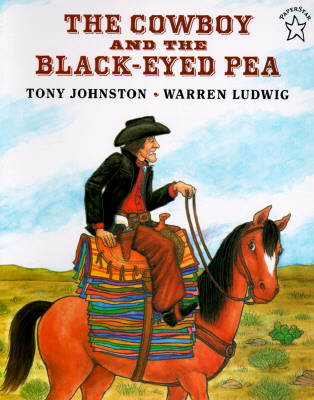
  4. Johnston, Tony. (1996). The Cowboy and the Black-Eye Pea. Illustrated by Warren Ludwig. New York: Puffin.


Puss in Boots

  1. Huling, Jan. (2002). Puss in Cowboy Boots. Illustrated by Phil Huling. New York: Simon & Schuster Children's Publishing. 
  2. Imai, Ayano. (2014). Puss & Boots. Bargteheide, Germany: minieditions.
  3. Perrault, Charles. (2011). Puss in BootsIllustrated by Fred Marcellino. New York: Square Fish. 
  4. Pinkney, Jerry. (2012). Puss in Boots. New York: Dial.


from Sugar Cane: A Caribbean Rapunzel. Illustrated by Raúl Colón. 
Rapunzel

  1. Isadora, Rachel. (2008). Rapunzel. New York: Putnam Juvenile.
  2. Storace, Patricia. (2007). Sugar Cane: A Caribbean Rapunzel. Illustrated by Raúl Colón. New York : Jump at the Sun/Hyperion Books. 
  3. Wlcox, Leah. (2005).  Falling for RapunzelNew York: Puffin.
  4. Zelinsky, Paul O. (2002). RapunzelNew York: Puffin.

from  The Girl Who Spun Gold. Illustrated by Leo and Diane Dillon
Rumpelstiltskin
  1. Calvert, Pam. (2006). Multiplying Menace: The Revenge of Rumpelstiltskin. Illustrated by Wayne Geehan. Watertown, MA: Charlesbridge.
  2. Galdone, Paul. (2013). Rumpelstiltskin. Boston, MA: HMH Books for Young Readers.
  3. Hamilton, Virginia. (2000). The Girl Who Spun Gold. Illustrated by Leo and Diane Dillon. New York: Blue Sky Press. 
  4. Moser, Barry. (1994). Tucker Pfeffercorn: An Old Story Retold. New York: Little Brown & Company.
  5. Stanley, Diane. (2002). Rumpelstiltskin's Daughter. New York: HarperCollins. 
  6. Stewig, John Warren. (2004). Whuppity Stoorie. Illustrated by Preston McDaniels. New York: Holiday House. 
  7. Zelinsky, Paul O. (1996). RumpelstiltskinNew York: Puffin.

Stone Soup

  1. Brown, Marcia.(1997). Stone Soup. New York: Aladdin.
  2. Compestine, Ying Chang. (2007).  The Real Story of Stone Soup. Illustrated by Stephanie Jorisch. New York: Dutton.
  3. Davis, Aubrey. (1996). Bone Button Borscht. Illustrated by Dušan Petričić. Tonawanda, NY: Kids Can Press. 
  4. Forest, Heather. (2005). Stone Soup. Illustrated by Susan Gaber. Atlanta, GA: August House.
  5. Hogrogian, Nonny. (1974). One Fine Day. New York: Aladdin.
  6. Kimmel, Eric A. (2011). Cactus Soup.  Illustrated by Phil Huling. Two Lions. 
  7. Maddern, Eric. (2009). Nail Soup. Illustrated by Paul Hess. London, UK: Frances Lincoln Children's Book.
  8. Muth, Jon J. (2003). Stone Soup. New York: Scholastic.


from  The Three Silly Billies. Illustrated by Barry Moser.
The Three Billy Goats Gruff

  1. Carpenter, Steve. (1998). The Three Billy Goats Gruff. New York: HarperCollins.
  2. Galdone, Paul. (2011). The Three Billy Goats GruffBoston, MA: Houghton Mifflin.
  3. Hopkins, Jackie Mims. (2011). The Three Armadillies TuffIllustrated by S.G. Brooks. Atlanta, GA: Peachtree Publishers.
  4. Kimmel, Eric A. (2012). The Three Cabritos.  Illustrated by Stephen Gilpin. Two Lions. 
  5. Palatini, Margie. (2005). The Three Silly Billies. Illustrated by Barry Moser. New York: Simon & Schuster Books for Young Readers. 


from Big & Bad by Etienne Delessert
The Three Little Pigs

  1. Alley, Zoë B. (2008). There's a Wolf at the Door. Illustrated by R W. Alley. New York: Roaring Brook Press. 
  2. Delessert, Etienne. (2008). Big and Bad. Boston, MA: Houghton Mifflin.
  3. Galdone, Paul. (2011). The Three Little Pigs. Boston, MA: Houghton Mifflin.
  4. Grace, Will. (2007). The Three Little Fish And The Big Bad Shark. Illustrated by Julia Gorton. New York: Scholastic.
  5. Guarnaccia, Steven. (2010). The Three Little Pigs: An Architectural TaleRetold and Illustrated by Steven Guarnaccia. New York: Abrams Books for Young Readers.
  6. Kasza, Keiko. (2003). My Lucky Day. New York: G. P. Putnam's Sons.
  7. Marshall, James. (2000). The Three Little PigsNew York: Grosset & Dunlap.
  8. Moser, Barry. (2001). The Three Little Pigs. Boston, MA: Little, Brown.
  9. Scieszka, Jon. (1989).  The True Story of the 3 Little Pigs. Illustrated by Lane Smith. New York: Scholastic.
  10. Trivizas, Eugene. (1993). The Three Little Wolves and the Big Bad Pig. Illustrated by Helen Oxenbury. New York: Scholastic.
  11. Wiesner, David. (2001). The Three Pigs. New York: Clarion.


Who are you callin' 'ugly'?
from Jerry Pinkney's The Ugly Duckling
The Ugly Duckling


  1. Andersen, Hans Christian. (2008).  The Ugly Duckling Illustrated by Bernadette Watts. New York: North-South Books. 
  2. Bas, Mercè Escardó i. (2004). The Ugly Duckling/El Patito Feo. Illustrated by Francesc Capdevila (Max).  San Francisco, CA: Chronicle Books. 
  3. Cauley, Lorinda Bryan. (1979). The Ugly Duckling. Boston, MA: HMH Books for Young Readers. 
  4. Mayer, Marianna. (1987).  The Ugly DucklingIllustrated by Thomas Locker. New York: Simon & Schuster. 
  5. Pinkney, Jerry. (1999). The Ugly DucklingNew York: Morrow Junior Books.