Thursday, July 14, 2016

#GiveForFrance


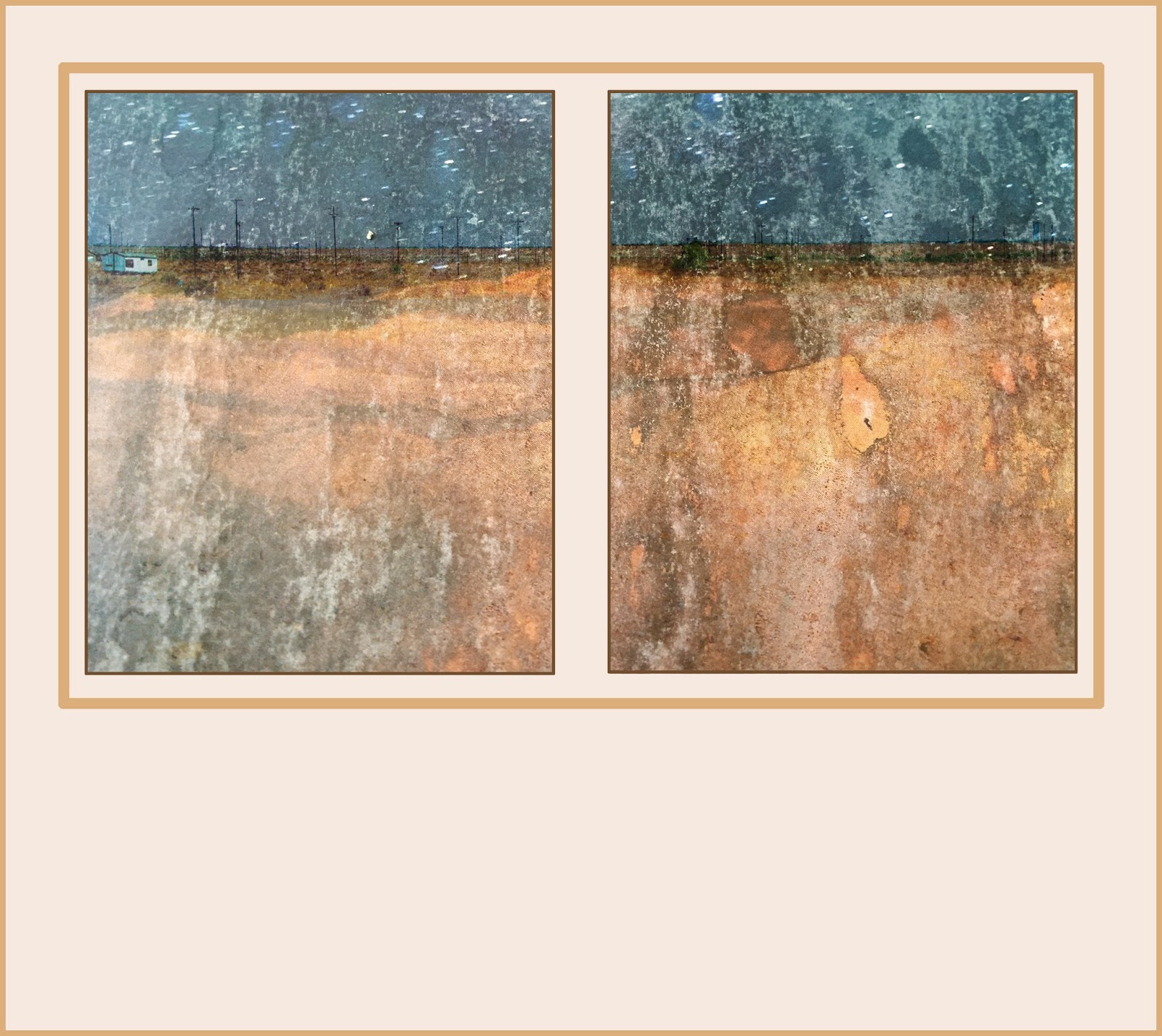
Field, southern France. (M.A. Reilly, 07/12/16)


We arrived home safely from France last night. From when Devon and I entered Orly Airport in Paris it took us about 5 hours to clear the various security points and for our flight to take off. We were delayed nearly 90 minutes. Throughout the airport, the presence of military was quite pronounced. When we entered the airport we ended up riding the escalator with 9 soldiers all of whom were carrying automatic weapons. And though the security checkpoint lines were very long, everyone seemed to understand the need for heightened security and acted accordingly.  Now, a day later, we hear news of a terrorist attack in Nice and the faces of the people we met while in France feel more present and thinking of their kindness and generosity helps to renew the belief that the world is populated largely with good people--people just like you, just like me. We must hang on to this understanding.  The world is filled with mostly good people. Ordinary people. People just like you.

I think about Saul Bellows's Dangling Man. Joseph, the protagonist comes to understand that goodness and community are co-specifying,  He observes,

Goodness is achieved not in a vacuum, but in the company of other men, attended by love.  - Saul Bellow


 Mediterranean Sea, southern France (July 2016). I took this
image on Monday. I 
was so excited to dip my feet into the sea.

It is in the company of other, that our own sense of goodness is heightened. So at these times when the absence of action feels frustrating, we need to find a way to help the victims of this latest terror. So what can we do?


Here's a few ideas...


  1. from LA Daily News: How can you help terror victims of the attack in Nice, France?
  2. from Reddit 
  3. #GiveForFrance
  4. Pray.
  5. Pray some more.


Saturday, July 9, 2016

SOL#16: Imagination and Murder: A Terrifying New Era Approaching

 
Birds Lifting (Original black and white image and citrasolved papers, M.A. Reilly, 2016)

“It is on the day that we can conceive of a different state of affairs that a new light falls on our troubles and our suffering and that we decide that these are unbearable” - Jean-Paul Sartre, 1956, pp. 434-435.


I.

Matt de la  Peña in his Newbery Medal acceptance speech wrote about self-definition and grace. He talked about the tangle of ethnicity and race that underscores the tenuousness of belonging and not. He opened and closed his speech quoting Denis Johnson, author of Jesus' Son: Stories who ended this collection of short stories with the voice of a recovering drunk and dope addict--the narrator of "Beverly Home"--who tells us boldly, “I had never known, never even imagined for a heartbeat, that there might be a place for people like us" (p. 133).

I think about that line--the idea of belonging, about  being a "people like us" and its relationship to the power of the imagination. What we can imagine can be.  But how do we imagine that which we have not experienced?  That which is beyond the scope of our present selves?  Maxine Greene has so eloquently written about the need for us to become (other)wise and how engagements with literature and the arts helps us to do so. de la  Peña credits reading basketball magazines and later novels by Gabriel Garcia Marquez and others with becoming an author. He tells us even when he was reading Basketball Digest, he was "in it for the narrative."

The narrative.

Now think about all that nonsense about text type percentages school children must read that David Coleman, the Common Core architect, foisted on United States schools.  (You remember the set of standards that were going to save the world).  For de la  Peña, like so many others,  it was narrative that resonated.  Narrative that informed and inspired, alongside later reading works by authors with whom he shared a common heritage. Seeing ourselves in the stories we read helps us to open windows and peer at lives we don't know as well. Reading literature helps us to develop our imaginations.

Narrative always matters and perhaps these days when Black men are being killed at the hands of some police and the murder of police is increasing--our need to understand, even appreciate other has never been so necessary.

Engaging with literature and the arts opens us to seeing not only what we are and presently are not, but also such engagements inspire us to more generously map what we are becoming and might become. Other stands apart until we have language to name and isn't this the role of the arts to help us name Other and to find a foothold in what might first feel unfamiliar? It was Greene who wrote, "The arts, it has been said, cannot change the world, but they may change human beings who might change the world."

Hold on to that thought for a moment.

II.

I'm mulling all this over as I read de la Peña's speech miles away from my home. It is late in Paris and the news of two more deaths of young black men at the hands of White police officers--this time in Minnesota and Baton Rouge and the deaths of five white Dallas police officers at the hand of a single African American male shooter who we are told wanted kill white people have been splashed across the French daily newspapers. All of these deaths and aggressions have me thinking more and more about home and race and the almost mythical narrative that resurges each and every time there is a death that is labeled, race-driven. The narrative offered says, we are a nation divided as if white and black represented the totality of definitions of selves in the US and that we neatly divide by those imposed racial lines. We are far more complicated than white and black. Such thinking locks us into situating the world as a duality. Choose X and you cannot choose Y.

That is the first myth and a dangerous one for it situates Other as being something permanent. I think that's what de la Peña is getting at in his speech.  Other is malleable, changing. He tell us,
When I sat down to write the text of Last Stop on Market Street, this troubling mindset was rattling around in my brain. Nana, the wise grandma in the book, is urging CJ to see the beauty of his surroundings, yes, but she’s also steering him toward something much more fundamental. She’s teaching CJ to see himself as beautiful. To see himself as worthy. “Sometimes when you’re surrounded by dirt, CJ, you’re a better witness for what’s beautiful.”
I love that language--the "steering him toward something much more fundamental" especially these days after more deaths have rocked what we may have mistaken as a foundation. We need not be built on the social constructs of race. We can be better than such narrow definitions of self and other. These divisions are fueled by fear and ignorance.  These murders show a crumbling facade. But it is not the permanency of race at odds here, but rather the shifting stance of Other that we need to understand and embrace. Some police officers, like others in the country, when confronting young Black men and women read these entanglements with 'Other' as a threat.  The lone shooter who executed five police officers read whiteness and police as threats.

History tells us that there has always been an Other and there will always be someone cast as other. How we define and attend to Other matters--as does our willingness and capacity to become (other)wise. I believe nothing is as important as this ongoing commitment to developing ourselves. I want to suggest here that engagements with literature and the arts represent a central way to understand and even embrace Other. These initial steps can help us to identify the institutionalize nature of racism that (in)forms all of these grotesque acts of violence and motivate us to take the necessary steps to reduce and end systematic racism. Privilege is so hard to recognize when it is what normal most feels like.  It hard to see privilege as a negative force when you benefit from what those privileges afford.  But let's not mistake the connections between racial privilege and racial violence. These acts of violence are rarely limited to personal matters, but rather are fueled by what is systematically learned.  If the only way Other is known is through media portrayals, racist ideologies and ignorance--then killings will continue at this alarming rate. Black children, men and women will continue to be murdered by the very people sworn to protect. Retaliation for these deaths by killing police officers will continue, if not, increase. The divisions will grow deeper, more permanent and become a truth we think is rational.

We must want for more and act--not on racial lines, but as a people invested in love.

III.

We have new narratives to learn--narratives like the one that powered de la Peña's journey from a "[a] half-Mexican hoop head" to imagining himself an honored author.  His work as author tells us that he did imagine "that there might be a place for people like us." He imagined this and made it so. To conjure what we don't know or feel we can't have requires us to exercise individual and collective imaginations in order to reshape the stories we have been taught that are so very wrong. We must first say out loud that these stories are not our truth.

African American people are not threats.
White police officers are not murderers.

Yes, in every set there is the exception, but it is not the exception that we need to use as definition. This just keeps us isolated, not talking, not putting our hands and hearts together to solve these matters of the greatest importance. These murders cannot continue. Black men, women, and children must be able to walk about their lives without the threat of death. Police must be honored, loved even, and respected. When we step into the shoes of other, we are afforded the rare opportunity to re-see the world and this so often fuels our desire to act with love--a force far greater than hate and ignorance.

IV.

Seeing Other shifts the world and during such shifts, we may feel terror and want to abort this work of routing out racism from our institutions--from the very narratives we teach ourselves and our children. I'm reminded of an image that happens at the beginning of "Beverly Home." Johnson's main character observes,
"And sometimes a dust storm would stand off in the desert, towering so high it was like another city— a terrifying new era approaching, blurring our dreams" (pp. 137-138). 
I think about this image and how it resonates--how the terror of what is new, unnamed and unfamiliar can be unsettling and alarming. It can scare us and make us want to turn away and blindly continue to blame someone else for all that this makes us feel. I think here about the dreams we have been taught to honor and know we need new dreams. We must learn how to name Other as human, as sacred friend, as most precious being we would lay our lives down to save. We must see what privilege costs and be willing to equalize opportunity and income.  We have so much to gain.

The thing I have most learned from grieving this last year, is that grief is an equalizer par none. Rob's death has taught me the power of love in ways I know to be true. My capacity to love is without limit--just like you. It also has taught me that grief is no stranger. Grief recognizes all and does not tiptoe around others based on race, gender, religion, sexual orientation, or income. Grief strips us bear and without our finery perhaps it is easier to recognize ourselves as kin.

We all matter.  We are lovable and deserve to be loved, respected, and safe-guarded.  I know that the grief in the ensuing months and years that these survivors of those murdered must now live with will be the most apt expression of what it means to be human. We are all frail and strong in the face of death.

But we need not experience such awful loss in order to act. To act just takes our will to rebut the crappy and dangerous narratives that are already multiplying that recast Other as evil, as wrong, as non-human.

Let's tell new stories. Let's tell them loud especially in the presence of lies.  Let's tell these stories consistently and with great care. We can do this.

Friday, July 8, 2016

#SOL16: Shadow Play


Today I viewed/experienced La Boîte de Pandore Une photography exhibit curated by Jan Dibbets at Musée d'Art Moderne in Paris.  The exhibit features photographs spanning 200 years and juxtaposes old and new in some interesting ways, including some very contemporary works by Seth Price, Wade Guyton, Kelley Walker, and Spiros Hadjidjanos that push against a common understanding of photography and the photograph. I am often puzzled by Seth Price's work and enjoy that puzzlement. He makes me think about what I believe photography is and isn't.  I was reading an interview he gave and was stopped when he was talking about a printer and said, "You just can’t get away from how amazing mistakes look."

"You just can’t get away from how amazing mistakes look" ought to be a tagline for every school of education, for life.

self portrait 
So it was in that spirit of experimentation that I decided to buck the trend and not snap photos with my phone of art work on display at the museum (the day before Dev and I went to the Lourve [ugh, don't ask] and watched as hundreds of people lined up in front of the Mona Lisa snapping pictures with their phones. I wondered then as I do now, what's that about? What compels us to this? Is it as simple as in the face of beauty we are moved to capture it in some way?  Or is there something else, something unsettling about all of that snapping?) Anyway, at the close of the photography exhibit there was a brief filmed interview with the curator. As I watched I began to notice that the hot spotlights in the room allowed for some very interesting shadows to form. Earlier in the exhibit I noticed a shadow of myself that formed against a smooth wall and made a quick image.

So it wasn't too surprising that I drifted from watching the interview and began paying attention to shadows. For two or more months, I have belonged to a Facebook group of photographers who focus on making images of human shadows and to date, I have contributed one image. I have viewed a lot though and surely this influenced me. As I sat in the small room, I unlaced my sneakers pushed them into the light and made an image. I edged my foot into the dark and light and made another image. (Mind you I had this exhibit largely to myself. Everyone else was at the Lourve making snapshots of the art. Okay that was a bit snarky.) I raised my hand, spread fingers and played the piano and so on.

Sneakers
My Right Foot
Player Piano
This interest followed me back into the daylight as I made my way back to the hotel stopping now and then to make an image of a shadow.


Here are a few of the images I made while walking in Paris:


self portrait

self portrait
Man in a Fedora

Self portrait

II.

Towards the end of the exhibit, the curator placed a quote from Towards a Philosophy of Photography by Vilém Flusser (1983).  Flusser writes:

The imagination of the camera is greater than that of every single photographer and that of all photographers put together: This is precisely the challenge to the photographer. Likewise, there are parts of the camera's program that are already well explored. It is true that one can still take new images, but they would be redundant, non-informative images, similar to those one has seen before. As stated elsewhere, redundant photographs are not of interest in this study; photographers in the sense intended here are in pursuit of possibilities that are still unexplored in the camera's program, in pursuit of informative, improbable images that have not been seen before" (pp. 36-37, from here).

Oh to be in pursuit of possibilities--unexplored possibilities.

Some days a phone is just a phone and the camera within is merely a means to reproduce the familiar. It's like a friend you never tire from being with. Some days a phone camera, like any tool, can be used to make something unexpected. Today, was a day of playing and after so many months where grief has more than dogged my step, it was a simple joy that transform the weight of grief into nothing more than shadows.


Wednesday, July 6, 2016

#SOL16: Here and Then Gone


Somewhere Over the Atlantic (M.A. Reilly, 2016)
I.

38,000 feet below thick clouds that have severely roughened the air flight, the ocean is concealed. I imagine it nonetheless--the strong Atlantic moving, waves rising, cresting, and falling like a wild sea serpent plunging down and then resurfacing again and again. In the ocean, everything flows along currents to find beaches I cannot see, cannot name. There's an order to be appreciated.

Here lost among clouds that stretch like ghostly fingers across a coming dawn, I watch as if the shift in clouds might reveal you. I tell you twelve years of Catholic school taught me that heaven was largely a skyward business and I wonder if this is where you have come to rest, come to be.

And so I look for you among the ephemeral bits of fluff, but instead I see the head of a cow, perhaps a moo cow coming down the road for we may well be over Ireland and these clouds give way to a gnarly old man who seems befuddled, hunched over a cane. And then there is nothing.  Just like the clouds Berndnaut Smilde captures with his camera.

Here and then gone.

Here and then gone.

II.

Cloud interpretation is largely a geometry of faith--a language I cannot decipher. But even so, there is a simple joy that fills me as I stare out the window of this mostly silent airplane, winging east to Paris. We are less than 2 hours from landing.

I'm reminded that 17 years ago we tried to come here, somewhat keen on imbibing that old cliche of love. Paris in April. But instead we took those dollars and some more and paid for Devon's adoption--a surprise after so many months of waiting. We never made it to Paris, saying we would come here one day, just the two of us. We thought we had such time for who would know that a month after our son turned 17 you would be dead?

III.

Death is thick in Paris. I had forgotten how in Europe everywhere most everyone seems to be smoking. This is true for Paris as well. Young and old.  I look  and want to say, "Save your lives." I look at the young ones and recall you telling the oncologist that you smoked from when you were a teen until you turned 27. I look at the three young girls all puffing away until I must turn away and as I do I notice another group of three at a table nearby--all of whom are men and heavy smokers--all much older than you and I wonder how much of lung cancer is an unfortunate matter of genes. Your father died from lung cancer too.

IV.

Dev and I are here in Paris, Rob and there's a certain solace I find present talking to you tonight knowing somehow that this digital impulse will find its way to you.  Someone and I am sorry to say I have forgotten who said that there would come a time when I would be able to not only bare talking with you again, but revel in it.

Yes, revel.

3600 miles through roughened air I have come to learn a truth.

Tuesday, July 5, 2016

#SOL16: Parataxis

from my art journal 6.28.16
I.

Memories are a shabby substitute.
Memories carry no weight.
Memories are not a body.
Memories carry little definition.

II.

Rob's illness was terminal.
Rob reached up.
Rob caught the back of my neck.
His hands were large, capable.
Live brilliantly.

III.

Some night I recall the feel of his hand.

I long to feel the weight.


IV

No weight.
No husband.
No hand.

V.

Rob's diagnosed.
Life is a parataxis.
Nothing is subordinated, coordinated.

One day fades.
A next appears.
Rinse and repeat.

Saturday, July 2, 2016

Making Art: Digitally Remixing CitraSolv Papers, Photographs, and Drawing

Desert, M.A. Reilly, 2016
(CitraSolv papers, original photograph, digital remix)


For the last few days I have been altering pages of magazines (NY Times Sunday Magazine and also LL Bean catlog) using CitraSolv and then using these papers in original art. The process involved in altering the magazine pages is easy and this tutorial by Cathy Taylor below offers some good insight.


I found spraying the CitraSolv works best and then after the ink had begun to dissolve using q-tips and small brushes to manipulate the loose ink served me well. I let the magazine sit with the CitraSolv on the pages for about 15 to 20 minutes and I always peak. I haven't used any stencils, saran wrap, tar gel or artist tape that Cathy references but will be trying it as it looks interesting. I look carefully and select the pages I want to use and lay these papers to dry (I don't hang them). The pages will be super easy to tear out and any rips only make the papers more interesting.


After the pages dry, I set them out on a table and look carefully to see what emerges. What does the page suggest? Some papers I set aside for collage purposes and other papers I see as background for art.  Here's a quick tutorial about ways to paint into the paper using acrylic inks (which I love).


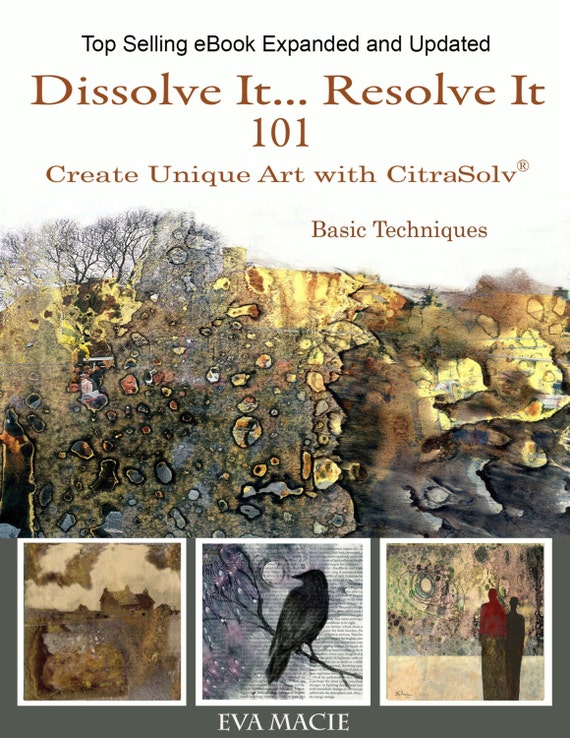
Dissolve It ~ Resolve It  Expanded and Updated. The CitraSolv® basic techniques workshopI also found Eva Macie's ebook, Dissolve It...Resolve It to be excellent and inspiring. Her work is beautiful and she also shows how to use stencils and masks to remove to further alter the pages.


Because I make a lot of art digitally, I photographed the pages and then further mixed them with original photographs and painted directly on them through photoshop.

Here are a few examples:

(CitraSolv papers, original photographs, digital remix)

Contemplation (CitraSolv, pencil, digital remix)

(CitraSolv papers, acrylic paint, newspaper, found papers, stabilo pencil, digital remix)
(CitraSolv papers, original photograph, digital remix)


Friday, July 1, 2016

#SOL16: What Love Makes

I.

In Elizabeth Alexander's memoir, The Light of the World, she chronicles the death of her husband and the aftermath. She observes, "In all marriages there is struggle and ours was no different in that regard. But we always came to the other shore, dusted off, and said, There you are, my love" (p. 76). That resonated with me as so many people comment that Rob and I had such a wonderful marriage and we did.  But it was not a marriage without struggle, nor was it one in which we did not seek that other shore. There's a blessing to seeking the other shore so repeatedly. I realize now that Rob helped me to know love--a love that was so generous as it was flawed. It is that knowledge of love and the love itself that heals me today.

Feeling love does not mean that I am not without sorrow. Sorrow is its own animal and it too resides within. Yesterday, I was reminded of the depth of sorrow I feel.  I was in the town where Devon went to elementary school--years that seem so far away now.  We were all so impossibly young and there were so many memories of the three of us. As I drove home I felt pain, realizing that by the time Devon would leave elementary school, Rob would have less than 7 years left to live. 7 years seems cruel. By the time I arrived home I felt cried out as if I simply had exhausted all the tears my eyes could produce and sorrow caped me like day-after hangover.  Devon asked how I was and I told him I was missing his dad.

It hurts so that he isn't here anymore, I said to him. We are making new memories without him. Like you driving. He didn't see that and he would have wanted to.
But Dad's in us. Wherever we go, wherever we are he's here because we will always carry a part of him. How could we not?
You sound like him now.  He would have said something similar.


II.

Contemplative (CitraSolv, NY Times Magazine, pencil, digital remix)
After Rob died, it felt as if a part of me was gone, vanished, no more. It felt like a giant hole that would never heal, never close.  Perspectives matter so and perhaps that is what time best gives us--the capacity to see other, to recast the present, to understand our lives differently. What once was a hollow place is now more window--allowing me to experience the world in ways I simply had not the means to do before.  For how could I be hollow?  I realized my son is correct. We do carry his dad within us, for he helped to form each of us. He did so simply by loving us and sharing himself with us.

III.

Last night I was working with CitraSolv to dissolve a few pages from  an old New York Times magazine. I wanted to see what might be revealed as the ink bled across the pages and as I manipulated the ink. As I studied the pages, one caught my eye. I began to see a scene emerge of a village of houses and a space one might walk to and through--a contemplative space.  I played with the ink, before photographing it and digitally remixing it further. I worked for several hours and throughout it all I had a sense of Rob's presence. So often he would observe me while I worked and he would want to know not only what I was working on, but also how I was making the piece of art. Show me how to do that, he would ask.

IV.

Today the house smells like oranges--a result of my use of CitraSolv. If Rob were here the smell of espresso might also be in the air.  For nearly 29 years, Rob Cohen helped me to make a life--a life we shared so deeply. And though he is gone from the Earth, he is still present in my life through his son and the countless memories I have of the times we were together. I see him in most everything Dev and I do. I hear him in the quiet logic of his son's words, the laughter of a friend, an inquiry from a neighbor. I feel him each time the lone cardinal who seems to have taken up residence wings across our yard. There you are my love. There you are.