Monday, March 7, 2011

SOL#17: Updated - Play Ball! Recommended K-12 Books about Baseball


Although I don't follow baseball today, I can still recall in the early 1970s, during spring driving with my dad in his trusty VW bug (the original) and listening to AM radio coverage of a baseball game. I remember my dad listening as Nolan Ryan pitched his way to a no hitter and recall my dad saying, Mary, we have a sure winner here. I'm not sure if it had something to do with listening to a game,  being with just my dad, or perhaps both--but I recall the time fondly.  

With spring a few weeks away and baseball warming up, I hope the list inspires you to "pitch a few books" to others and to read to children.


1. Picture Books
Adler, David A. 2007. Campy: The Story of Roy Campanella. Illustrated by Gordon James.NY: Viking Juvenile.
-------------------. 2004. The Babe & I. Illustrated by Terry Widener. NY: Sandpiper.
-------------------. 2003. Mama Played Baseball. Illustrated by Chris O’Leary. NY: Harcourt.
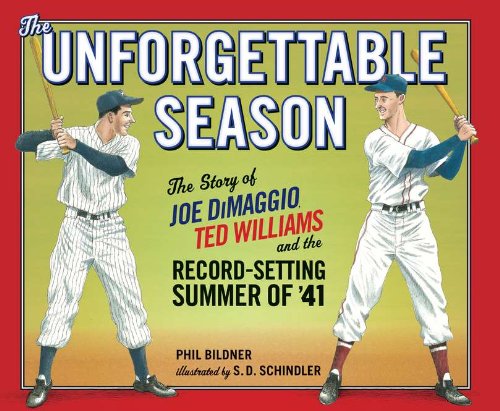
Bildner, Phil. 2011. Joe DiMaggio, Ted Williams and the Record-Setting Summer of 1941. Illustrated by S.D. Schindler. NY: Putnam Juvenile.
--------------. 2006. Shoeless Joe & Betsy Black. Illustrated by C.F. Payne. NY: Simon & Schuster.
Bowen, Fred. 2010. No Easy Way: The Story of Ted Williams and the Last .400 Season. Illustrated by Chuck Pyle. NY: Dutton Juvenile.
Burleigh, Robert. 2003. Home Run: The Story of Babe Ruth. Illustrated by Mike Wimmer. NY: Sandpiper.
Burleigh, Robert. 2007. Stealing Home: Jackie Robinson: Against the Odds. Illustrated by Mike Wimmer. NY: Sandpiper.
Churin, Nancy. (2016). The William Hoy Story. Illustrated by Jez Tuya. New York: Albert Whitman & Company.
Cline-Ransome, Lisa. 2003. Satchel Paige. Illustrated by James E.Ransome. NY: Aladdin.
Corey, Shana. 2006. Players in Pigtails. Illustrated by Rebecca Gibbon. NY: Scholastic.

Curtis, Gavin. 2001. The Bat Boy and His Violin. Illustrated by E.B Lewis. NY: Aladdin.
Gilles, Almira Astudillo. 2001. Willie Wins. Illustrated by Carl Angel. NY: Lee & Low.
Golenbock, Peter. 2005. Hank Aaron: Brave in Every Way. Illustrated by Don Lee. NY: Lee & Low.
---------------------. 1992. Teammates. Illustrated by Paul Bacon. NY: Sandpiper.
Hopkinson, Deborah. 2003. Girl Wonder: A Baseball Story in Nine Innings. Illustrated by Terry Widener. NY: Atheneum/Anne Schwartz Books.
Hubbard, Crystal. 2005. Catching the Moon: The Story of a Young Girl’s Baseball Dream. Illustrated by Randy Duburke. NY: Lee & Low.
Johnson, Angela. 2007. Just Like Josh Gibson. Illustrated by Beth Peck. NY: Simon & Schuster.
Kusugak, Michael (Inuit). 1993. Baseball Bats for Christmas. Illustrated by Vladana Langer Krykorka. Tornoto, Ontario: Annick Press.
Lorbiecki, Marybeth. 2006. Jackie's Bat. Illustrated by Brian Pinkney. New York: Simon & Schuster.
Mandel, Peter. 2000. Say Hey! Illustrated by Don Tate. NY: Hyperion.
McKisack, Patricia. 2008. Michelson, Richard. 2006. Across the Alley. Illustrated by E.B. Lewis. New York: Harcourt.
Mellage, Nanette. 1999. Coming Home: A True Story of Josh Gibson, Baseball's Greatest Run Hitter. Illustrated by Cornelius Van Wright and Ying-Hwa Hu. New York: Troll.
Michelson, Richard, 2011. Lipman Pike: America’s First Home Run King. Illustrated by Zachary Pullen. Ann Arbor, MI: Sleeping Bear Press.
Mochizuki, Ken. 1995. Baseball Saved Us. Illustrated by Don Lee. New York:  Lee & Low.
Moss, Marissa. 2004. Mighty Jackie: The Strike-Out Queen. Illustrated by C.F. Payne. New York: Simon & Schuster.
Negron, Ray. 2006. The Boy of Steel: Baseball Dream Come True. Illustrated by Laura Seeley. New York: Harper Collins.
Nelson, Kadir. 2008. We Are The Ship: The Story Of Negro League Baseball. NY: Jump at the Sun.
Okimoto, Jean Davies. 2002. Dear Ichiro. Illustrated by Doug Keith. Seattle, WA: Sasquatch Books.
Posada, Jorge. 2010. Play Ball! Illustrated by Raul Colon. New York: Paula Wiseman Books.
Rappaport, Doreen. 2000. Dirt on Their Skirts: The Story of the Young Women Who Won the World Championship. Illustrated by E.B. Lewis. New York: Dial.
Robinson, Sharon. 2009. Testing the Ice: A True Story about Jackie Robinson. Illustrated by Kadir Nelson. New York: Scholastic Press.
--------------------. 2004. Promises to Keep: How Jackie Robinson Changed America. New York: Scholastic.
Shore, Diane Z. & Jessica Alexander. 2011. This is the Game. Illustrated by Owen Smith. New York: HarperCollins.
Tavares, Michael. 2000.  Zachary's Ball. Sommerville, MA: Candlewick.
Uhlberg, Myron. 2005. Dad, Jackie, And Me. Illustrated by Colin Bootman. Atlanta, GA: Peachtree.
Vernick, Audrey. 2010. She Loved Baseball: The Effa Manley Story. Illustrated by Don Tate. New York: Collins.
Winter, Jonah. (2016). You Never Heard of Sandy Koufax?! Illustrated by Andre Carrilho. New York: Schwartz & Wade.
-----------------. 2008. Roberto Clemente: The Pride of the Pittsburgh Pirates. Illustrated by Raul Colon. New York: Atheneum.
Wise, Bill. (2012). Silent Star: The Story of Deaf Major Leaguer William Hoy. Illustrated by Adam Gustavson. New York: : Lee & Low.
Wise, Bill. (2009). Louis Sockalexis: Native American Baseball Pioneer. Illustrated by Bill Farnsworth. New York: Lee & Low.
Yolen, Jane. (2010). All Star! Honus Wagner and the Most Famous Baseball Card Ever. Illustrated by Jim Burke. New York: Philomel.

Poetry

Edelson, Noah. 2005. Cooperstown Dreams: Poems about Baseball and Other Things That Make a Difference. Illustrated by Hannah Edelson. Sherman Oaks, CA: Mighty Oak Media.
Fehler, Gene. 2009. Change-Up: Baseball Poems. Illustrated by Donald Wu. NY: Clarion.
Graves, Donald. 1996. Baseball, Snakes and Summer Squash: Poems about Growing Up. Illustrated by Paul Birling. Honesdale, PA: Boyds Mill Press.
Hopkins, Lee Bennett. 1993. Extra Innings: Baseball Poems. Illustrated by Scott Medlock. NY: Harcourt.
Janeczko, Paul B. 1998. That Sweet Diamond Baseball Poems. Illustrated by Carole Katchen. NY: Atheneum.
Koertge, Ron. 2006. Shakespeare Bats Cleanup. Cambridge, MA: Candlewick.
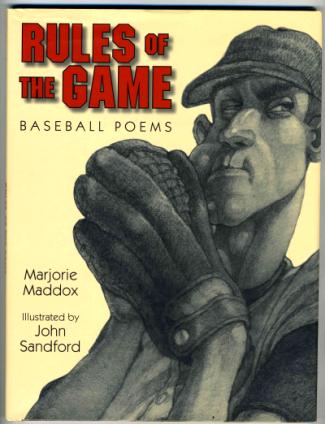
Maddax, Marjorie. 2009. Rules of the Game: Baseball Poems. Illustrated by John Sandford. Honesdale, PA: Wordsong.
Morrison, Lillian. 1992. At the Crack of the Bat: Baseball Poems. Illustrated by Steve Cieslawski. NY: Hyperion.
Raczka, Rob. 2010. GUYKU: Haiku for Boys. Illustrated by Peter H. Reynolds. NY: Houghton Mifflin. (includes a haiku about baseball cards)
Rodriguez, Alex. 2007. Out of the Park. Illustrated by Frank Morrison. NY: Harper Collins.
Smith, Charles. 2004. Diamond Life: Baseball Sights, Sounds, and Swings. NY: Orchard.
Thayer, Ernest. 2002. Casey At the Bat. Illustrated by Leroy Neiman. Introduction by Joe Torre. NY: Ecco.
 -----------------. 2000. Casey at the Bat: A Ballad at the Republic in the Year 1888. Illustrated by Christopher Bing. San Francisco, CA: Chronicle.

Informational
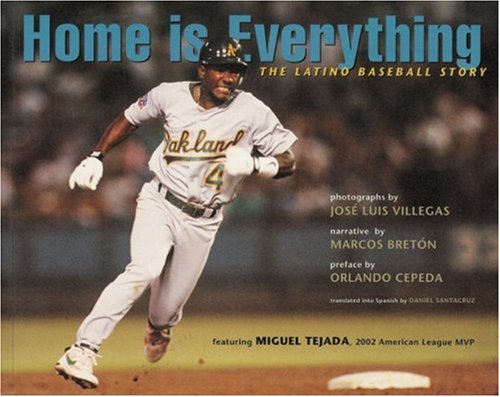
Bretón, Marcos. 2003. Home Is Everything: The Latino Baseball Story: From the Barrio to the Major Leagues. Photographs by Jose Luis Villegas. El Paso, TX: Cinco Puntos Press.
Chronicle Books Staff. 2009. B Is for Baseball: Running the Bases from A to Z. San Francisco: Chronicle Books.
Cook, Sally and James Charlton. 2007. Hey Batta Batta Swing! The Wild Old Days of Baseball. Illustrated by Ross MacDonald. NY: Margaret K. McElderry.
Curlee, Lynn. 2004. Ball Park: The Story of America's Baseball Fields. NY: Antheum.

Gibbons, Gail. 2000. My Baseball Book. NY: HarperCollins.
Herzog, Brad. 2004. H is for Home Run: A Baseball Alphabet. Chelsea, MI: Sleeping Bear Press.
Wong, Steven. 2007. Baseball Treasures. Illustrated by Susan Einstein.NY: HarperCollins.

Novels & Short Stories (Middle School & High School)

Cochrane, Mick. 2010. The Girl Who Threw Butterflies. NY: Yearling.
De la Pena, Matt. 2008. Mexican WhiteBoy. NY: Delacorte.
Lupica, Mike. 2011. The Batboy. NY: Puffin.
----------------. 2008. The Big Field. NY: Philomel.
----------------. 2007. Heat. NY: Puffin.
Mackel, Kathy. 1997. A Season of Comebacks. NY: Penguin.
Mercado, Nancy (Ed.). 2009. Baseball Crazy: Ten Short Stories that Covers the Bases. NY: Puffin.
Park, Linda Sue. 2008. Keeping Score. NY: Philomel.
Preller, James. 2008. Six Innings: A Game in Life. NY: Feiwel & Friends.
Raven, Margot Theis. 2005. Let Them Play. Illustrated by Chris Ellison. Sleeping Near Press.
Ritter, John H. 2005. The Boy Who Saved Baseball. NY: Puffin.
----------------. 2000. Over the Wall. NY: Philomel.
Sturm, James. 2007. Satchel Paige: Striking Out Jim Crow. Illustrated by Rich Tommaso. NY: Hyperion.
Testa, Maria. 2004. Becoming Joe DiMaggio. Cambridge, MA: Candlewick Press.

Sunday, March 6, 2011

Understanding the Charter and Public School Division/Debate as Story

I have long believed that stories matter.  In the opening of Leslie Marmon Silko's Ceremony, she writes:
I will tell you something about stories,
[he said]
They aren't just entertainment. 
Don't be fooled.
They are all we have, you see,
all we have to fight off
illness and death.

Narratives do not happen in a single time frame.  They are informed and reformed by time, intention, presence, and neglect. As such there are understories and yet-to-realize possibilities within stories. It's why when we ask someone to tell us a story, it is not Truth we seek, but a truth.

That seems important to remember in the discussion/debate/diatribe about charter schools and public education that is currently occurring.  It is what led me to pose to @tomwhitby on Twitter:  "i think it wise to ask why public is enamored with charters. what r we not seeing in our own backyards?"

See, that's the narrative I want to better understand.  Your neighbor who doesn't hate teachers but wants to latch on to a dream that right now seems to be expressed as a possibility through enrollment of a child in a charter. What's the story/stories your neighbor is telling him/herself about schooling, learning, possibilities, and desire? What are the stories we need to be hearing?

I am less curious to know what Arne Duncan, @BillGates @DianeRavitch have to say--not because I don't value their words, ideas, contributions, and insights--but because I wonder if they really know the stories of your actual neighbor either.  They know policy, business, and unions and the stories used to position these entities in what seems to be an endless play for power.  In many ways their stories seem like the same story, with interchangeable good and bad characters.

So I want to ask if there is a method by which stories of our local neighbors, not filtered, can be collected and shared?  I want to know the stories my neighbors in northern NJ are telling themselves about learning, schools, teaching, charters, and public schools.


I think Silko's right. Stories, they aren't just entertainment. We shouldn't be fooled. They are all we have.


I'm suggesting we start listening.


I'm wondering what you think.   Any ideas?


Are unConferences A Manifestation of Plato's Allegry of the Cave?

I have no doubt valuable understandings can and do happen at unConferences.  It is a powerful learning format.  I have experienced this, learning about search engines and interesting ways of collecting and displaying web sites. Inherently practical information I will certainly use.  I like the idea of UnConferences, the spontaneity, the potential range of interactions, and the thoughtfulness of the convener who may use a range structures like Spectrograms or Community Mapping,  to solicit and map interactions and responses.

An interesting description of unConferences here states:

The Creative unConference favors a flexible, participant-driven format that values energetic dialogue over talking head presentations. Unlike a traditional conference, where topics and speakers are set by organizers months in advance, unConference participants create the agenda and act as the session leaders. This allows all participants to have their voices heard and engage up to the minute ideas. 
During the unConference, session topics can be added or modified, responding to the needs of its participants in real time. Participants are encouraged to move from one presentation to another, engaging with their colleagues. Simple guidelines put forward at the event help this all happen smoothly.
Hmm. I wonder about those simple guidelines and how energetic dialogue is ensured.  At a session I attended (and left) at an unConference, the discourse resembled teacher room chat at its worse.  I wondered then and now if it didn't also serve to solidify misconceptions, racially charged stereotypes, and poorly imagined practices. And still I also imagine that for the majority of people in the session they might well describe it as energetic dialogue. Yet, for me it was more like Plato's Allegory of the Cave, specifically when Socrates says to Glaucon: “And if they were able to converse with one another, would they not suppose that they were naming what was actually before them?

It is foolish to confuse perception with sight. During the session, one teacher spoke of social Darwinism as truth, while another stated that literacy performance was "set" by the age of 5 and there was nothing schools could do to improve the matter. I heard talk about reports that no one in the room had actually read, yet everyone had an opinion, even after admitting to having not read the report.  Allow me to paraphrase some of what I heard before leaving the session:
You know. It's like Darwin. You know him? There's always some kids who just can't get it.

What's bad about teacher evaluation is they're going to put your name on the Internet and how are you going to find another job? They'll know your kids didn't do good.

If you teach in a wealthy school district your kids can learn. If you teach in (insert poor community) we get the kids who can't. Is that fair to us?

I know we all teach exactly the same. I steal their worksheets and use them.  It's the kids you get that make the difference. 

My kid (5 year old) has 1000 books. My neighbor's kid (5 year old) has 1.  You can't make up that kind of difference in school.
The kids come to us blank. They have had no experiences.
The beliefs being uttered and unchallenged were shocking.  When I asked the group to focus and comment on their own practices, they did not do that and I wondered why. Instead they continued expressing their beliefs about NCLB, working conditions, evaluation of teachers, ill preparation of students via their lives, etc.  The discourse exchanged was an embarrassment, personally and professionally, especially as:.
I reject social Darwinism. 
I reject the belief that poor kids aren't intellects and aren't creative.
I reject the belief that even if a teacher uses the same worksheet as another, that the learning in the two classrooms is the same.
I reject the belief that learning potential is ever set, let alone at age 5.
I reject the belief that students arrive at any school day without relevant experiences.
Where is the metalanguage necessary to critique our assumptions, beliefs, "truths" at an unConference?  Is it even possible to re-conceptualize one's practice when situated singularly within one's primary discourse?  I wonder if in the rush to embrace unConference, we may be forgetting the value of juried conferences.  Is there no value in preparing presentations that are informed by relevant and juried research and theory?

Friday, March 4, 2011

Turning the Traditional English Midterm Exam On Its Head - A Multimedia Response: Guest Blog by Kara Douma

Kara Douma
Guest Blog: It's impossible not to be motivated when in the presence of Kara Douma, an instructional leader at Morristown High School (Morristown, NJ). Kara is highly thoughtful, full of "can do" energy, and an advocate for all learners (students & teachers). It is such a pleasure to be able to post Kara's ideas about assessment in the high school English classroom.  I hope her recount inspires others to challenge the traditional paper and pen midterms and seek ways of assessing student learning that situate students as collaborators in the assessment process, not mere receivers.

Bio: Prior to her current work, Kara enjoyed teaching at Holmdel High School as a special educator and at Manchester Middle School as an English teacher. While she instructed a summer program at the Center for Talented Youth, her first experience in education was as a teaching assistant at a private school for students with multiple disabilities. She deeply appreciated learning from and working with a diverse group of students. Today, Kara is a graduate advisor at Monmouth University and a student at Rowan University in the Doctoral Program in Educational Leadership. 


Reexamining the Mid-Term
 Kara Douma

January always seems to be a challenging month for both students and teachers at the high school. The holidays have just left us as the winter cold settles in our bones. At the beginning of the month, a familiar email circulates within the walls of the school; it is the mid-term exam memo detailing the deadline for submission along with the schedule of exam blocks. This is the catalyst that inspired Ms. Kelly Dabinett and me to turn this January into an experience of blissful student learning by way of matching student interest to their academic needs and their learning preference.  We were determined.

There were several pieces of the puzzle which turned this traditional exam into a more interactive assessment, the first being that I knew I was collaborating with one of the best English teachers in the school. Kelly and I worked to create a meaningful experience to engage learners. In order to accomplish this, we set the parameters of the project -based learning experience which revolved around the books the students had read during the first semester. We decided to link the readings to real life interests of our students. For example, Values of the Game served as a springboard for studying the New York Knicks and The Alchemist proved to be an entry into a study of dreams.  The topic selected was split into two areas of interest to be researched utilizing web based resources on iPads. Then, a personal connection web was completed to translate specific learning to the readings, oneself, and the world. Students selected from simulating an interview, acting out a scene, utilizing drawings or photographs with verbal explanation or considering another mode. Students used Flip Cameras for student recording. Then students conveyed their ideas and research to the class. 
This mid-term exam was unusual as it was not completed in the limitations of an exam block. Rather, it developed over three weeks leading up to the film presentation on exam day. Artifacts combined with video represented several targeted proficiencies for young adults including: writing, speaking, collaboration/ leadership, creativity, problem solving/critical thinking, conducting research/ using information, effective use of technology, and self-assessment/reflection. With new learning experiences reflection can run deep. Reflection occurred naturally throughout the process by way of making thinking visible through discussion, movement, and decisions on the product. When asked about the deviation from the traditional mid-term exam, a student replied, “I had a lot of fun because it was something I really like to do, make movies. It is not written like an essay; this is interesting, not like reading a textbook. The visual, hands-on activity made it real and made me want to learn more.” This evolved into an experience that rocked the cemented exam block and motivated students even in the darkest month of the high school year.

Luckily, two phenomenal students were willing to share their beautiful product with everyone. They completed their process on the text The Contender with an interest in high school dropouts. They discovered they wanted to learn more about existing differences of people in the world. One student reflected, “As the interviews unraveled, I realized I wanted to focus more on the dreams of people.”  She went on to discuss the use of technological tools as a mode of expression, “It’s in front of you. It’s not paper and pencil in front of you. This is the new, that was the old. I can now share my ideas and thoughts with the world.” 


Please follow this link to see the beautiful product of what was once the eighty minute mid-term exam.

http://www.youtube.com/watch?v=AHn0pvJ342U


What High School Students Want Us to Value Regarding Education


Tweets based on high school students from MHS’s Classics Academy discussing education. Students presented ideas about education during Symposium.  @shklepesch (Scott Klepesch, Supervisor of Instruction) captured the gist of the ideas presented using Twitter (#mhsclassicsacademy ). The students were in the class, Symposium, taught by @mylatinteacher (Mark Gutkowski). Here’s the trasnscript as posted on Twitter. Wondering what you think. 


Expanding vision school environment to include space outside of the building, community is the school #mhsclassicsacademy #schoolenvironment

fostering cross-disciplinary approaches in high school, #mhsclassicsacademy, #interdisciplinary

RT @shklepesch: goals are to offer more classes to address the interests of students, #mhsclassicsacademy, #interest, #passion , #learning

compiling portfolio work over four years of high school, this can be shown to colleges, employers #mhsclassicsacademy, #student portfolios

goals are to offer more classes to address the interests of students, #mhsclassicsacademy, #interest, #passion , #learning
embedding into schedule monthly conferences- time is privileged for students teachers to discuss progress, #mhsclassicsacademy #grading

revise high school grading system- personalized feedback #mhsclassicsacademy, #grading

"If you are ready to graduate- why can't you go and pursue your dreams" #mhsclassicsacademy

@maryannreilly, check out #mhsclassicsacademy, thoughts about what school be like

recommending a reduction is credit requirements to allow more choice, increasing tech and art #mhsclassicsacademy,

"focus on issues of the 21st Century"- "Moving away from grades and standardized testing, #mhsclassicsacademy, #21stcenturylearning

embedding into academies, apprenticeships through work internships, #mhsclassicsacademy, #internships, #mentoringstudents

students could take a half academy, enroll in three instead of 5 core classes, #mhsclassicsacademy

all academies would include a wheel class and work towards reducing class size, #mhsclassicsacademy

passion-based learning through academies, #mhsclassicsacademy, #learning academies

recommending two teacher shifts and moving towards trimesters as opposed to semester, #mhsclassicsacademy, #studentscheduling

recommended goals scheduling, extended school day, later start time, flexibility with time, student designed schedule #mhsclassicsacademy

in Sympodium class for students presentations on education, should be interesting #mhsclassicsacademy

Wednesday, March 2, 2011

Editing Clubs, Cultural Models: Teaching Writing in Middle School and High School Students

This is an excerpt from chapter 7, Studying Writer's Craft in Three Middle School Classrooms is from Deepening Literacy Learning: Art & Literature Engagements in K-8.  In this portion of the chapter I describe an 8th grade ELA class I taught. Two other teachers and their students are referenced at the end of this excerpt.  These teachers' classrooms are described in earlier section of the chapter.

A Middle School Editing Club

George Hillocks (1986; see also Hillocks & Smith, 1991) reviewed relevant research since the 1960s on teaching writing and grammar. Hillocks concluded:
None of the studies reviewed for the present report provides any support for teaching grammar as a means of improving composition skills. If schools insist upon teaching the identification of parts of speech, the parsing or diagramming of sentences, or other concepts of traditional grammar (as many still do), they cannot defend it as a means of improving the quality of writing. (p. 138)

If formal grammar exercises then do not lead to improved writing, what might a teacher do who wants his or her students’ finished written work to be polished and for the students to understand how syntax, usage, and spelling can enhance meaning? There are of course many responses.

With an eighth-grade class I taught, students learned how to edit written text by participating in an editing club. Editing club was a learning structure where a small group of students assumed responsibility for editing student-work generated during a month for publication purposes. Membership in this group rotated so that all students had the opportunity to assume these responsibilities several times during the school year. At the end of September, I began by inviting students to join a new classroom club, The Editing Club, explaining that students would work with me in order to edit our first student publication. The students had begun the school year organizing the class into various clubs, so the addition of one more club was certainly not unusual. Out of a class of 28 students, seven students and I met at a round table in the classroom to begin this work. In preparation, I had made copies of an editing checklist the students and I had been using, gathered several different types of reference books such as dictionaries, thesaurus, style guides; and included a jar of blue pencils, along with three laptops so that students might access on- line resources.

I decided to create an editing club when I realized that I was less effective trying to teach my whole class specific editing practices. Although students had individualized editing checklists, they had difficulty applying what they had learned to their finished written work. More importantly, though, my students believed that editing was simply a matter of right and wrong. Choice and the consequences of choice were not familiar ways of understanding the editing process.

At the close of the first month of school, my students and I were readying written work for our initial class publication, Something We’ve Been Meaning to Tell You. This book would become an 80-page collection of poetry, short fiction, drawings, and photography and represented our first works. I wanted to make sure that all copy was ready for printing. I realized that the more I worked as the main editor of student text, the better I became at noticing language, making decisions with regard to usage and spelling, detecting lapses of logic, and addressing syntax issues. I realized at this time that inviting students into this process might also improve students’ capacity to edit their own and others’ texts.

Relying on the editing checklists and minilessons was simply not proving to be overly effective.
Editing club began with students learning how to edit their own work. Students selected one of the texts they had written that was to be included in the class publication. I had noticed that these students’ writing relied on passive verb construction and an overuse of pronouns. I wanted to show them a way writers could make more deliberate choices with regard to subject and predicate. I decided to introduce students to Kevin Boon’s (1993) concept of vertical analysis of word choice. I began by showing them how I would conduct a vertical analysis of word choice using a sample text.

I selected a brief passage taken from a story that a student from a previous class had written. The student wrote:
The day was sunny. It was warm and hot. I wondered if I would find something to do. I walked around my apartment. Then the phone rang and I answered it. I listened to nothing and then dial tone. I hung up. I was scared.
“When the student reread this section, he felt that it dragged," I explained. “One of the strategies I showed him was a vertical analysis of the subjects and predicates in the sentences.” I then showed the club a chart I had made that we would use to record the subject and predicate of each sentence. As a small group we completed that chart (see Table 7.1).

Table 7.1.    Vertical Analysis Chart
Vertical Analysis Directions: Examine the subject and predicate of each sentence. List each in the correct column.
Subject           Predicate
day                 was
It                    was
I                     wondered
I                     would find
I                     walked
phone             rang
I                     answered
I                     listened
I                     hung
I                     was


“Now that we have listed each subject and predicate, I want you to study the chart and tell me what you notice,” I explained to the group.

“Well there sure are a lot of I’s,” Thomas quickly remarked.

“Yeah, and he used the word, was, a few times,” Paulette added.


“He used better verbs,” David said. “Wondered, walked, rang, answered, are more specific.”

“Yes, the verbs you mentioned, David, are more specific than the use of the verb, was,” I replied. “If this was your text and you were to revise this, how would vertical analysis help you to know what to change and perhaps what to leave as is?”

“Well, I would get rid of a lot of the sentences that begin with I. There has to be another way to say it,” Thomas said.

“I think seeing just the subjects and verbs helps you to think about your choice of words,” added Luna.

“Yeah, I think Luna’s right. It was easy to see how this kid relied on I to start a lot of his sentences,” added Thomas.

“Let’s see how each of us might revise a sentence that included the pronoun, I, as its subject,” I said. “Keep in mind that you may need to revise more than one sentence. Jot your revision on a piece of paper and we will listen to these in a few minutes.”


As students reread the passage and chose a sentence to revise, I placed a highlighter in front of each student along with a copy of her or his own work they had selected to revise and edit. After a few minutes of work, I asked the students to read the original sentence and the revised one.

“Okay,” said David. “He (the author of the passage) had written, ‘I walked around my apartment.’ I revised it. Now it says, ‘While walking around my apartment, the phone rang and I answered it.’”

“Good work, David. I like how you combined two of the sentences. Any others?”

“I combined the last two sentences,” said Tony. “Now it reads, ‘I hung up and was scared.’”

“I did those two sentences too,” Paulette said, but I changed them differently. “I wrote, ‘Hanging up the phone, I walked around my apartment checking the windows and doors and was scared.’ ”

“Interesting. Tony and Paulette each helped us to see that there can be more than a single way to revise a work. I noticed that Paulette also extended the scene. Checking the windows and the doors helped me to appreciate how scared the narrator feels,” I said.

“This was hard,” Luna said and then paused. “I changed the sentence, ‘I wondered if I would find something to do.’ I rewrote it. ‘I walked around my apartment and wondered if there was something of interest to do.’ I’m not sure my revision made it better.”

“Why not?” I asked.

“Well, now it seems kind of formal. Like instead of just using I,  I wrote something of interest to do. Seems like a lot of words to me.”

“Luna raises an important question for us to consider,” I told the group. “Just because we can revise the work, does not necessarily mean our revision will improve the text. Like in all things related to writing, we need to think and ask ourselves how does this change fit with the whole work? Is it logical? Does it continue the voice of the piece?”

“I also had to work to figure out the subject and predicate. I wasn’t always sure,” said Kelly.

“So what did you do, Kelly?” I asked.

“Well, I did that trick you taught us. I asked who or what the sentence was about and that helped me find the subject. Then I asked what was the subject doing or being and that helped me find the verb. And then I checked it with David.”

“How did that work for you?” I asked. “Well, I got the right words, so I guess okay,” she answered.

“Knowing the subject and predicate of your sentences helps you to see if the words you have chosen work well. Isolating each helps us to better see if our word choices are powerful, redundant, bland, and so on.”

“I can see that,” Kelly said with a sense of surprise. “Just looking at the subjects and verbs helps you to actually see them. Then you can decide if that’s what you want.”

“Right, Kelly.”

“So with that in mind, I have placed a copy of your writing that you wanted to include in our anthology along with a highlighter. I would like you to reread your own work and see if there is a section that you would want to revise. Remember, the student whose work we just looked at indicated that he felt the section dragged. When you find a section you want to look at again, I’d like you to highlight it and then conduct a vertical analysis just as we did. To do this I am asking you to form three small groups and working with your group see what you notice about each of your choices of subjects and predicates. See if revising is necessary and talk through how you might revise. If you need help selecting a section or identifying the subject and predicate, let me know.”

After completing the work, students generated a list of insights they had made. Peter, who was most vocal, said, “It really helped me to see the words listed. The chart helped me to see the patterns really quickly. I don’t think I would have noticed that I used only pronouns at the beginning of my story. It made it hard to understand who I was talking about.”

******************************************************

I have no doubt that Peter may have papers that had phrases such as, vague pronoun reference, written as commentary. I have no doubt that I may have written such a phrase as well. What Peter’s insight allowed me to consider was the power of charting. Visually charting the words, afforded students an opportunity to see patterns more quickly.

In the week following this initial activity, editing club members completed an analysis and revision of their own text, and then selected two other students and shared this process with them. The editing club member relinquished the decisions about the revision to each author, but worked alongside as a critical advisor. This introductory lesson allowed me to initiate a conversation with students about the social context in which writing and editing occurs.

Using the structure of editing club allowed me to gradually teach students aspects of syntax, spelling, and usage. Along with editing techniques such as isolating words in order to better study them, I also was able to engage students in discussions related to the decisions writers make with regard to syntax, spelling, and usage. These eighth-graders arrived in September believing that editing was a matter of right and wrong. I wanted them to understand that writers make decisions about the way the text will be read and that those decisions are influenced by what we value, what we know, who we are and are not. Perhaps Kelly best summarized the change in belief students experienced when she wrote in a reflection paper:
I didn’t know there were choices I could make. I thought there were just a lot of rights and wrongs and I felt like I was always guessing when it came to editing and usually getting it wrong. I thought I was a really bad writer. I thought I must be kind of dumb when I couldn’t pass grammar tests. I was scared I would fail high school and not get a good job. I didn’t realize that writing was about making choices about how I wanted my work to sound and how I wanted it read. I felt there were right answers and I just didn’t know them.

A Sociocultural Perspective
In thinking about the insights Kelly and her peers developed with regard to editing choices, as well as the ways teaching and learning were situated in Ms. González’s and Ms. Jackson’s classrooms, I am reminded of Lev Vygotsky’s commentary about change. Vygotsky (1960/1997) wrote, “It is easier to assimilate a thousand new facts in any field than to assimilate a new point of view of a few already known facts” (p. 1). Cultivating new perspectives with regard to teaching writing required each teacher to understand that learning is socially situated and that literacy is not “autonomous” (Street, 1984, 1995). The teachers described in this chapter each ascribed to an ideological belief of multiliteracies (Gee, 2002, 2008; Lank- shear & Knobel, 2007; Street, 1995), not the singular belief in an “autonomous” model.

Brian Street (1995) describes an autonomous model of literacy saying it “isolates literacy as an independent variable and then claims to be able to study its consequences. These consequences are classically represented in terms of ‘take off ’ or in terms of cognitive skills” (p. 29). He contrasts the autonomous model with a description of an ideological model that focuses “on the specific social practices of reading and writing” (p. 29). As exemplified in the classrooms described here, the literacy practices were interwoven into the talk, the values, and the beliefs students, teachers, and the wider community cultivated. Our “ways with words” (Heath, 1983) were culturally (in)formed.

If we return to Kelly’s comments concerning her beliefs about her capacity to write and what she understood to be valued in writing, we can uncover the cultural models that informed her learning. Kelly believed that failure on grammar tests would lead to failing “high school and not getting a good job.” James Gee (2008) identifies this type of thinking as that which is informed by the literacy myth: a wildly held belief that literacy makes humans better, less primitive and more advanced. Gee explains that the myth suggests that literacy leads to the following gains:

Literacy leads to logical, analytical, critical, and rational thinking, general and abstract uses of language, skeptical and questioning attitudes, a distinction between myth and history, a recognition of the importance of time and space, complex and modern government (all with separation of church and state), political democracy and greater social equity, a lower crime rate, better citizens, economic development, wealth and productivity, political stability, urbanization, and lower birth rate. (p. 50)

Gee (2008) writes that the literacy myth is “one of the ‘master myths’ of our society; it is foundational to how we make sense of reality” (p. 51). Thirteen-year-old Kelly believed that she “was kind of dumb” and that her economic future was being determined based on performance on previous grammar tests. The autonomous model of literacy makes logical this myth that superiority is granted alongside one’s ability to read and write. Gee states that,
the traditional view of literacy as the ability to read and write rips literacy out of its sociocultural contexts and treats it as an asocial cognitive skill with little or nothing to do with human relationships. It cloaks literacy’s connection to power, to social identity, and to ideologies, often in the service of privileging certain types of literacy and certain types of people. (p. 67)
In contrast, in Ms. González’s seventh grade classroom, Marisa, Penny, and Tamara highlighted the connection between learning and human relationships. As Penny explained, “Yeah, it’s like you didn’t even know you knew how to add details and stuff to your work and then you’re doing it.” And Tamara who said that she “makes up thoughts better working with Risa and Penny.” These middle school students seem to realize that knowledge is multidimensional. Gee (2008) comments:
Our knowledge is not something sitting passively in our heads (though this is the common view of knowledge); rather, what is in our heads is just one aspect of larger more public and historical coordinations that in reality constitute our knowledge. (p. 220)
Similarly, in Ms. Jackson’s sixth grade, Kaila develops an idea that improvisation helps a writer learn what his or her character wants, but cannot have, in conversation with her peers. Kaila uses this insight when she revises her work by adding an inner monologue that connects the physical setting with the way the main character feels when confronted with the end of the summer and the return to school. Kaila shows her reader that Maggie feels burned like the hot summer street when she considers returning to school.

The insights composed by these middle school students were informed by the classroom community and occurred in settings where teachers adopted inclusive approaches to teaching and learning, understood the multiplicity of literacies, and valued transmediation. Gee (2008) writes that, “whenever we write or read, speak or listen, we always do so within a specific historically achieved and history-creating coordination, a coordination of an identity, a social language, things, tools, sites and institutions, as well as other minds and bodies” (p. 220). It was not simply the techniques the teachers and students used to revise and edit their texts that helped to create such powerful literacy learning. In addition to learning strategies, the community of practice (Grossman, Wineburg & Woolworth, 2001; Lave & Wegner, 1991; Rogoff & Lave, 1984; Wenger, 1998) that developed in each of these classrooms provided a setting where students and teachers could risk learning in novel ways.

References
Boon, Kevin. (1993). Vertical analysis of word choice. Teaching English in the Two-Year College, 20, 53-56.
Gee, James P. (2002). A sociocultural perspective on early literacy development. In Susan Neuman & David K. Dickinson (Eds.), Handbook of early literacy research (pp. 30-42). New York: Guilford.
Gee, James P. (2008). Social linguistics and literacies (3rd ed.). New York: Taylor & Francis.
Grossman, Pam, Sam Wineburg, & Steven Woolworth. (2001). Toward a theory of teacher community. The Teachers College Record, 103, 942-1012.
Heath, Shirley Brice. (1983). Ways with words: Language, life, and work in communities and classrooms. Cambridge: Cambridge University Press.
Hillocks, George, Jr. (1986). Research on written composition: New directions for teaching. Urbana, IL: ERIC Clearinghouse on Reading and Composition Skills and the National Conference on Research in English. Distributed by the National Council Teachers of English.
Hillocks, George, Jr., & Michael W. Smith. (1991). Grammar and usage. In James Flood, Julie Jensen, Diane Lapp, & James R. Squire (Eds.), Handbook of research on teaching the English language arts (pp. 591-603). New York: Macmillan.
Michele Knobel. (2007). New literacies (2nd ed.). Maidenhead: Open University Press.
Lave, Jean, & Etienne Wenger. (1991). Situated learning: Legitimate peripheral participation. Cambridge: Cambridge University Press.
Rogoff, Barbara, & Jean Lave (Eds.). (1984). Everyday cognition: Its development in
social context.
Cambridge, MA: Harvard University Press.
Street, Brian V. (1984). Literacy in theory and practice. Cambridge: Cambridge University Press. Street, Brian V. (1995). Social literacies: Critical approaches to literacy in development,
ethnography and education
. London: Longman.
Vygotsky, Lev Semenovich. (1960/1997). The collected works of Lev Vygotsky. In Robert W. Reiber (Ed.), The history of the development of higher mental functions (Vol. 4, Marie J. Hall, Trans.). New York: Springer.
Wenger, Etienne. (1998). Communities of practice: Learning, meaning, and identity, Cambridge: Cambridge University Press.

From:
Deepening Literacy Learning: Art & Literature in K-8 Classrooms, pp. 194–201 Copyright © 2010 by Information Age Publishing All rights of reproduction in any form reserved.

Tuesday, March 1, 2011

Global Books for Grade 4

Mirror & Window Books

Amado, Elisa. 2007. Tricycle. Illustrated by Alfonso Ruano. Toronto: Groundwood Books.
Argueta, Jorge. 2001. A Movie in My Pillow/Una película en mi almohada. Illustrated by Elizabeth Gómez. San Francisco, CA: Children’s Book Press.
Coy, John. 1996. Night Driving. Illustrated by Peter McCarthy. NY: Henry Holt.
Cumyn, Alan. 2004. After Sylvia. Toronto: Groundwood Books.
Gifaldi, David. 2008. Listening for Crickets. NY: Henry Holt and Co.
Medina, Meg. 2008. Milagros: Girl from Away.  NY: Henry Holt.
Schotter, Roni. 1999. Nothing Ever Happens on 90th Street. Illustrated by Krysten Brooker. New York: Scholastic.
Thomas, Joyce Carol. 1996. Brown Honey in Broomwheat Tea. Illustrated by Floyd Cooper. New York: HarperTrophy.


Text Sets
1. Jazz
Piano Starts Here: The Young Art TatumBurleigh, Robert. 2001. Lookin' for Bird in the Big City. Illustrated by Marek Los. Boston: Harcourt.
Campbell, Bebe. 2006. Stompin At The Savoy. Illustrated by Yarde Richard. NY: Philomel.
Dillon, Leo & Diane. 2007. Jazz on a Satruday Night. NY: Blue Sky Press.
Gourse, Leslie. 2007. Great Women of Jazz. Illustrated by Martin French. NY: Dutton.
Isadora, Rachel. 2002. Bring on that Beat. NY: Putnam.
Lester, Julius. 2001. The Blues Singer: Ten Who Rocked the World. Illustrated by Lisa Cohen. New York: Jump at the Sun.
Myers, Walter Dean. 2007. Jazz. Illustrated by Christopher Myers. New York: Holiday House.
Parker, Robert A. 2008. Piano Starts Here: The Young Art Tatum. NY: Schwartz & Wade.
Pinkney, Andrea Davis. 2002. Ella Fitzgerald: The Tale of a Vocal Virtuosa. Illustrated by Brian Pinkney. NY: Hyperion.
Raschka, Christopher. 2002. John Coltrane's Giant Steps. NY: Atheneum.
--------------------------. 1997. Mysterious Thelonious. NY: Orchard.

--------------------------. 1992. Charlie Parker Played Be Bop. NY: Scholastic.
Weatherford, Carole Boston. 2010. The Sound That Jazz Makes. Illustrated by Eric Velasquez. Tarrytown, NY: Marshall Cavendish.
-----------------------------------. 2008. Before John Was a Jazz Giant: A Song of John Coltrane. NY: Henry Holt.
Winter, Jonah. 2006. Dizzy. Illustrated by Sean Qualls. New York: Arthur A. Levine Books.

2. Peace
Demi. 2001. Ghandi. NY Simon & Schuster.
Coerr, Eleanor. 1997. Sadako. Illustrated by Ed Young. NY: Putnam.
Hines, Anna Grossnickle. 2011. Peaceful Pieces. NY: Henry Holt.
Katz, Karen. 2006. Can You Say Peace? NY: Henry Holt.
Menchu, Rigoberta & Domi. 2006. The Honey Jar. Illustrated by Dante Liano. Toronto: Groundwood Books.
Tutu, Archbishop Desmond & Douglas Carlton Abrams. 2008. God's Dream. Illustrated by LeUyen Pham. Cambridge, MA: Candlewick.
Winter, Jonah. 2009. Peaceful Heroes. Illustrated by Sean Addy. New York: Arthur A. Levine Books.
Wilson, Janet. 2008. One Peace: True Stories of Young Activists. Orca Book Publishers.
Zalben, Jane Breskin. 2006. Paths to Peace: People Who Changed the World. NY: Dutton.


3. Poets
Ashby, Ruth. 2006. Caedmon's Song. Illustrated by Bill Slavin. NY: Eerdmans Books for Young Readers.
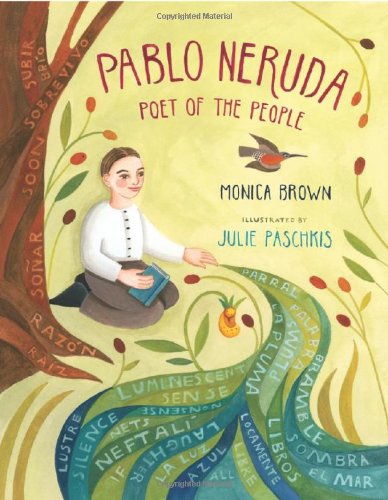
Brown, Monica. 2011. Pablo Neruda: Poet of the People. Illustrated by Julie Paschkis. NY: Henry Holt.
Bryant, Jen. 2009. A River of Words: The Story of William Carlos Williams. Illustrated by Melissa Sweet. NY: Eerdmans Books for Young Readers.

Hill, Laban Carrick. 2010. Dave the Potter: Artist, Poet, Slave. llsutrated by Bryan Collier. NY: Little Brown.
Median, Tony. 2006. Love to Langston. NY: Lee & Low.

Ryan, Pam Munoz. 2010. The Dreamer. Illustrated by Peter Sis. NY: Scholastic Press.
Sisters in Strength: American Women Who Made a DifferenceWalker, Alice. 2001. Langston Hughes: American Poet. Illustrated by Catherine Deeter. NY: Amistad.
Winter, Jeanette. 2002. Emily Dickinson’s Letter to the World. New York: Farrar, Straus and Giroux.

Global Interests
Ancona, George. 2003. Murals: Walls that Sing. Tarrytown, NY: Marshall Cavendish.
Garay, Luis. 1997. The Long Road. Plattsburg, NY: Tundra Books.
Greenfield, Eloise. 2006. When The Horses Ride By: Children in the Time of War. Illustrated by Jan Spivey Gilchrist. New York: Lee & Low.
Hopkins, Lee Bennett. 2010. Amazing Faces. Illustrated by Chris Sientpoet. NY: Lee & Low.
McDonough, Yona Zeldis. 2000. Sister in Strength: American Women Who Made a Difference. Illustrated by Malcah Zeldis. NY: Henry Holt.

When The Visual Matters...
Balouch, Kristen. 2006. Mystery Bottle. New York: Hyperion.
Bildner, Phil. 2010. The Hallelujah Flight. Illustrated by John Holyfield. NY: Putnam.
Brown, Don.  2010. All Stations! Distress! April 15, 1912: The Day the Titanic Sank. NY: FlashPoint.
Garza, Xavier. 2005. Lucha Libre: The Man in the Silver Mask. El Paso, TX: Cinco Puntos.
Greenberg, Jan. 2008. Christo and Jeanne-Claude: Through the Gates and Beyond. Illustrated by Sandra Jordan. NY: Roaring Brook Press.
Hammond, Anna. 1993. This Home We Have Made / Esta Casa Que Hemos Hecho. Illustrated by Joe Matunis. NY: Crown.
Hopkins, Lee Bennett, (Ed.). 2002. Home to Me: Poems Across America. Illustrated by Stephen Alcorn. New York:Orchard.
Miller, William. 2008. Rent Party Jazz. Illustrated by Charlotte Riley-Webb. NY: Lee & Low.
Nye, Naomi Shihab. 2000. Come With Me: Poems for a Journey. Illustrated by Dan Yaccarino. New York: Greenwillow.
Raven, Margot Theis. 2004. Circle Unbroken: the Story of a Basket and its People. Illustrated by E. B. Lewis. New York: Farrar, Straus and Giroux.
Yerxa, Leo. 2006. Ancient Thunder. Toronto, Ontario: Groundwood Books.

Books That Make Me Ask Questions
From The Bee Tree
Cohen Diana & Buchmann, Stephen. 2007. The Bee Tree. Illustrated by Paul Mirocha. El Paso, TX: Cinco Puntos Press.
Fradin, Dennis Brindell. 2004. Nicolaus Copernicus: The Earth is a Planet. Illustrated by Cynthia Von Buhler. New York: Mondo Publishing.
Hartfield, Claire. 2002. Me and Uncle Romie: A Story Inspired by the Art of Romare Bearden. Illustrated by Jerome Lagarrigue. New York: Dial.
Johnston, Tony. 2001. Uncle Rain Cloud. Illustrated by Fabrico VandenBroeck. Watertown, MA: Charlesbridge.
Lasky, Kathryn. 1994. The Librarian Who Measured the Earth. Boston: Little Brown and Company.
Mohr, Nicholas. 1999. Felita. Illustrated by Ray Cruz. NY: Puffin.
Nelson, S.D. 2006. Quiet Hero: The Ira Hayes Story. NY: Lee & Low Books.
Park, Frances and Ginger Park. 1998. My Freedom Trip: A Child’s Escape from North Korea. Illustrated by Debra Reid Jenkins. Honesdale, PA: Boyds Mill Press.
Raschka, Christopher. 2010. Little Black Crow. NY: Atheneum.
Rohmer, Harriet. The Invisible Hunters / Los Cazadores Invisibles. Illustrated by Joe Sam. San Francisco, CA: Children’s Book Press.
Sis, Peter. 1997. The Starry Messenger. NY: Farrar, Straus and Giroux.
Strauss, Rochelle. 2007. One Well: The Story of Water on Earth. Illustrated by Rosemary Woods. Tonawanda, NY: Kids Can Press.

Making Inferences
Cheng, Andrea. 2003. The Key Collection. Illustrated by Yangsook Choi. NY:  Henry Holt and Co.
Giblin, James Cross. 2006. The Boy Who Saved Cleveland.
Illustrated by Michael Dooling. NY: Henry Holt and Co.
Joose, Barbara. 2006. Wind-Wild Dog. Illustrated by Kate Kieslr. NY: Henry Holt.
Lasky, Kathryn. 2000. First Painter. Illustrated by Rocco Baviera. NY: DK.
Mora, Pat. 2002. Maria Paints the Hills. Paintings by Maria Hesch. Albuquerque, NM: Museum of New Mexico Press.
Schmidt, Gary. 2002. The Wonders of Donal O'Donnell. Illustrated by Loren Long. NY: Henry Holt and Co.
Weatherford, Carole Boston. 2006. Dear Mr. Rosenwald. Illustrated by R. Gregory Christie. New York: Scholastic.
Wiles, Deborah. 2001. Freedom Summer. Illustrated by Jerome Lagarrigue. New York: Aladdin.
Yin. 2006. Brothers. Illustrated by Chris K. Soentpiet. New York: Philomel.

Determining Importance in Expository Text
Bardoe, Cheryl. 2006. Gregor Mendel: The Friar Who Grew Peas. Illustrated by Jos. A. Smith. Chicago, IL: Abrahms Books for Young Readers and The Field Museum of Chicago.
Bruchac, Joseph. 2002. Navajo Long Walk: The Tragic Story of a Proud People’s Forced March From Their Homeland. Illustrated by Shonto Begay. Washington, D.C.: National Geographic Society.
Deem, James M. 2005. Bodies From the Ash: Life and Death in Ancient Pompeii. San Diego, CA: Houghton.
Parks, Parks and Gregory J. Reed. 1997. Dear Mrs. Parks: A Dialogue with Today’s Youth. New York: Lee & Low Books.
Rohmer, Harriet, Ed. 1997. Just Like Me: Stories and Self-Portraits by Fourteen Artists. San Francisco, CA: Children’s Press Books.
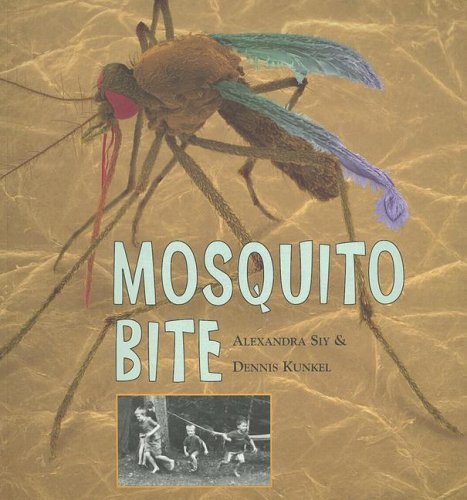
Siy, Alexandra. 2006. Mosquito Bite. Illustrated by Dennis Kunkel. Watertown, MA: Charlesbridge Publisher.
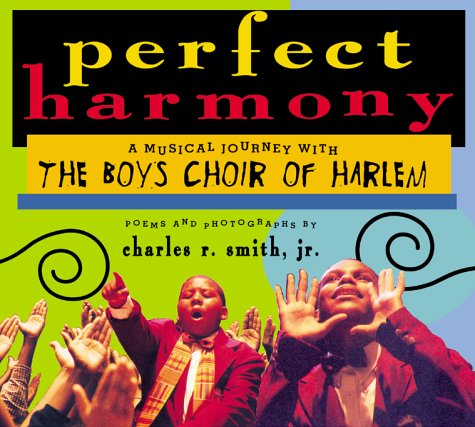
Smith, Charles R., Jr. 2002. Perfect Harmony: A Musical Journey with the Boys Choir of Harlem. New York: Jump at the Sun.
Smith, David. 2002. If The World Were a Village: A Book About the World’s People. Illustrated by Shelagh Armstrong. Tonawanda, NY: Kids Can Press.
Webb, Sophie. 2000. My Season with Penguins: An Antarctic Journal. NY: Houghton Mifflin.

Synthesis: Putting It All Together.
Bruchac, Joseph. 2004. Jim Thorpe’s Bright Path. Illustrated by S.D. Nelson. New York: Lee & Low.
Cheng, Andrea. 2005. Shanghai Messenger. Illustrated by Ed Young. New York: Lee & Low.
Gerstein, Mordicai. 2006. The Old Country. NY: Roaring Brook Press.
Myers, Tim J. 2000. Basho and the Fox. Illustrated by Oki S. Han. New York: Marshall Cavendish.
Nelson. S.D. 2010. Black Elk's Vision: A Lakota Story. NY: Abrams Books for Young Readers.
Norman, Lissette. 2006. My Feet Are Laughing. Illustrated by Frank Morrison. New York: Farrar, Straus, Giroux.
Russell, Barbara Timberlake. 2004. The Remembering Stone. Illustrated by Claire B. Cotts. NY: Farrar, Straus, Giroux.