These books are part of the Read and Wonder series published by Candlewick Press. The books are a blend of fiction and facts focusing mostly on animals. They can serve as good models for writing.
 Davies,
Nicola. (2004). Bat Loves the Night: Read and Wonder. Illustrated
by Sarah Fox-Davies. Cambridge, MA: Candlewick Press.
Davies,
Nicola. (2004). Bat Loves the Night: Read and Wonder. Illustrated
by Sarah Fox-Davies. Cambridge, MA: Candlewick Press.
 One of nature’s most magical sights emerges
from camouflage in this evocative, informative story about a mother tiger in
the wild.
One of nature’s most magical sights emerges
from camouflage in this evocative, informative story about a mother tiger in
the wild.
 As the
story unfolds, it follows a family of four as they seek out mushrooms on their
walk through the woods. Interspersed through the story are facts for the
curious. It concludes with a scattering of about a dozen samples of mushrooms
with a comment about each.
As the
story unfolds, it follows a family of four as they seek out mushrooms on their
walk through the woods. Interspersed through the story are facts for the
curious. It concludes with a scattering of about a dozen samples of mushrooms
with a comment about each.
 Text Level M

Hansard, Peter. (2001). A Field Full of Horses: Read and Wonder. Illustrated by Kenneth Lilly. Cambridge, MA: Candlewick Press. Do you love horses? Do you love the way their
noses are silky-soft but bristly too? And the way a horse's tail slowly swishes
as he rests in the shade with eyes half-shut? Do you love to see them trot,
canter, gallop, buck and rear?
Do you love horses? Do you love the way their
noses are silky-soft but bristly too? And the way a horse's tail slowly swishes
as he rests in the shade with eyes half-shut? Do you love to see them trot,
canter, gallop, buck and rear?
 Jenkins,
Martin. (2003). Grandma Elephant’s in Charge: Read and Wonder. Illustrated
by Ivan Bates. Cambridge,
MA: Candlewick Press.
Jenkins,
Martin. (2003). Grandma Elephant’s in Charge: Read and Wonder. Illustrated
by Ivan Bates. Cambridge,
MA: Candlewick Press.
Find out why you should love guinea pigs too!
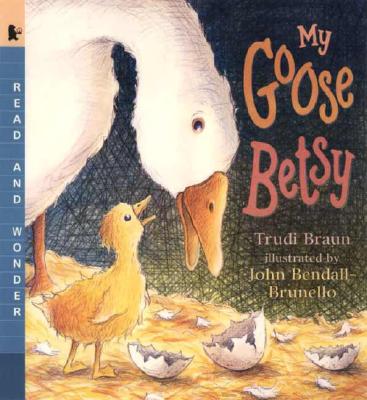
Braun,
Trudi. (2002). My Goose Betsy: Read and Wonder. Illustrated by John Bendall-Brunello. Cambridge, MA: Candlewick Press.
Meet a goose named Betsy who has a very special
job. . . being a mother! Now in an affordable paperback format.
Text Level L
Butterworth,
Chris. (2009). Sea Horse: The Shyest Fish: Read and Wonder. Illustrated
by John Lawrence. Cambridge, MA: Candlewick Press.
Stunning pictures and engaging words. . . . An
accomplished entrée to early science topics."
Text Level L
Davies,
Nicola. (2007). White Owl, Barn Owl: Read and Wonder. Illustrated by Michael Foreman. Cambridge, MA:
Candlewick Press.
Few children now have access to the open
woodlands and grasslands frequented by barn owls, but they can all enjoy the
magic of the bird thanks to this lovely introduction.
Text Level L
Davies,
Nicola. (2004). Bat Loves the Night: Read and Wonder. Illustrated
by Sarah Fox-Davies. Cambridge, MA: Candlewick Press.
Follow Bat as she swoops into the shadows--and
find out why Bat loves the night
Text Level M
Davies,
Nicola. (2001). Big Blue Whale: Read and Wonder. Illustrated by Nick Maland. Cambridge, MA: Candlewick
Press.
Equally majestic as the biggest animal that has
ever lived--the Big Blue Whale
Text Level
N
Davies,
Nicola. (2008). Ice Bear: In the Steps of the Polar Bear: Read and Wonder. Illustrated by Gary Blythe. Cambridge, MA:
Candlewick Press.
Follow the path of the awe-inspiring polar bear
as it strives to survive in an age-old Arctic habitat threatened by global
warming.
Text Level N
Davies,
Nicola. (2001). One Tiny Turtle: Read and Wonder. Illustrated
by Jane Chapman. Cambridge, MA: Candlewick Press.
Young nature lovers will eagerly page through
this book to learn about the fascinating life of the endangered loggerhead sea
turtle.
Text Level N
Davies,
Nicola. (2003). Surprising Sharks: Read and Wonder. Illustrated
by James Croft. Cambridge, MA: Candlewick Press.
AN AMERICAN LIBRARY ASSOCIATION NOTABLE
CHILDREN'S BOOK. Full of fun facts, here's a surprising book about sharks that
kids can really get their teeth into.
Text Level N
Dowson, Nick.
(2004). Tigress: Read and Wonder. Illustrated by Jane Chapman. Cambridge, MA:
Candlewick Press.
One of nature’s most magical sights emerges
from camouflage in this evocative, informative story about a mother tiger in
the wild.
Text Level N
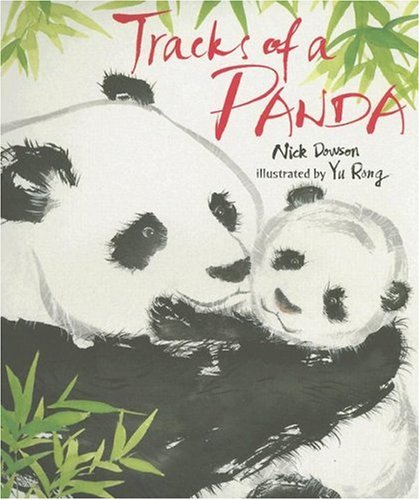
Dowson, Nick.
(2010). Tracks of a Panda: Read and Wonder. Illustrated by Yu Rong. Cambridge, MA:
Candlewick Press.
A giant panda and her baby set off on a search
for a safe, sustaining home in this informative tale about an enchanting
creature.
Text Level K
Doyle, Malachy. (2002). Jody Beans: Read and Wonder. Illustrated by Judith Allibone. Cambridge, MA: Candlewick Press.
When Jody’s grandfather comes to visit, he brings along a packet of seeds for them to plant. Through spring, summer, and fall, Jody watches her plants sprout, flower, and grow lots of beans. Soon, as Jody’s parents await a new baby, Granda and Jody are picking the beans - and waiting for next spring
When Jody’s grandfather comes to visit, he brings along a packet of seeds for them to plant. Through spring, summer, and fall, Jody watches her plants sprout, flower, and grow lots of beans. Soon, as Jody’s parents await a new baby, Granda and Jody are picking the beans - and waiting for next spring
Text Level K
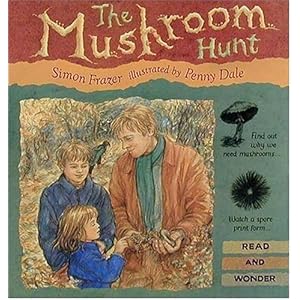
Frazer,
Simon. (1995). The Mushroom Hunt: Read and Wonder. Illustrated
by Penny Dale. Cambridge, MA: Candlewick Press.
As the
story unfolds, it follows a family of four as they seek out mushrooms on their
walk through the woods. Interspersed through the story are facts for the
curious. It concludes with a scattering of about a dozen samples of mushrooms
with a comment about each.
French,
Vivian. (2009). Caterpillar, Caterpillar: Read and Wonder. Illustrated
by Charlotte Voake. Cambridge, MA: Candlewick
Press.
The text does an excellent job of describing
the metamorphosis of a swallowtail butterfly, and the close-up vibrant drawings
of each developmental stage are outstanding.
Text Level M
French,
Vivian. (2003). Growing Frogs: Read and Wonder. Illustrated by Alison Bartlett.
Cambridge, MA: Candlewick Press.
Follow along as an egg becomes a tadpole, a
not-quite-frog, and finally a frog. RRRRIBBIT!
Text Level L
French,
Vivian. (2006). T. Rex: Read and Wonder. Illustrated by Alison Bartlett. Cambridge, MA:
Candlewick Press.
A young boy encounters some fascinating facts
-- and even more intriguing questions -- in this lively ode to curiosity.
Text Level M
French,
Vivian. (2010). Yucky Worms: Read and Wonder. Illustrated by Jessica Ahlberg. Cambridge, MA:
Candlewick Press.
Who would want to be friends with a wiggly,
slimy worm? You can’t even tell which end is which! But there’s more to these
lowly creatures than meets the eye. Kids are invited to find out where worms
live, see how they move, and understand why gardeners consider them friends with
the help of this humorous and informative look at an unappreciated — and
fascinating — creature.
Text Level M
Hansard, Peter. (2001). A Field Full of Horses: Read and Wonder. Illustrated by Kenneth Lilly. Cambridge, MA: Candlewick Press.
Do you love horses? Do you love the way their
noses are silky-soft but bristly too? And the way a horse's tail slowly swishes
as he rests in the shade with eyes half-shut? Do you love to see them trot,
canter, gallop, buck and rear?
Text Level M
Howker,
Janni. (2002). Walk with a Wolf: Read and Wonder. Illustrated
by Sarah Fox-Davies. Cambridge, MA: Candlewick Press.
Young readers will welcome this exciting
opportunity to be a part of the pack.
Text Level N
Jenkins,
Martin. (1999). The Emperor’s Egg: Read and Wonder. Illustrated
by Jane Chapman.
Cambridge, MA: Candlewick Press.
Try balancing an egg on your feet for two
months in the Antarctic! The story of the world's most devoted dad.
Text Level O
Jenkins,
Martin. (2001). Chameleons are Cool: Read and Wonder. Illustrated
by Sue Shields. Cambridge,
MA: Candlewick Press.
The ability to change color, a sharp-shooting
tongue, and skin covering your eyes--now THAT is cool.
Text Level M
Jenkins,
Martin. (2003). Grandma Elephant’s in Charge: Read and Wonder. Illustrated
by Ivan Bates. Cambridge,
MA: Candlewick Press.
An entertaining, educational look at the
everyday life of a family of elephants - who never forget who's in
charge. Elephants are the biggest animals on land, and they live in big
families, too. So who can possibly keep them in line? Grandma! After all, she's
been around long enough to know where all the best watering holes are, how to
gather the tastiest food.
Text Level L
King-Smith,
Dick. (2001). All Pigs are Beautiful: Read and Wonder. Illustrated
by Anita Jeram. Cambridge, MA: Candlewick Press.
Oink! Oink! Pigs...beautiful? Who'd have
guessed?
Text Level N
King-Smith,
Dick. (1997). I Love Guinea Pigs: Read and Wonder. Illustrated
by Anita Jeram. Cambridge, MA: Candlewick Press.
 |
| from Insect Detectives. |
Text Level M
Voake, Steve. (2010). Insect Detective: Read and Wonder. Illustrated by Charlotte Voake. Cambridge, MA: Candlewick Press.
"Gently encourages young readers to
explore their natural surroundings and observe some of the more commonly found
insects in it."
Text Level L
Wallace,
Karen. (1998). Gentle Giant Octopus: Read and Wonder. Illustrated
by Mike Bostock.
Cambridge, MA: Candlewick Press.
Discover the mysterious, magnificent octopus!
Now in an affordable paperback format.
Text Level M
Wallace,
Karen. (1996). Red Fox: Read and Wonder. Illustrated
by Peter MeInyczuk. Cambridge, MA: Candlewick Press.
An informative
picture book allows beginning readers to follow a meadow fox on an average day.
In smaller type along the bottom of the page, for older readers, is more
detailed information-how, when trotting, for example, the fox leaves a straight
line of prints. The whole is a fine blend of fact and factual fiction. A "Read
and-Wonder" book.
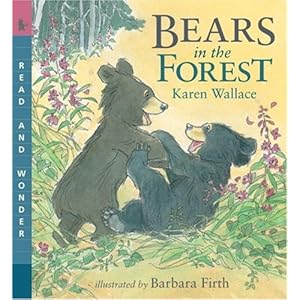
Wallace,
Karen. (2009). Bears in the Forest: Read and Wonder. Illustrated
by Barbara Firth. Cambridge, MA: Candlewick Press.
Deep in a forest cave, a mother bear gives
birth to two tiny cubs. Read the story of how they grow.
Text Level M
Wallace, Karen.
(1994). My Hen is Dancing: Read and Wonder. Illustrated by Anita Jeram. Cambridge, MA:
Candlewick Press.
Wallace
presents interesting facts about chickens and their habits. The illustrations
are excellent and the text informative. Did you know that a hen lays brown or
white eggs, but never both? Information tidbits are scattered throughout the
book. Part of the "Read and Wonder Series" - nonfiction picture books
with a real difference.
Wallace,
Karen. (1993). Think of an Eel: Read and Wonder. Illustrated by Mike Bostock. Cambridge,
MA: Candlewick Press.
Part of the Read and Wonder series, this book
brings the extraordinary and mysterious life of an eel to light.
Text Level N


